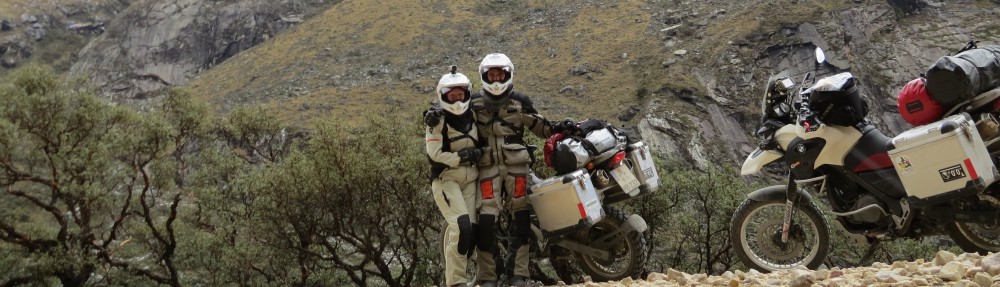
High mountains and deep canyons


The Canon de Colca is one of Perus natural highlights as they say. It is very often compared to the Grand Canyon. But other than his famous colleague in the US this canyon is not located in a flat area. It is surrounded by the Andean mountains towering with 5200m over it’s river bed. This creates an incredible sight.

The tourists get there by bus from Arequipa as a one or 2-day organized tour.
Screen Shot 2014-11-07 at 20.59.55

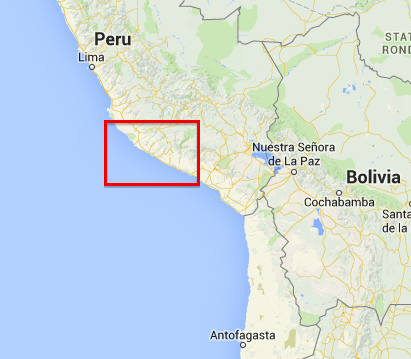
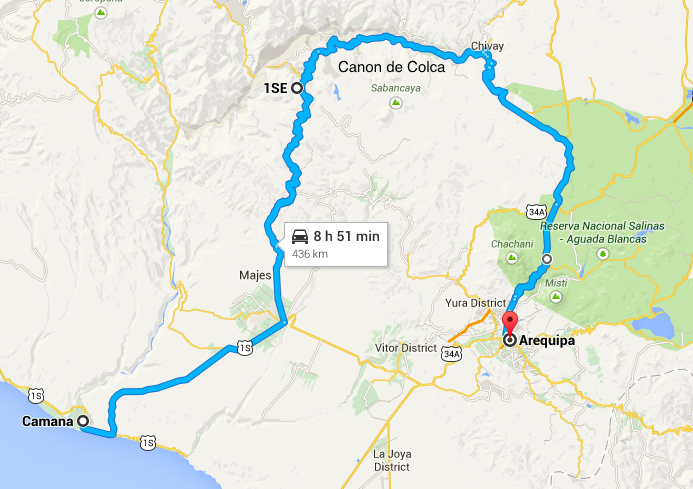
For us on the bikes there are other options of course and so we take a long dirt road via Huambo. We start in Camana driectly on the coast very early in the morning. After 80km on tarmac we turn off to a dusty gravel road. It has quite a lot of corrugations and so our bikes get shaken pretty well.

The road climbs up the mountains and slowly the desert gets a more and more spots of vegetation. Small bundles of grass start to grow and once in a while even a little bush finds enough humidity to live here.

Little flowers contribute yellow spots to the brown of the grass and dust.

After we have about half of the dirt road (80km) the road gets steeper and we start noticing snow covered mountains around us. It turns out to be the surrounding volcanoes, some of them reaching more than 6000m. The landscape is fantastic. A mountain pass at 4200m offers a breathtaking view into a broad valley, which ends in the far distance with a sharp edge, the first sight of the Calco canyon. We make a break, but after being on the coast at sea-level for more than a week, we are pretty out of breath. We continue on the road which is getting more rough but with less corrugations which makes riding actually more enjoyable. There are hardly any cars here. During the 6 hours we spend on the bikes we only saw a handful of cars or trucks.


As we descend from the mountain pass we enter the little village of Huambo. Lots of people in traditional clothing are gathered on the Plaza del Armas, the main plaza. Traditional music is being played from loudspeakers and a lady is commenting the appearance of little dance groups. Trucks and even a bulldozer are setup as floats parading in front of the inhabitants of the village. It is the 124th anniversary of the village and they are celebrating it very nicely. We stand somewhere on the side and get in contact with people immediately. So we stand there, drink some coke and eat some cookies, which we bought from the store next to our bikes and watch the parade going on.

It is really nice and enjoyable.

After a while, just before the parade is finished we jump on our bikes and continue the last 30km to Cabanonde.


The place we stayed is famous for its kitchen (Kuntur Wassi) and so we had a delicious dinner of Alpaca meat. We got up early in the morning to reach a steep cliff. When the early sun hits the canyon condors use the thermal lift to rise up and go hunting. As we approach the Cruz del Condor there are already a couple of tour busses waiting. We jump off the bikes and just make it in time to see some of the huge birds flying-by real close. It is an impressive sight to see this majestic birds sailing in the warm wind.

After 15 minutes the birds are gone. Time to see what else there is to see. The canyon is incredible: deep down you can see the Colca river a 1200m below. Above it the 5200m high Senal Ajiruha mountain towers over the canyon. There are some frozen waterfalls up there. It is almost unreal as the rest of the area is quite dry. We enjoy the view for some more time and keep going following the route of the busses back to Arequipa.

The Canyon gets wider and lots of terraces are build into the walls. It turns very green with all these fields. It is one of the main agricultural areas of Peru. We reach the next town that is at 3600m and fill up our bikes. Then we start the ascent on asphalt now, up to the 4800m mountain pass of Patapamba. The ride is incredible, with great views into the valley of the Colca canyon. The top is quite flat and offers a fantastic sight to the volcanoes surrounding the area.

As we don’t want to take the long main road to Arequipa we decide to take a little short cut. A dirt track leads in between two massive volcanoes (Misti 5800m and Chachani 6000m). The road is pretty good and almost flat so we proceed very well. As we hit the flank of Chachani it gets pretty sandy at some parts though. It is not real sand, it is ashes from the volcanoes and it is very very soft. Christy had some difficulties and I fell twice as well. Since we were at 4000m altitude picking up the bikes was quite a strenuous work.

But most of the time the road was very rocky and so we made it back ok to tarmac and then into the nice city of Arequipa.

We decided to stay a full day there to “recover” from all the incredible sights and rides we have had the last week.

Sand and Sea

Nazca to Camana

Screen Shot 2014-11-06 at 15.29.55

Screen Shot 2014-11-06 at 15.29.24

We left Nazca to make a little detour to have a nice view on the Cerro Blanco, the highest sand dune in the world. We are not very tempted by superlatives, but this dune is an astonishing 2800m high, just 50km from the sea. We love sand and dunes and so we were very curios to see it.

We ride into a dry valley which starts right in Nazca. On both sides mountains with soft shapes accompany the valley. Almost no vegetation is found here; just on the bottom of the valley there must be a little bit of water as some plants create a pattern of green once in a while.

Suddenly the peak of the Cerro Blanco appears over the smaller mountains in the foreground. The name is describing it pretty well. With all the brown mountains surrounding us the bright color of the Cerro Blanco sticks out and appears almost white. We find an opening in the mountains and turn off the paved road to get a closer look. Soft sand makes riding a lot of fun and as we approach we finally see the full flank of the mountain. A wall of more than 2300m of sand is piling up in front of us. It is an incredible sight.

We ride further down the bumpy track until it gets too difficult for Christy on her heavy bike.

We go back to the main road and continue until we reach a mountain pass. From here you can approach the summit of the Cerro Blanco. We stop, enjoy the view and play a little bit in the soft sand, but there is no point on continuing uphill with the loaded bikes.

So we turn around to Nazca and keep going south the PanAm.

After a few kilometers we get off it again to follow a sandy dirt road to a cemetery from pre-inca times: Chauchilla. Tomb raiders have dug the ground to find treasures and so the dead had been laying there in the open field for centuries. A few years ago officials have restored some of the graves and put the bodys into their original graves.

Since in the past years people have wandered around the dead and sometimes even posing with them for photos I think restoring the graves has been a great thing to do. It gives some dignity back to this place.

The whole place still is covered in bones, hair, clothing, clay fragments and other parts of the graves. All over are little dips, indicating other graves that have been opened.

We are the only visitors. It is boiling hot in the sun. The place is surrounded by hills in different colors. The place offers a strange morbid beauty and peace.

The deads have been dried in their graves to mummies. The many years in the sun have whitened their bones. So here they sit in their new graves with some rests of their belongings. It is really macabre and strange. But also beautiful and peaceful.

We hit the PanAm at around 1 and we have decided to go till the town of Chala. We expected the road to be sort of boring and to be one of the parts where we would just cover distance.

But we were wrong! It was a fantastic ride with lots of stops to enjoy the constantly changing scenery.

The landscape can be described in one sentence: Desert to the left, black strip of PanAm in the middle, blue sea to the right.

But the diversity was mind-blowing: we passed sections with complete flatness, areas with beautifully shaped rocks, colors of red, green and yellow. At one point the dunes towered a few hundred meters and rose directly from the sea. About have way up the PanAm crosses the dunes flank. We passed deserted sand beaches for kilometers. Sometimes the coast was rocky with the waves wildly shattering on the cliffs. Sometimes the sea was rolling in long surfers paradise waves upon shallow beaches.

The sea was deep blue, forming a perfect contrast with its freshness and vivid nature in comparison to the complete lack of water and lifeless desert on our left.

It was 400km of pure pleasures. From Nazca to Camana with an overnight stop in Chalca.


Back to the coast and to the oldest ruins

Once we got out of the traffic of Huarez the ride became another highlight.

Screen Shot 2014-10-20 at 23.16.48


Screen Shot 2014-10-20 at 06.35.33


Finally the weather has cleared up and we see the full beauty of the southern part of the Cordillera Blanca. We are still travelling along the Rio Santa which is a small stream up here. The valley slowly turns into a hilly countryside with the high mountains on the left. Brown grass bundles are the main vegetation. They move in the strong wind and make the hills look like they were covered in fur. In the background the white peaks show their majestic shapes. We still go uphill even though the city is already way over 3000m. We find a little dirt road that leads towards the mountains and ride into it. It leads back into the national park, we think about taking that road in order to make a little loop. But the road contains deep gravel areas, which make it difficult to ride with the loaded bikes. That would make the trip pretty long hours. We decide to get back to the main road and continue the route we had originally planned.

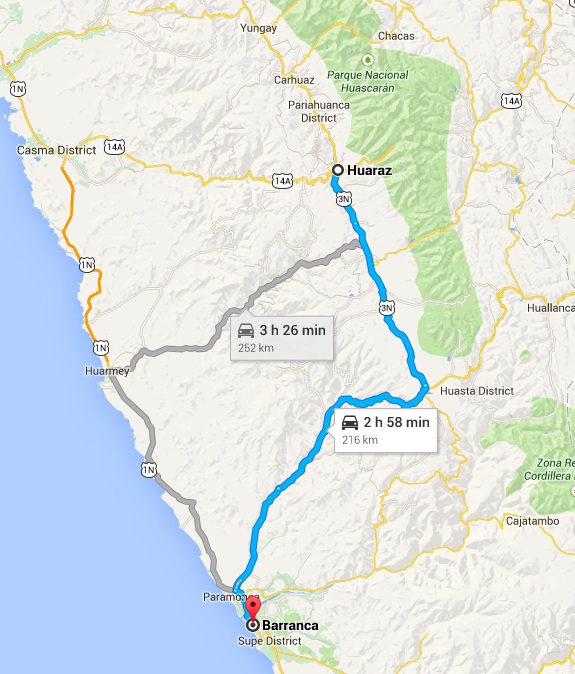
After we reached a little pass, the road started to decline. In less than 60km it goes down from 3500m to 500m and then to sea level. The road is in very good shape, there is not much traffic and so riding is real fun.

The road leads down into a valley and offers great point of views where we stop to take pictures. The vegetation becomes less and less until the valley is a pure desert. Just on the last 40km the valley seems to contain some water so that the lower part of the valley is green while the mountains and hills around us seem to be completely dry.

We reach Barranca. Again we are irritated by how unpleasant some of the Peruan cities are. We look for a hotel along the beachside, but the area doesn’t look very safe. So we end up in a hotel in the center of town, opposite to a couple of casinos. The hotel is quite nice and so we have a good rest after this day full of new impressions.


The following day we ride west to find the ruins of Caral. A very good dustless dirt road leads through huge fields of papas, sugar cane, corn and a lot of other vegetables. Farmers cut the fields, collect the fruits and carry them to the trucks. The sugar cane trucks are loaded far beyond anything we would call full. They look like Silent Bob from the Simpsons when they come around the corner.

A little dirt track leads away from the main road we had been on. There are no signs, only gps is showing us the way. The dirt track is very bumby, partly sandy and is great fun to ride. I use the little bumps to make little jumps with the bike, drift in the sand and playfully enjoy the ride into the desert.

Finally we arrive at a circular arranged entrance to the site. Eerything is very new. The UN heritage is supporting this site. It is the oldest site on the American continent. The site is over 5000 years old, as old as the Egyptian culture. The pyramids which can be visited there are partly destroyed and are other than the Mayan pyramids not with a real peak, but have a terraced structure.

The site has only been investigated since 1996 and is open for the public only a few years. They still search and think they have discovered maybe 40% of the site. They found more than 20 sites in this valley.

It was very interesting to see it, imagining that this site completely changed the facts of history as the closest sites in terms of age they have found so far in America is 1000 years younger. How many other sites are still buried under these many sand dunes in this country? Where did this old culture move to? Where are all the other cities that must have existed?


We took our time and rode down the coast to find a great new hotel with view to the seaside in a small town, just 150km north of Lima in the town of Huacho.

So we would have a relaxed day riding into Lima the following day.

Through the canyons and into thin air

Chimbote – Cañon de Pato – Caraz

Screen Shot 2014-10-19 at 22.31.04  Screen Shot 2014-10-19 at 22.21.26

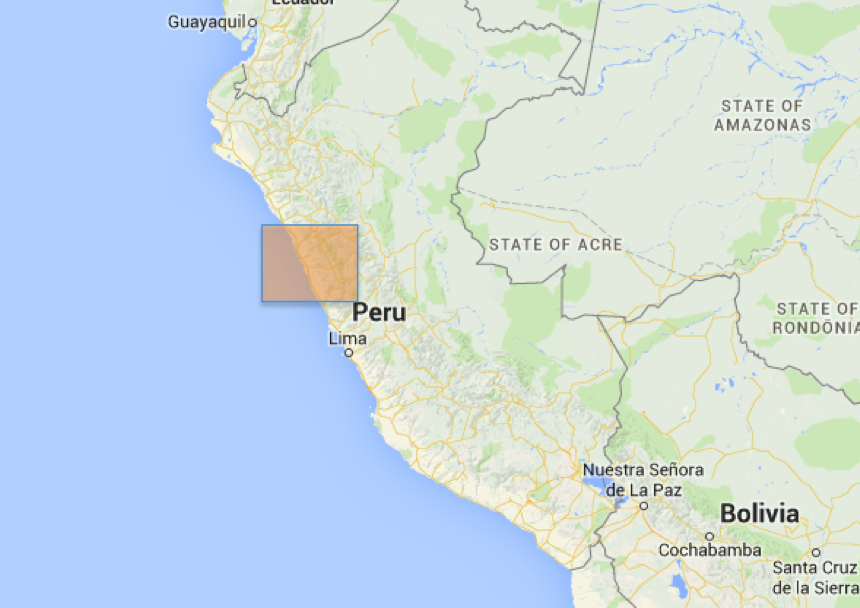
We left Chimobote, a loud and chaotic city to head into the valley of the Rio Santa. The valley starts as a very green and broad oasis in between rocky, sandy and dry mountains. Fields of all kind of vegetables show that this ground is very rich. Corn, potatoes and endless fields of sugar canes on both sides of the roads. The road is in good conditions and leads us deeper and deeper into the Andes. The mountains get higher and higher as the valley becomes more and more narrow. After approximately on hour the pavement ends and a good gravel road continues following the river. The green of the valley almost disappears, only a small stripe of green directly at the river remains. The riding is great and the roads allows high speed travelling, you can easily go 80 or partly even 100km/h. Christy is taking it more easy of course, but is constantly riding at reasonable speed. So when I want to take a nice picture of her I have to speed up for a while and get the camera out in a hurry to be able to get into a good position of a picture. I am surprised how well she is managing the bike on the gravel. The off-road training with her little Beta bike back in Germany really seemed to help her. We stop very often to take pictures and to enjoy the view of the valley, but I also try to keep us going, as I expect the Cañon de Pato, a steep canyon at the very end of todays itinerary to be a little bit more difficult and I don’t want us to end up in the dark there.

The valley is spectacular with steep walls on both sides and the dirt road winding on its ground along the river. The colors of the mountains surrounding us vary in different brown colors and areas of yellow and red earth. It is incredibly beautiful. As the valley slowly turns into a steep canyon, the road leads up the hill, offering breathtaking views into the canyon.

In a small village we stop to get something to drink. It is a very strange atmosphere. Many of the inhabitants sit around and look at us as we were from a different planet. As usual I try to chat them up, but other than the people in all other areas on our travel so far they are not very talkative.

So we drink our cokes in quite. The road keeps being spectacular and the walls of the canyon even get higher and the canyon narrower. This is where the Cañon de Pato begins. The walls of the canyon are just a few meters apart and fall vertically down to the bottom where the Rio Santa roars wildly. Other than I had expected, the road turns out to be very good and paved. But it is a one-way road with many small tunnels. Signs encourage you to honk before every tunnel, but I still end up facing traffic in the tunnel. So we squeeze us through the wall and the upcoming car. The road is covered with sand and only two lanes of where the car tires roll are free. There is nothing like a guardrail. If you happened to slip over the edge the next stop would be the bottom of the river, so we keep our concentration up and make a couple of breaks.

After a few kilometers the canyon opens up and the valley becomes wide again. On the left hand side the mountains of the Cordillera Blanca reach up to 6000m. They are covered in clouds though, so we can only guess about their beauty.

Because the road through the Cañon de Pato is way better than anticipated we make it to Caraz at around 3:30pm. We search a Hotel and find a nice place in the “Los Pinos Lodge”. We unload the bikes and as the clouds open up a little bit we get a short view of one of the mountains of the Cordillera Blanca. A steep snowy mountain, seen from the yard of our hotel where humming birds fly around the colorful flowers. It was mind blowing.


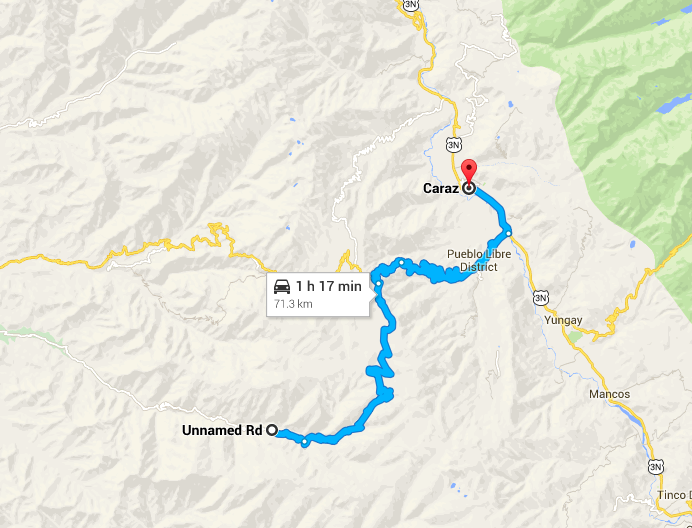
We decide to make a little day trip into the Cordillera Negra. It is a mountain range in the west of the valley. As the Cordillera Negra “only”reaches up to just below 5000m, the tips of the mountains are not covered in snow, other than the white summits of the Cordillera Blanca, which gives both ranges the names.

Screen Shot 2014-10-19 at 22.22.50

We expect to have a nice view into the Cordillera Blanca and get up early to use the usual better weather in the morning.

The road is very good, but very narrow. The good asphalt brings us through a small village. All houses are build in a 15th century clay brick style except the tin roofs.

In dozens of serpentines the road leads up the hill and with every curve the view into the valley is changing. The slopes of the Cordillera Blanca end in clouds that cover the tip of the mountains. They strangely only cover the Cordillera Blanca. We ride in the sun and the whole valley is sunny as well.

The mountain we ride up doesn’t seem to end, one curve after the other. Some of the serpentines are really steep, and since the road is very narrow, we are very happy that there is only little traffic. On some places the road leads all the way to the edge, where the walls go down 1500m. Again we have to keep the concentration up. Safely we arrive at a mountain pass. Instead of going on, we find a little dirt road that leads along the ridge of the mountain. We follow the track for a few kilometers until we find a spot with a great view. The clouds have moved a little bit, and it seemed as if it would clear up a little.

We sat there, watched nature slowly opening the scenery of the Cordillera Blanca. Small openings in the clouds allowed to get a little peek of the one summit, than a few minutes later of another one, as the first one gets covered again. It was fantastic. I remember the first summit I saw peeking out of the clouds. It was so high up, that I could hardly believe it was connected to the lower part of the mountain that you could see.

The sun was shining on us the whole time, but the wind was sort of cool since we were at an Altitute of over 4200m so we decided to ride down. The weather cleared up even more as we descended down the road.

The beauty of the landscape, the colors of the mountain, the white summits of the Cordillera Blanca, the incredible road and the drops next to it, it all gave us the feeling of having been a witness of a one-of-kind magic moment, even though we know the mountains have been there for millions of years and will most likely last some more.