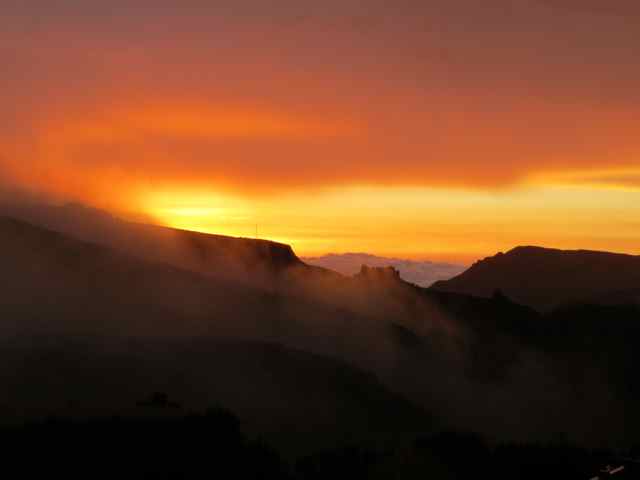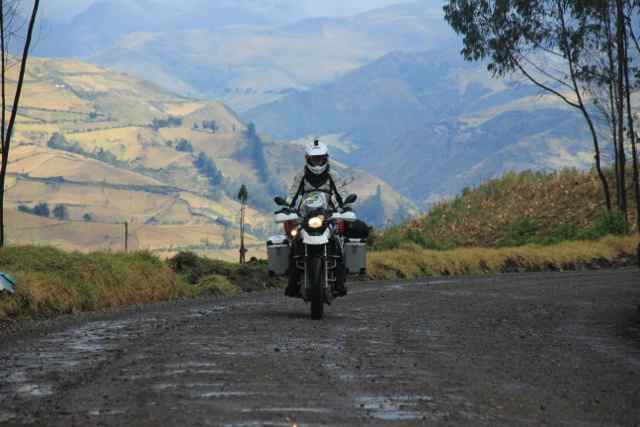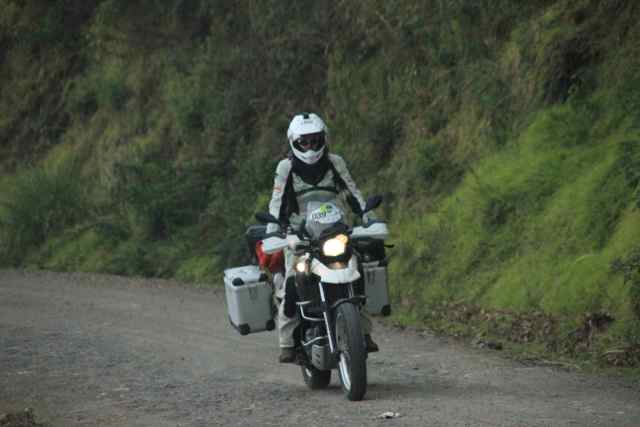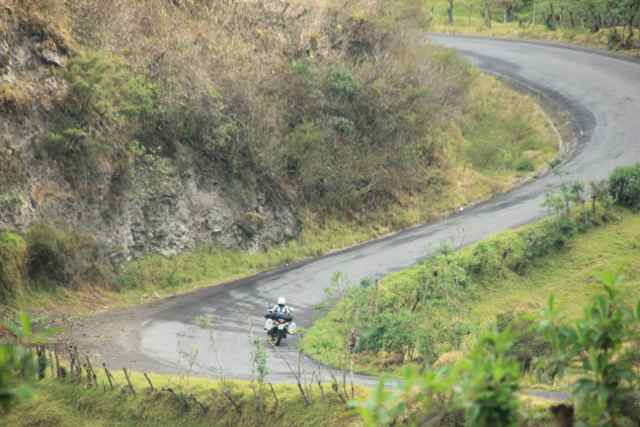
A dusty road and up the mountains

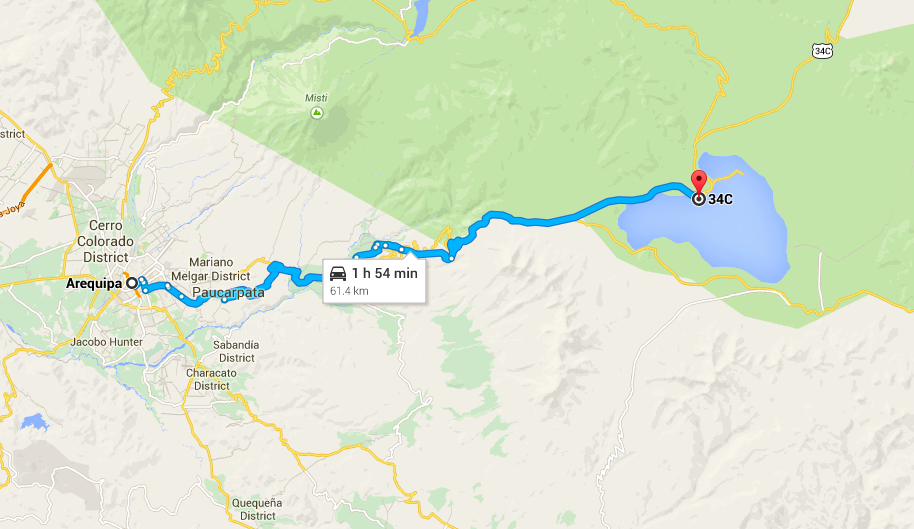
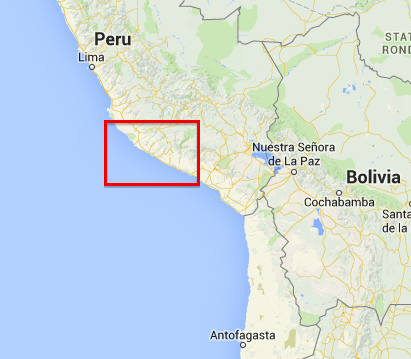
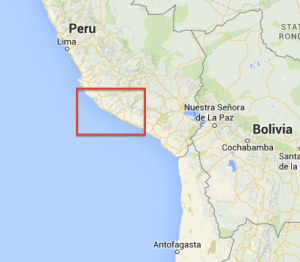
A little road leads all the way from Arequipa through the Salinas national park to Ouno at the Titicaca lake. It would be a pretty long way though and so we thought of instead take a daytrip with no luggage to a laguna in the Salinas NP. It turned out to be a great idea. First because the lake was really nice, and more importantly, we didn’t have any luggage with us: the road was a killer for being on the bikes.

Screen Shot 2014-11-14 at 23.33.47

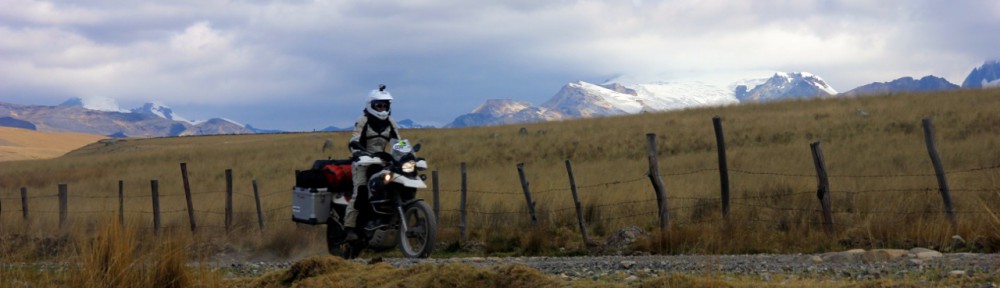
In endless curves it ran up a mountain. The road was one of the dustiest roads I have ever been on. In the curves the dust was 20cm deep with loose rocks underneath. So if you didn’t have enough speed your front wheel would slide and bounce from one side to the other. The only safe way beside speed was foot peddling through (Christies “powerwalk”).

We were covered in dust. But it was also a road of fantastic views.

Screen Shot 2014-11-14 at 20.58.52

The next day we packed our bikes and took the main road to Puno. It was a great ride: good tarmac, a lot of Vacunas, Lamas and Alpacas, a wonderful landscape.


We enjoyed it a lot. It was very relaxing.


High mountains and deep canyons


The Canon de Colca is one of Perus natural highlights as they say. It is very often compared to the Grand Canyon. But other than his famous colleague in the US this canyon is not located in a flat area. It is surrounded by the Andean mountains towering with 5200m over it’s river bed. This creates an incredible sight.

The tourists get there by bus from Arequipa as a one or 2-day organized tour.

Screen Shot 2014-11-07 at 20.59.55

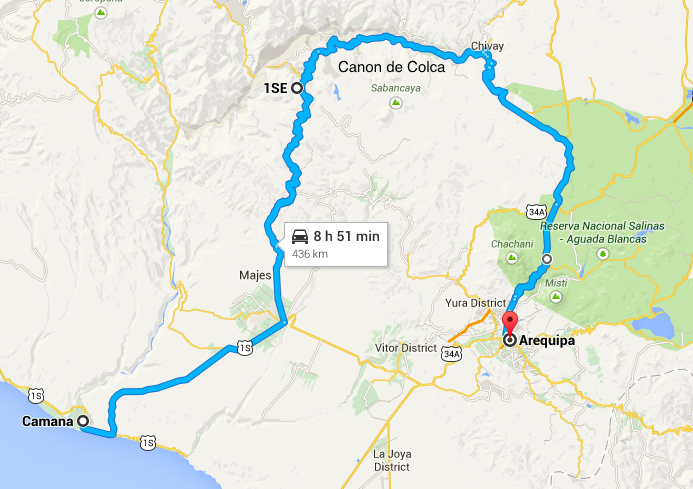
For us on the bikes there are other options of course and so we take a long dirt road via Huambo. We start in Camana driectly on the coast very early in the morning. After 80km on tarmac we turn off to a dusty gravel road. It has quite a lot of corrugations and so our bikes get shaken pretty well.

The road climbs up the mountains and slowly the desert gets a more and more spots of vegetation. Small bundles of grass start to grow and once in a while even a little bush finds enough humidity to live here.

Little flowers contribute yellow spots to the brown of the grass and dust.

After we have about half of the dirt road (80km) the road gets steeper and we start noticing snow covered mountains around us. It turns out to be the surrounding volcanoes, some of them reaching more than 6000m. The landscape is fantastic. A mountain pass at 4200m offers a breathtaking view into a broad valley, which ends in the far distance with a sharp edge, the first sight of the Calco canyon. We make a break, but after being on the coast at sea-level for more than a week, we are pretty out of breath. We continue on the road which is getting more rough but with less corrugations which makes riding actually more enjoyable. There are hardly any cars here. During the 6 hours we spend on the bikes we only saw a handful of cars or trucks.


As we descend from the mountain pass we enter the little village of Huambo. Lots of people in traditional clothing are gathered on the Plaza del Armas, the main plaza. Traditional music is being played from loudspeakers and a lady is commenting the appearance of little dance groups. Trucks and even a bulldozer are setup as floats parading in front of the inhabitants of the village. It is the 124th anniversary of the village and they are celebrating it very nicely. We stand somewhere on the side and get in contact with people immediately. So we stand there, drink some coke and eat some cookies, which we bought from the store next to our bikes and watch the parade going on.

It is really nice and enjoyable.

After a while, just before the parade is finished we jump on our bikes and continue the last 30km to Cabanonde.


The place we stayed is famous for its kitchen (Kuntur Wassi) and so we had a delicious dinner of Alpaca meat. We got up early in the morning to reach a steep cliff. When the early sun hits the canyon condors use the thermal lift to rise up and go hunting. As we approach the Cruz del Condor there are already a couple of tour busses waiting. We jump off the bikes and just make it in time to see some of the huge birds flying-by real close. It is an impressive sight to see this majestic birds sailing in the warm wind.

After 15 minutes the birds are gone. Time to see what else there is to see. The canyon is incredible: deep down you can see the Colca river a 1200m below. Above it the 5200m high Senal Ajiruha mountain towers over the canyon. There are some frozen waterfalls up there. It is almost unreal as the rest of the area is quite dry. We enjoy the view for some more time and keep going following the route of the busses back to Arequipa.

The Canyon gets wider and lots of terraces are build into the walls. It turns very green with all these fields. It is one of the main agricultural areas of Peru. We reach the next town that is at 3600m and fill up our bikes. Then we start the ascent on asphalt now, up to the 4800m mountain pass of Patapamba. The ride is incredible, with great views into the valley of the Colca canyon. The top is quite flat and offers a fantastic sight to the volcanoes surrounding the area.

As we don’t want to take the long main road to Arequipa we decide to take a little short cut. A dirt track leads in between two massive volcanoes (Misti 5800m and Chachani 6000m). The road is pretty good and almost flat so we proceed very well. As we hit the flank of Chachani it gets pretty sandy at some parts though. It is not real sand, it is ashes from the volcanoes and it is very very soft. Christy had some difficulties and I fell twice as well. Since we were at 4000m altitude picking up the bikes was quite a strenuous work.

But most of the time the road was very rocky and so we made it back ok to tarmac and then into the nice city of Arequipa.

We decided to stay a full day there to “recover” from all the incredible sights and rides we have had the last week.

Sand and Sea

Nazca to Camana

Screen Shot 2014-11-06 at 15.29.55

Screen Shot 2014-11-06 at 15.29.24

We left Nazca to make a little detour to have a nice view on the Cerro Blanco, the highest sand dune in the world. We are not very tempted by superlatives, but this dune is an astonishing 2800m high, just 50km from the sea. We love sand and dunes and so we were very curios to see it.

We ride into a dry valley which starts right in Nazca. On both sides mountains with soft shapes accompany the valley. Almost no vegetation is found here; just on the bottom of the valley there must be a little bit of water as some plants create a pattern of green once in a while.

Suddenly the peak of the Cerro Blanco appears over the smaller mountains in the foreground. The name is describing it pretty well. With all the brown mountains surrounding us the bright color of the Cerro Blanco sticks out and appears almost white. We find an opening in the mountains and turn off the paved road to get a closer look. Soft sand makes riding a lot of fun and as we approach we finally see the full flank of the mountain. A wall of more than 2300m of sand is piling up in front of us. It is an incredible sight.

We ride further down the bumpy track until it gets too difficult for Christy on her heavy bike.

We go back to the main road and continue until we reach a mountain pass. From here you can approach the summit of the Cerro Blanco. We stop, enjoy the view and play a little bit in the soft sand, but there is no point on continuing uphill with the loaded bikes.

So we turn around to Nazca and keep going south the PanAm.

After a few kilometers we get off it again to follow a sandy dirt road to a cemetery from pre-inca times: Chauchilla. Tomb raiders have dug the ground to find treasures and so the dead had been laying there in the open field for centuries. A few years ago officials have restored some of the graves and put the bodys into their original graves.

Since in the past years people have wandered around the dead and sometimes even posing with them for photos I think restoring the graves has been a great thing to do. It gives some dignity back to this place.

The whole place still is covered in bones, hair, clothing, clay fragments and other parts of the graves. All over are little dips, indicating other graves that have been opened.

We are the only visitors. It is boiling hot in the sun. The place is surrounded by hills in different colors. The place offers a strange morbid beauty and peace.

The deads have been dried in their graves to mummies. The many years in the sun have whitened their bones. So here they sit in their new graves with some rests of their belongings. It is really macabre and strange. But also beautiful and peaceful.

We hit the PanAm at around 1 and we have decided to go till the town of Chala. We expected the road to be sort of boring and to be one of the parts where we would just cover distance.

But we were wrong! It was a fantastic ride with lots of stops to enjoy the constantly changing scenery.

The landscape can be described in one sentence: Desert to the left, black strip of PanAm in the middle, blue sea to the right.

But the diversity was mind-blowing: we passed sections with complete flatness, areas with beautifully shaped rocks, colors of red, green and yellow. At one point the dunes towered a few hundred meters and rose directly from the sea. About have way up the PanAm crosses the dunes flank. We passed deserted sand beaches for kilometers. Sometimes the coast was rocky with the waves wildly shattering on the cliffs. Sometimes the sea was rolling in long surfers paradise waves upon shallow beaches.

The sea was deep blue, forming a perfect contrast with its freshness and vivid nature in comparison to the complete lack of water and lifeless desert on our left.

It was 400km of pure pleasures. From Nazca to Camana with an overnight stop in Chalca.


Long lines

We hit the road before midday and stayed on the PanAm which is a road with not too much traffic here. As the rest of the coast of Peru, the area is very dry. If it is not sandy it consists of dry rocks on both sides of the road. The wind blows the fine sand over the road in straight lines. These thin lines get disturbed when Christy is passing through. The turbulences of her bike makes the sand dance around the street for some time before the wind forces them in a straight line from right to left again.

The black line of the PanAm that is cutting through these different shades of brown and yellow is a fantastic picture and we stop frequently since the shapes and colors of the desert change a lot.

It gets more hilly after a while and finally the PanAm lowers through a couple of river valleys. In one of the valleys we take a short dirt road that brings us to the first signs of the Nazca geoglyphes. We ride up a little hill and continue walking for a short while until we get to a place where we have a great view. We are all alone here. Nobody else. It is quite and peaceful here.

We continue the PanAm and after it leads out of a small valley we suddenly find ourselves in a large plane. Little black rocks cover the ground till the horizon. The road is perfectly straight for as long as you can see.

Suddenly I notice something on our right side. I stop and turn around to have a better view. And indeed, I have just crossed one of the Nazca lines. I stand there watching the line. It is approx. 3m wide and maybe 10cm deep, continues on both side of the road to eternity as it seems.

The Nazca lines are most known for its figures. But in fact there are thousands of long lines, some lasting for a couple of kilometers. The reason for why these lines where drawn is unknown. It is just a mistery. And here I stand, looking at it right in front of me.

We continue to a small tower that is standing next to the road. From it’s top you have a great view on three figures. I have seen pictures of these images a million times. But I was surprised how small they look in real live. And the lines are really thin (approx. 20cm wide).

We continued to a little hill from which many of the long lines start (or end). We climbed it and had a perfect view along these long geometrical shapes. It was already 5o’clock and the low sun threw perfect shadows over the edges of the lines.

We looked for a hotel and ended up in a pretty fancy place: Nazca Lines Hotel. Maria Reiche, the main researcher of the Nazca lines lived here for more than 30 years until she died. The hotel owner let here live here for free to show his appreciation of her life long dedication to the Nazca lines.

We had a great dinner next to the pool and some nice palm trees and thought of that eventful day had just passed.


Cattle and penguins

After we stayed in Lima for another day to fully recover from my illness we started on our way south. Parracas is a small town 200km south of Lima that lives from the tourism. The reason for tourists to come to this little place is a couple of islands close to the cost. A huge number of different birds live on these little islands together with a small penguins and sea lions.

After a noisy night (it has been Halloween night with a lots of drinking and singing going on in town) we got up to line up with these hundreds of tourists. Large groups of tourists were coordinated by the trip organizers. I felt a little bit like being in a herd of cattle, not exactly knowing what was going on around me. The tour guide that picked us up from the hotel has disappeared and so we end up in a different group of people. And like one of the herd I just thought we best go with the masses and finally just ended up in one of the boats somehow.

Once we left the harbor the many boats spread so that you could hardly see any other boats. We past a large sign that was carved into the shore, a few hundret meters long. As the geoglyphes at Nazca they meaning is unknown but quite impressive. And even though this carving has been directly at the sea, influenced by the strong winds here, it lasted for so long.

We leave the coast and the boat takes course to the islands. The islands are a sight for itself: a couple of rocks laying there in the sea with steep cliffs and a lot of caves and bridges. It looks like the phantasy island of a pirate movie and I wouldn’t have been surprised a lot if the Black Pearl appeared suddenly.

There are birds everywhere: small black ones, large pelicans, white middle sized… in fact birds of all colors and sizes. And they are all in large numbers. A constant cawing of thousands of birds mix with the splashing sound of the waves crashing on the rocky shores of the islands.

The smell is an interesting mixture of the salty sea and the bird’s dung in which the rocks are covered. In fact this dung used to be one of the main export goods of Peru as it is known as one of the best fertilizer.

The captain of our small boat maneuvers the vessel very close to the shore, so we got a perfect view on all these different animals. And there is more than just birds: sea stars, crabs, shells of all different kind appear. And finally some birds I wouldn’t have expected here: penguins. These little cute things are staying here on this island. It is a very small type: Humboldt Penguins. They are really fantastic with their clumsy way they move around solid ground. And it is tricky terrain for them with all the steep rocks and the high steps they have to take. Just watching one of them helplessly trying to get up on a rock made my day. He fell over on his belly again and again, but eventually he made it. Persistent little guy!

Going around another corner of the islands finally sea lions hang around on little mini islands. The males posing and showing off, some getting into a real fights and others (most of them) just hanging around lazy on the rocks. The way they lay there make the rocks look like a real cozy place even though some of them lay there in a real uncomfortable situated places.

It was fantastic to see these animals so close in their natural sorroundings. They seem to be totally fine with the situation and just look at you in a mixture of boredom and curiosity.

The whole boat trip took two hours of which one hour we spend with the animals on the island. It was a fantastic tour and made me even forgot the terrible herding experience from the morning.

We happily returned to the hostel and packed our bike to make it to Nazca the same day.


Into the Cordillera Blanca

National park of Huascaran – Laguna Orconcocha – Huaraz

Screen Shot 2014-10-20 at 23.16.48 Screen Shot 2014-10-20 at 23.15.32

Even though the weather was not very stable and clouds covered the mountains most of the time, we wanted to get into the national park of the Cordillera Blanca. A small dirt road brought us the few kilometers from the valley to a deep cut in the mountains. We enter the mountains through these pillars of rocks left and right. It felt like entering a cathedral. The road constantly lead up and finally a crystal blue lake on the right side appeared. The water is intensively colored and looks almost artificial. We stopped and had a look around.

We passed the small lake and continue the valley to a second lagoon. The landscape is unreal. The colorful lakes, steep walls of rock, and above, visible from time to time through the clouds the white glaciers of the high peaks.

At the end of the second lagoon there is an open area, which is marked as campsite. We pitched up our tent and met the only neighbors, a young couple from France who travels for more than one year in their camper with their 2 little children. Since they come from south, we exchanged some information and have a little chatted before the cold forces us to return to the tent.


The next day we made a little hike. We actually wanted to go to Lake 69, a little lagoon which lays in between high mountains. It is a few hour hike, but I didn’t feel very well and so we decided not to finish the way to the lagoon as it is located at 4700m altitudes. It was still really beautiful and we enjoyed every step we took. The hike led through a valley with cows enjoying the warmth of the sun. The flat ground of the valley had rich green gras, a little stream peacefully led through the meadows. As we continued to hike further down the valley, the flat area suddenly ends with steep walls. From all sides long waterfalls feed the little stream that flows in the valley. The highest peak in Peru was just uncovering from the clouds and so we have fantastic views into the high mountains surrounding us.

We left the beautiful valley and headed for Huarez, which we reached just after sunset.

As many cities of Peru Huarez is pretty chaotic when you enter. Traffic and the chaos don’t make it very pleasant to ride through the city.

The city itself doesn’t really have much to offer either. The main topic here is the mountains. On every corner guides offer their trips, rent equipment and advertise adventure tours.

Incredible Mountain roads to Cuenca

We had an early start, and again we had fantastic riding days on our way to Cuenca. The road crosses the Sangay NP. The scenery is fantastic, great views into the lower valleys, the vegetation still being incredibly rich. The air gets cooler and the landscape seems to change with every 15 minutes of riding. As we reached the highest point of the road the landscape reminds me a lot of Scotland, a mere 2 hour ride away from the deepest rainforest you can imagine.

Due to the cloudy sky we were not lucky enough to see the Sangay mountain itself, a 5300m glacier covered volcano which arises from the jungle.


There are very few cars and almost no trucks on the road. The riding itself is fantastic, new tarmac on perfect curves that makes every motorbiker smile. It was a nice and smooth riding today even though we hit some heavy rain as we covered the last couple of kilometers on our way to Alausi where we stayed for the night.

We kept following the Panamericana which at this stage is a very beautiful road winding through the mountains. Christy is improving a lot on her riding, and it is fantastic to see how much she is gaining confidence with all these curves and steep slopes.

We stopped at Ingapirca, the most important Inca ruins in Ecuador. The precision of how they put together the rocks to build their walls is stunning. I have heard of it before, but seeing it with our own eyes was very special and quite impressive.


We approach Cuenca pretty early and find a fantastic hotel where we plan to stay for a couple of days to get some Spanish lessons.

Into the jungle

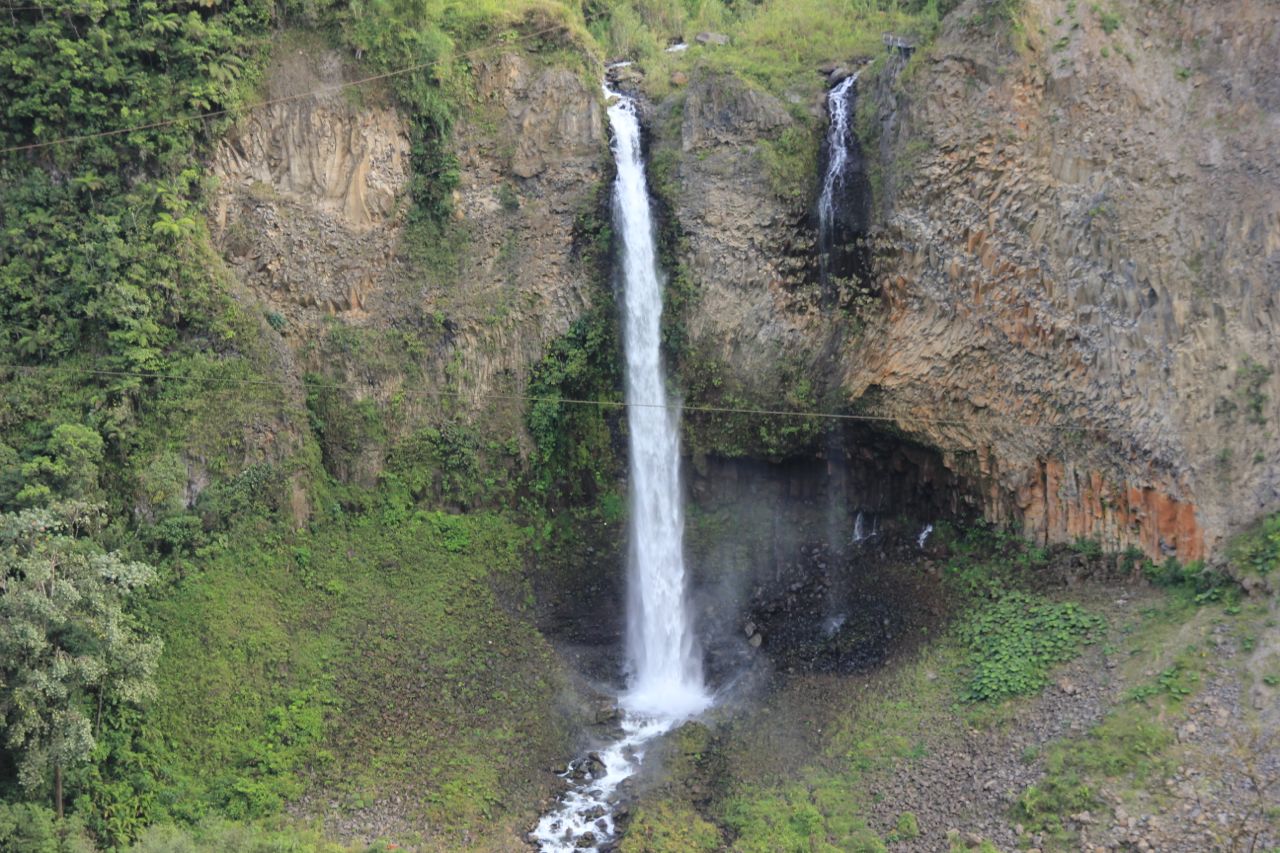
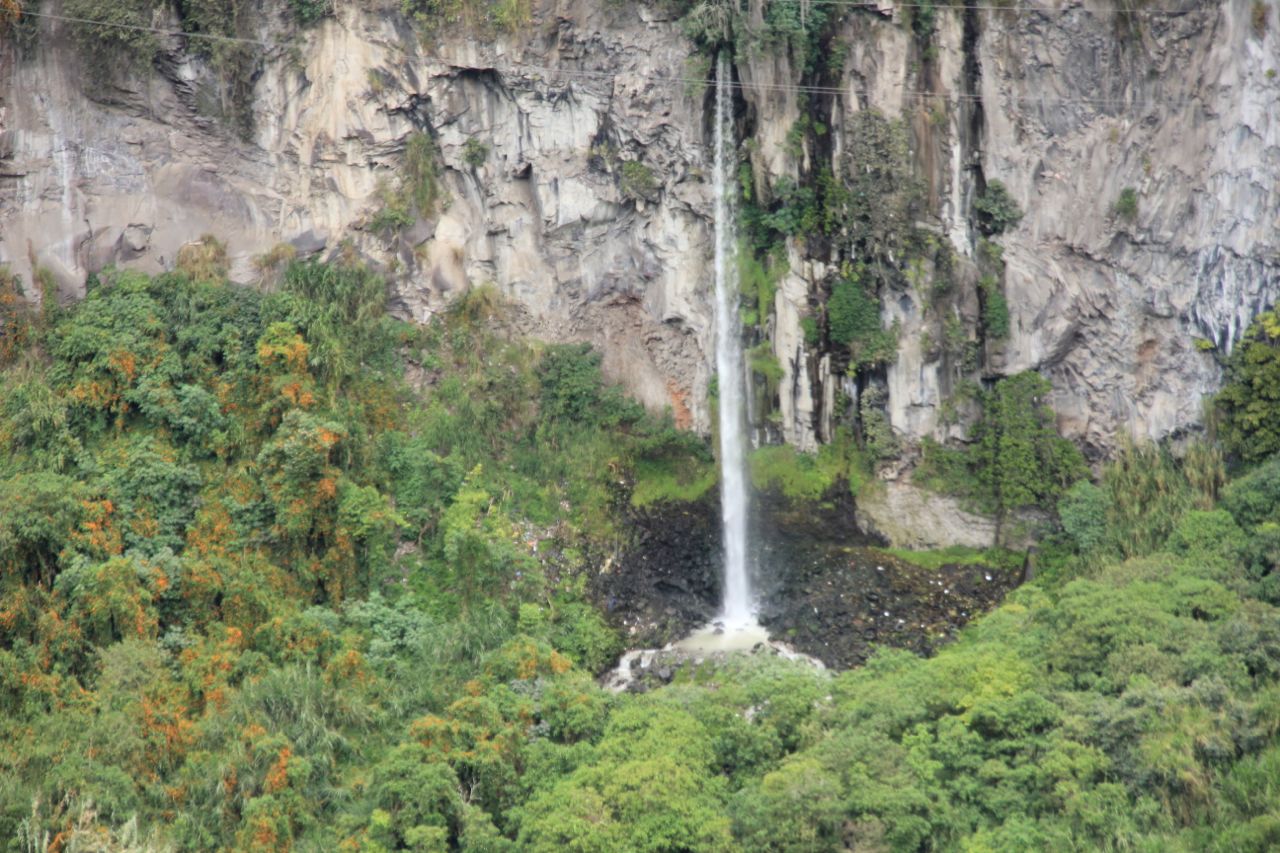
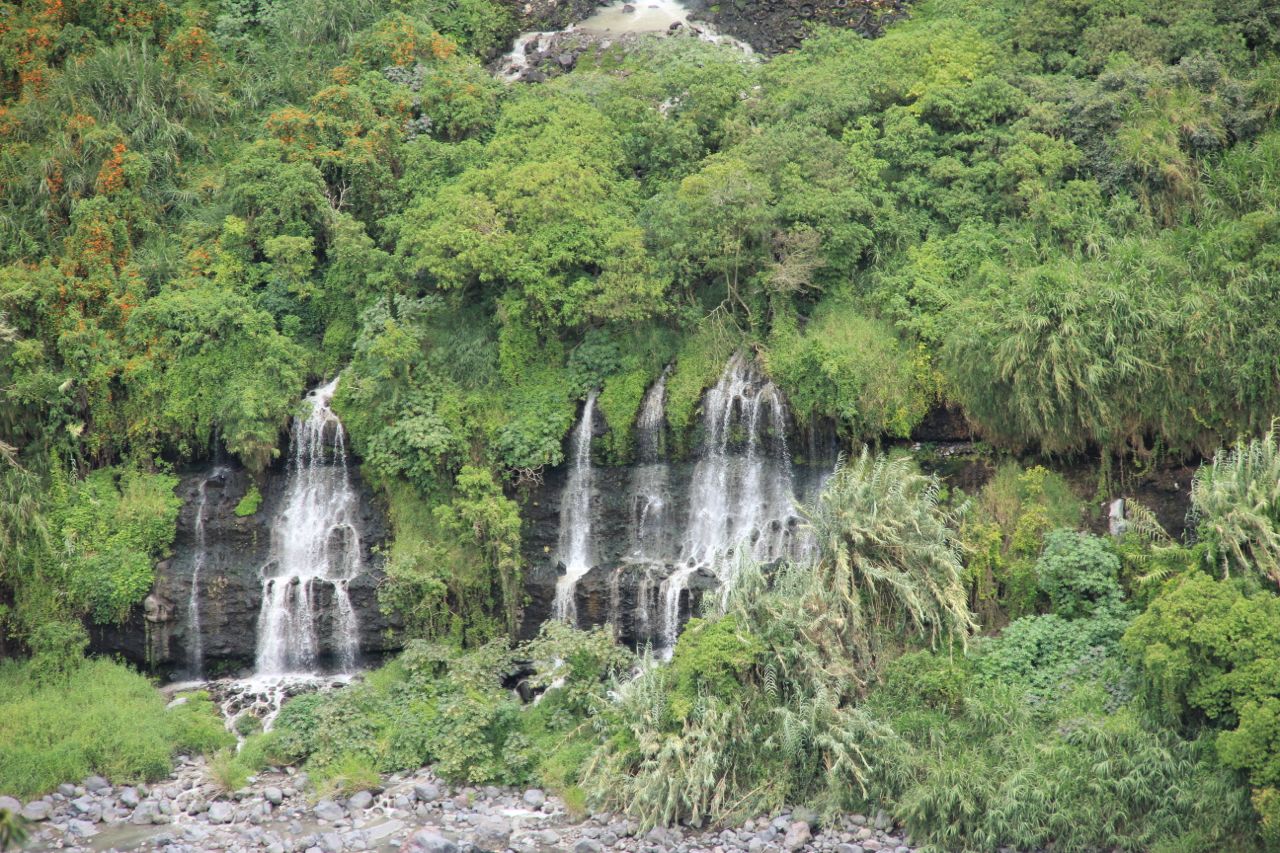
The road leading from Baños to Puyo is called the road of waterfalls. And indeed we saw many of them. The valley in which we drove has the water coming from both sides, creating small and large waterfalls. There are many small cable cars that lead to them, it seems to be a very popular thing here in Ecuador.

Nice waterfall

Nice waterfall

The road to Punyo is called the road of waterfalls for a reason

The road to Puyo is called the road of waterfalls for a reason

IMG_0557 copy

With every km the vegation became richer and the air heavier as we are approaching the amazonas low lands of Ecuador. We find a little hotel which we approach over a small bridge which is actually for pedestrians only.

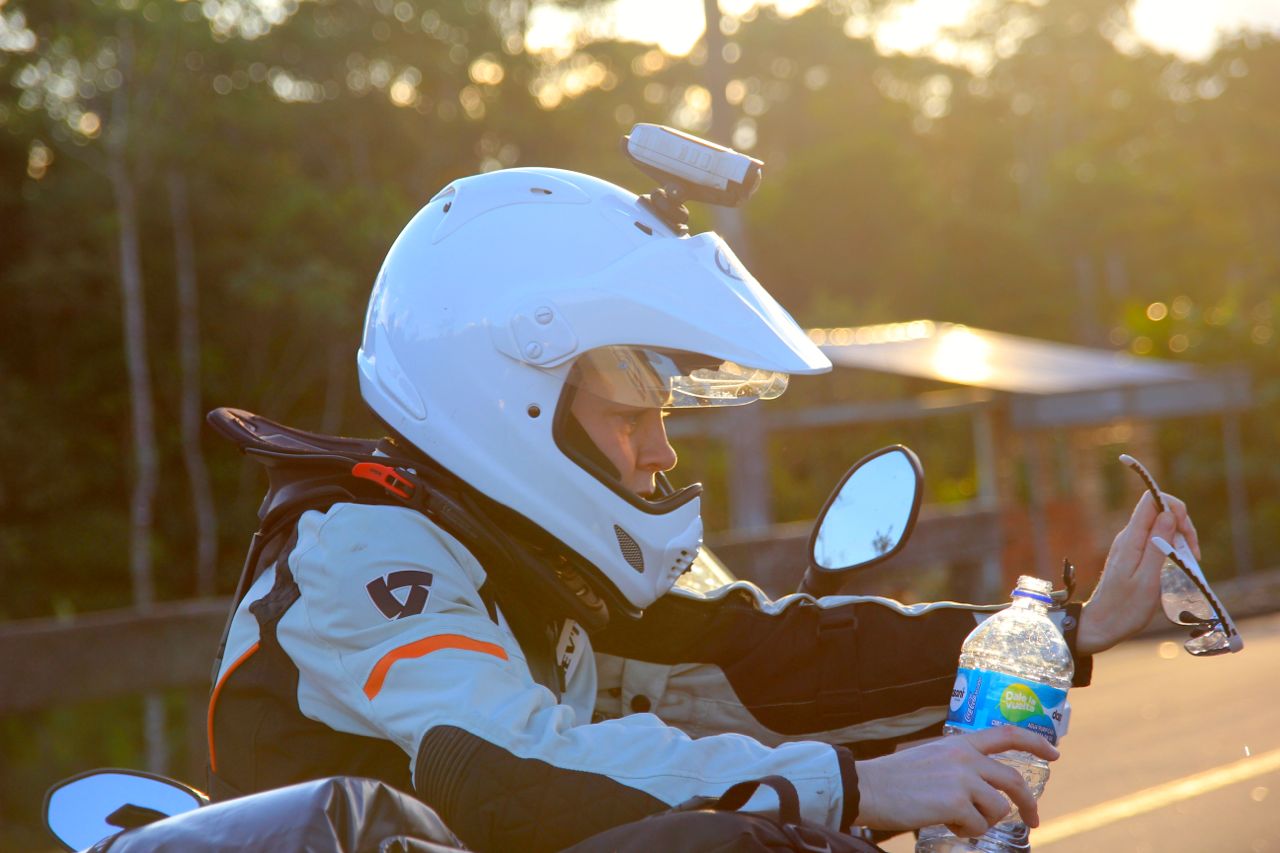
Christy enjoying the view during a break

Christy enjoying the view during a break


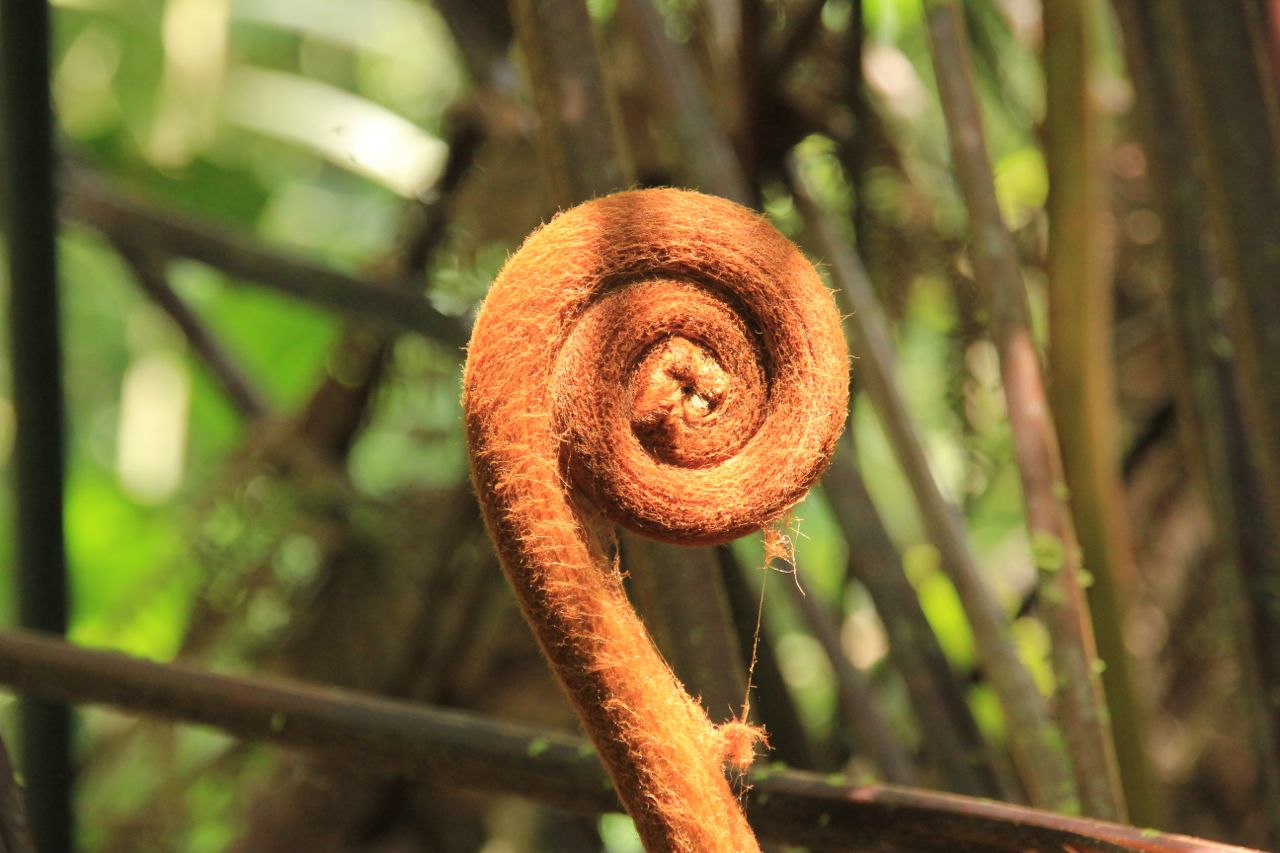
The next day we visit a small park where an amercian married to an indigines women shows the tradional way of living of the indian tribes from the amazon. His wife, born and raised in a tradional way, teached him the medical treatments the indigenes people do with all the different plants. He walked us through the park and explained a lot about the use of the plants and their characteristics, like the walking tree which actually walks up to 3m in a few years to optimize his position to gain more light.

A walking tree

Chris Canaday explaining a walking tree

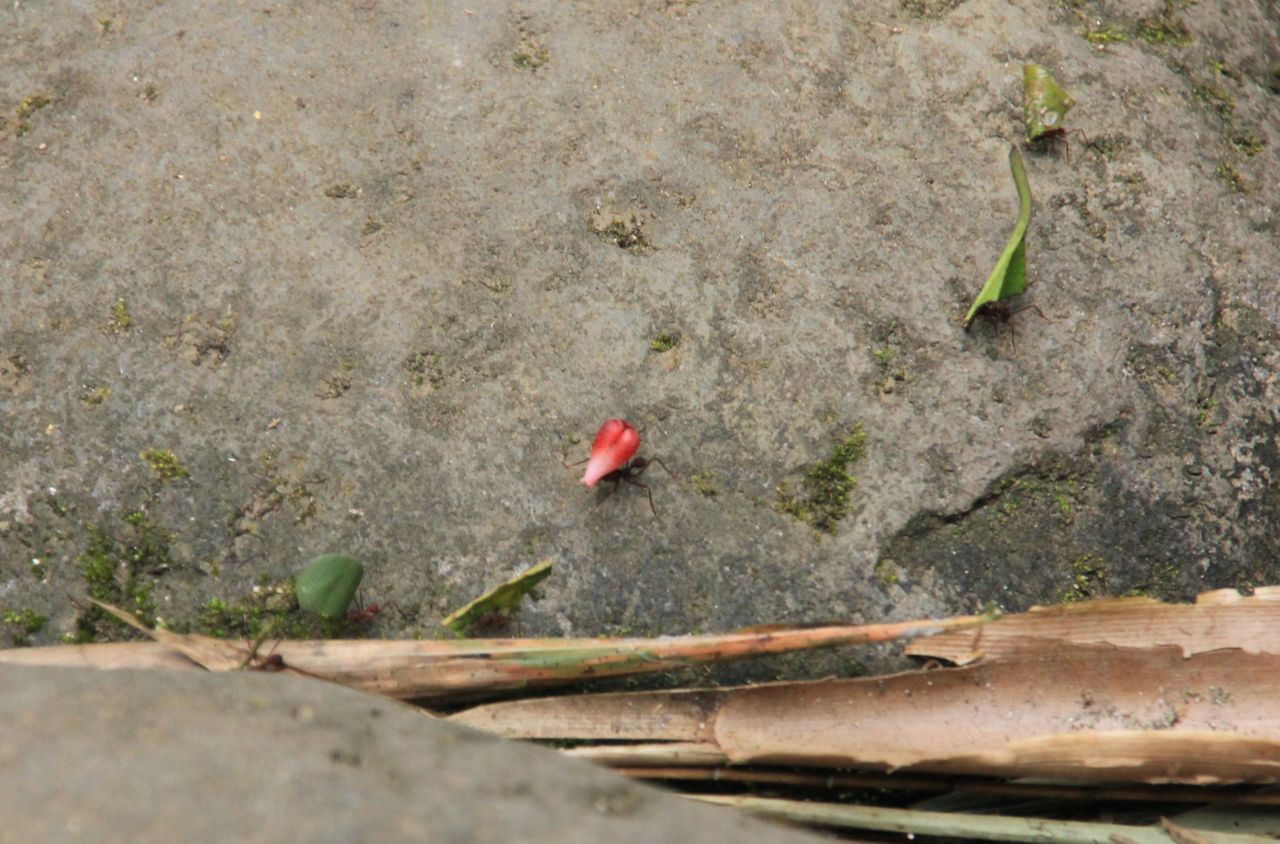
We saw a lot of different small animals, like the bull ant, a giant ant that is quite peaceful but should be avoided due to its quite painful bite. He showed us a street of cutter ants dragging huge pieces of leaves to their home to fertilize a certain mushroom which they eat.

Cutting ants on their little procession

Cutting ants on their little procession

The variety of plants are incredible. And we learned (and already forgot) about the medical use of many of them..

The variety of plants are incredible. And we learned (and already forgot) about the medical use of many of them.

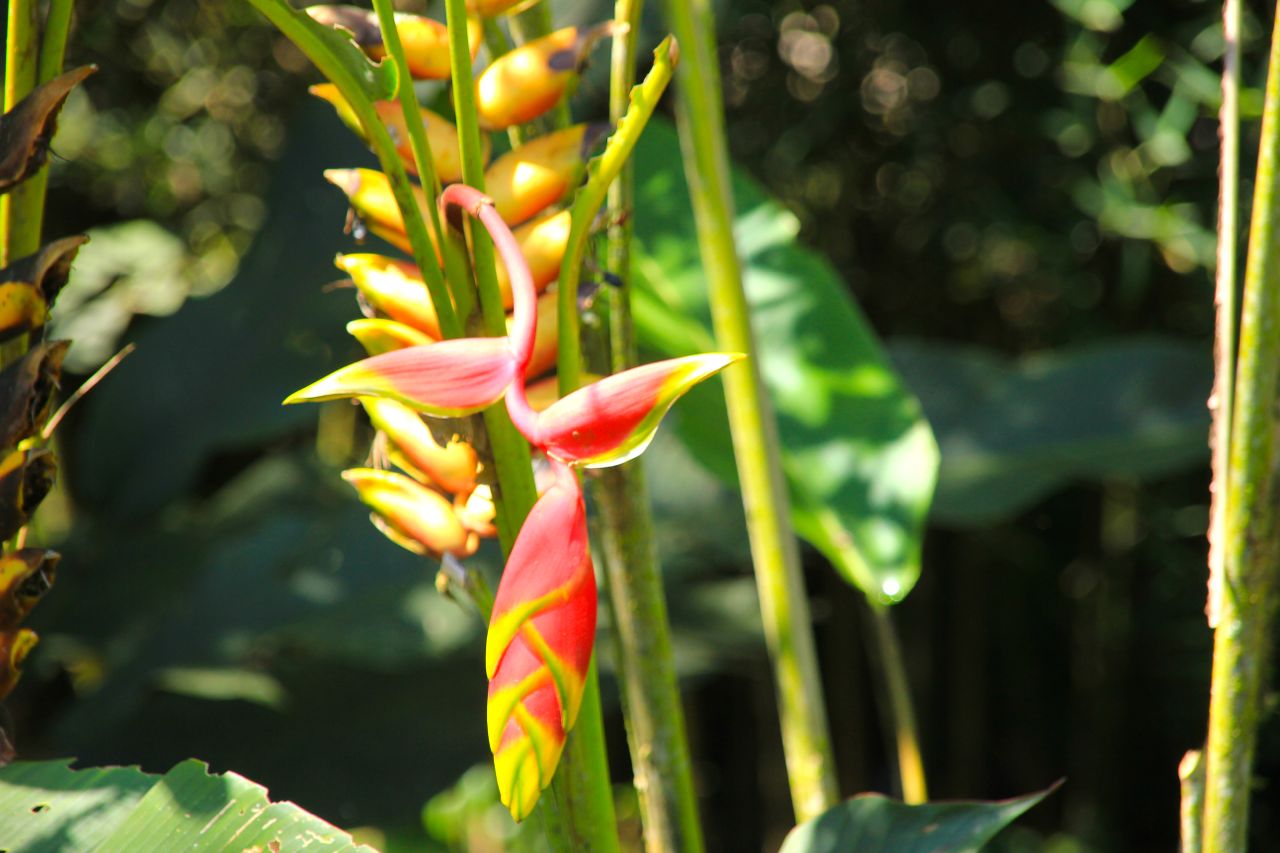
This one is just good for beauty I guess

This one is just good for beauty I guess

It was quite interesting and it was steaming hot when we finally returned to the hotel to pack our bikes.

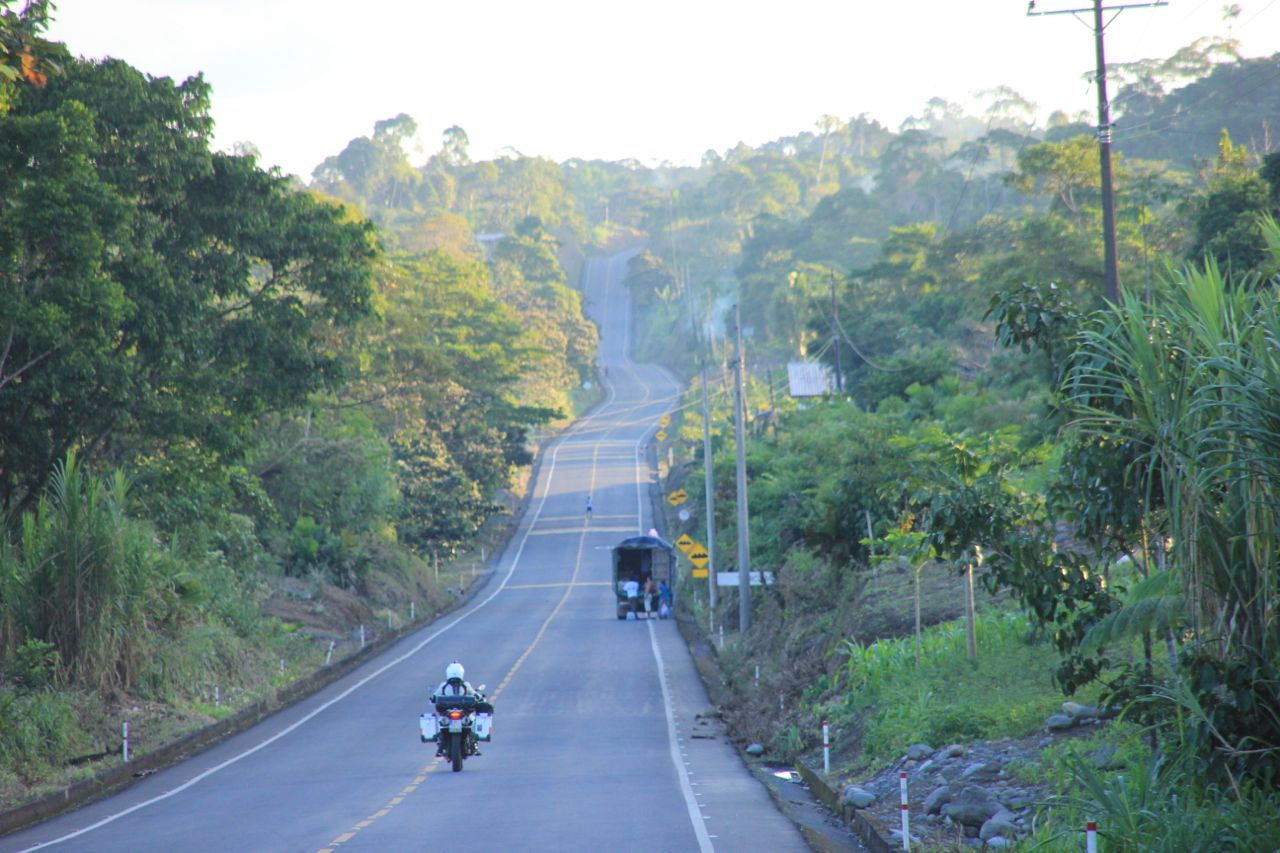
The road to Macas is brand new, as most of the roads in Ecuador. The current president takes a lot of effort to invest into the infrastructure of the country.

On the road to Macas

On the road to Macas

Left and right of the road the jungle spreads, on the right side bordered by the mountains on the left side spreading endlessly to the horizon.

Riding was very relaxing.

Riding was very relaxing.

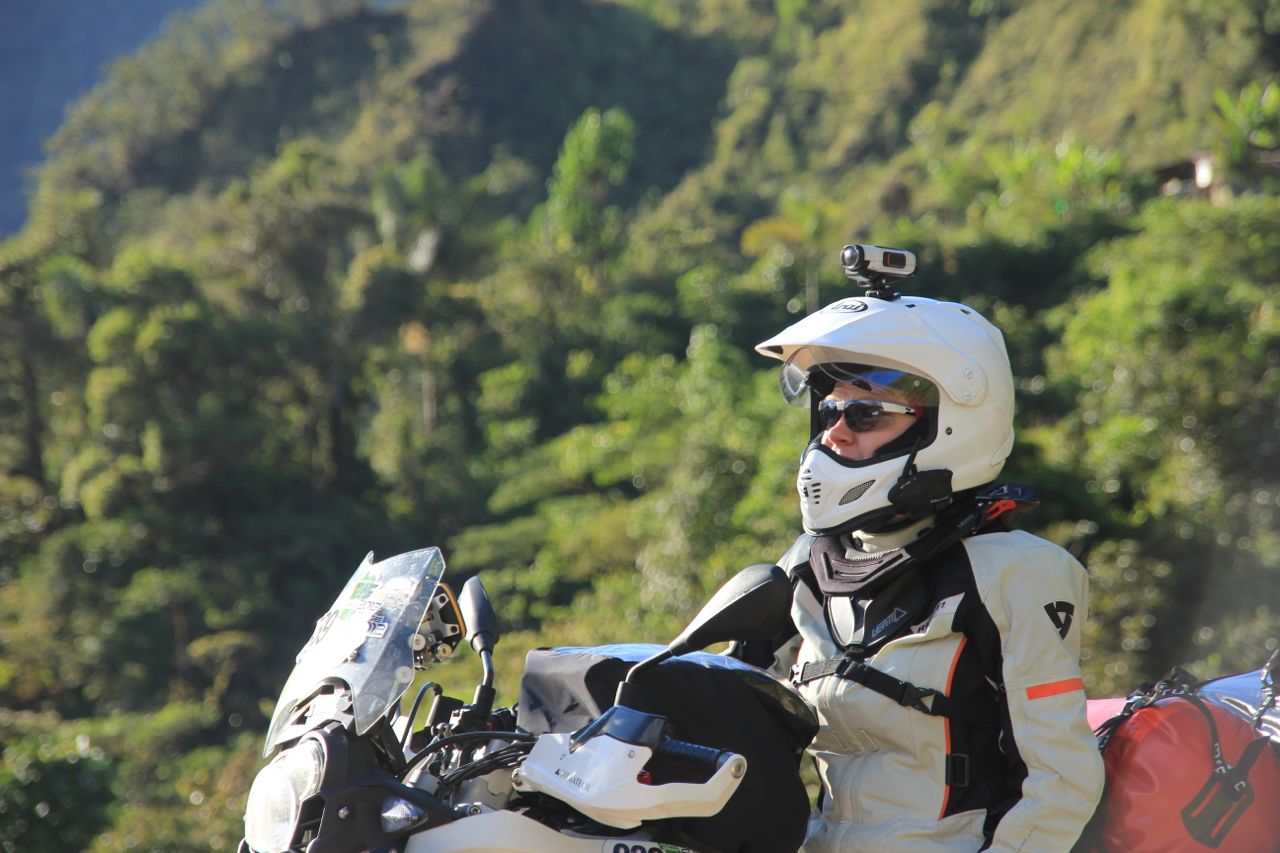
We arrive in Macas after dark. As we stopped to get something to drink, two police officers chat Christy up. They are curios about our travel and help us with the directions of the hotel we want to stay in. That’s how we end up with a police escort through the small town to our little hotel.

Christy started to take over the navigation.

Christy started to take over the navigation.

A giant’s burp

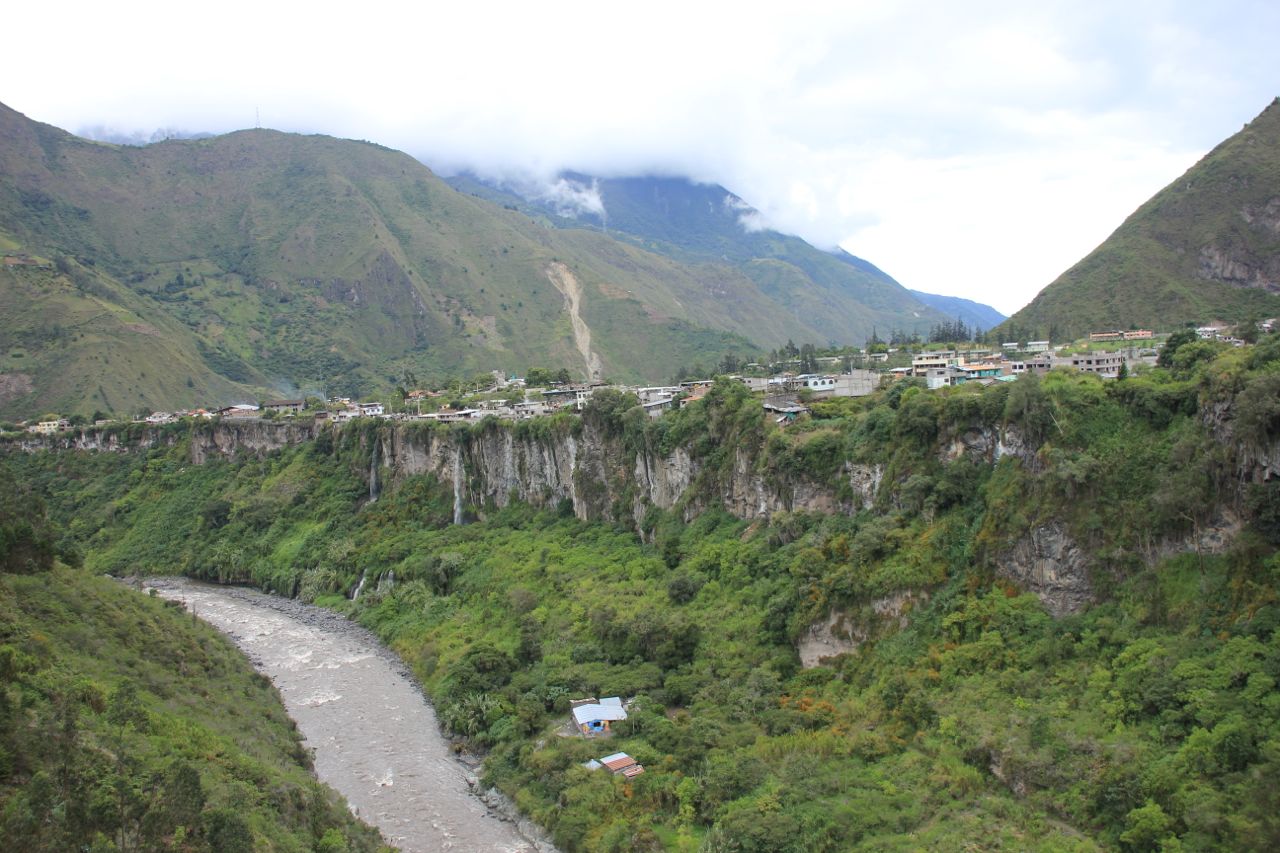
Baños is a very touristy little town with lots of outdoors activities going on. The climate is very nice, around 25 degrees, not humid, just nice and friendly. We had a little break there, taking care of our blog, did some laundry, reading and took half a day of Spanish lessons.

View on Banos

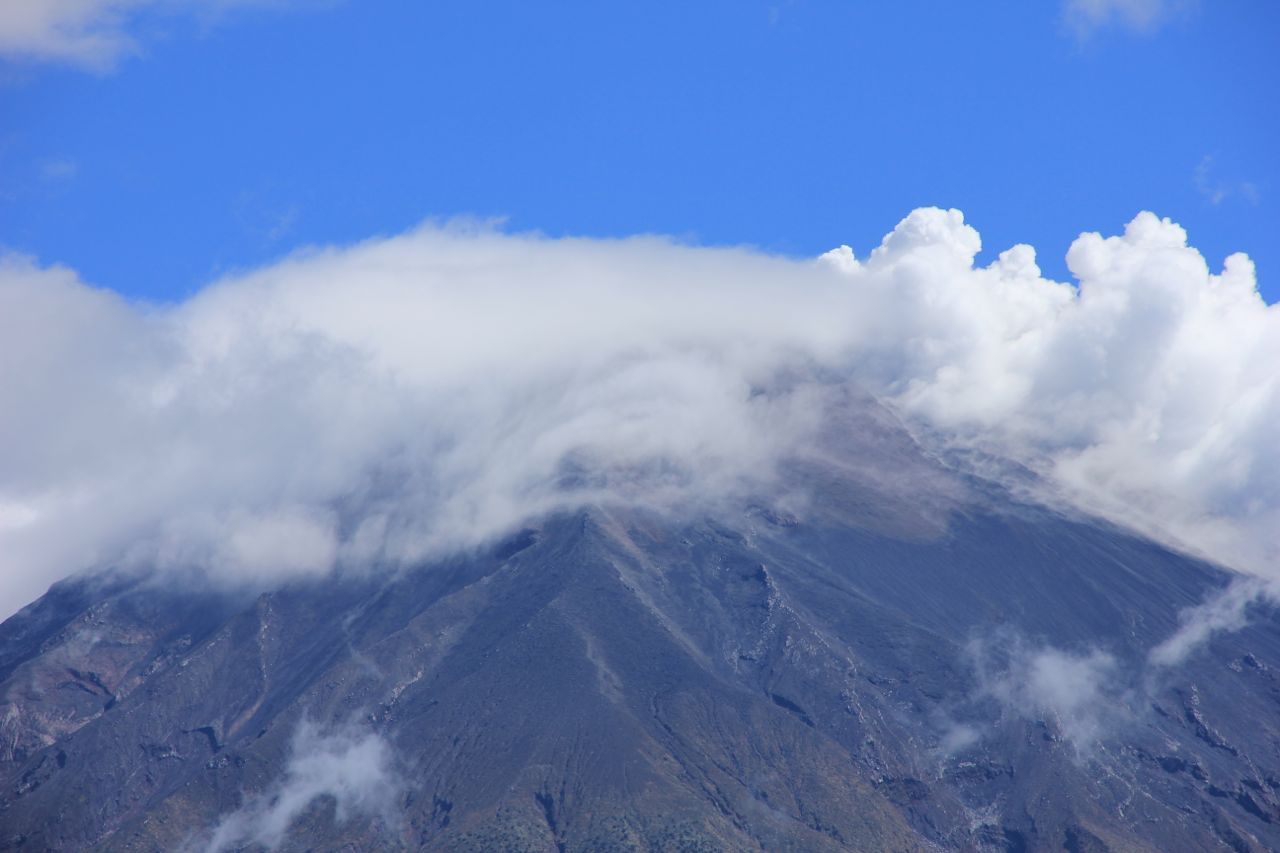
The town is situated directly underneath the Tungurahua volcano, which is not only active, but erupting momentarily. Just a few weeks ago a couple of explosions combined with lava flow and hot ashes floating down to the valley scared the inhabitants of Baños.

The danger is very present. Everywhere within the city there are emergency signs, showing the directions to the evacuation routes. In case of a larger eruption the population is meant to leave the valley on the opposite side of the volcano.

View on Banos

View of Baños

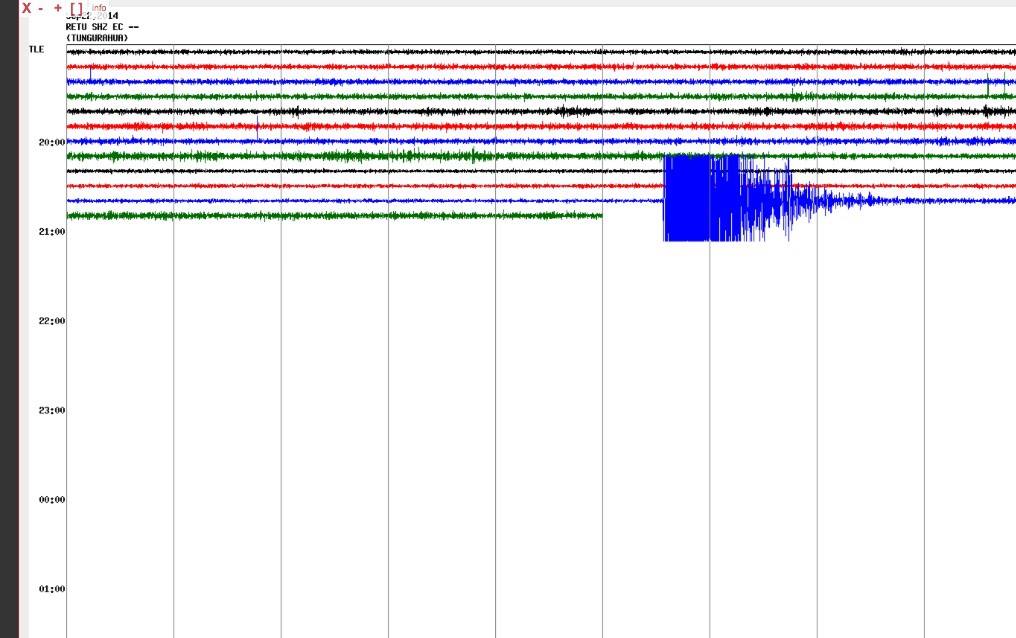
As we were sitting in our room one evening, suddenly a loud noise made us jump to our feed. The whole ground shook. We nervously looked at each other having both the possibility of a large eruption in mind.

After a few seconds the whole thing was over. We opened the window to hear whether there would be any sirens. We stood there at the window a few minutes, but beside the usual barking of the neighborhood dogs there was nothing to hear. So we decided that this was not that bad after all. We looked up the volcano in Google whether we could see some information, and indeed there was some sort of explosion at the Tungurahua that was shown on some seismographic measurement stations around. But in comparison to what the graph looks like on a “real” eruption it was clear this was only a small burp of this giant.

The little "burp"visible on the live measurement data

The little “burp” visible on the live measurement data

thats how it looks when it you should get ready to run (recorded August this year)

thats how it looks when it you should get ready to run (recorded August this year)

The Tungurahua volcano

The Tungurahua volcano


The volcano is momentarily erupting

The volcano is momentarily erupting

There are several viewpoints on the volcano, but since it was cloudy most of the days we didn’t go there. On the day of our departure from Baños we drove up the mountain opposite of the volcano to have a view. It was still in clouds, but as we were sitting up there the sky cleared up and we had a wonderful view on the Tungurahua.

The road to Quilotoa Crater

One of the places we wanted to see is the Quilotoa crater. The crater is filled with water, creating a great lake with steep walls that made the Incas believe the lake had no ground.

As so often the ride to Quilotoa crater proofed that motorbiking is more about the roads you ride on than the destinies you are actually going to.

Right after Latacunga the road led up the mountain in steep curves, offering a beautiful view into the valley and the momentarily erupting volcano of Tungurahua. We turned into a dirt road to get away from the main street for a short break. In the distance we could see a shepherd guarding his sheep and slowly moving from one place to the next, taking a short nap every time he moved himself for 100m.

Getting off the road for a little break

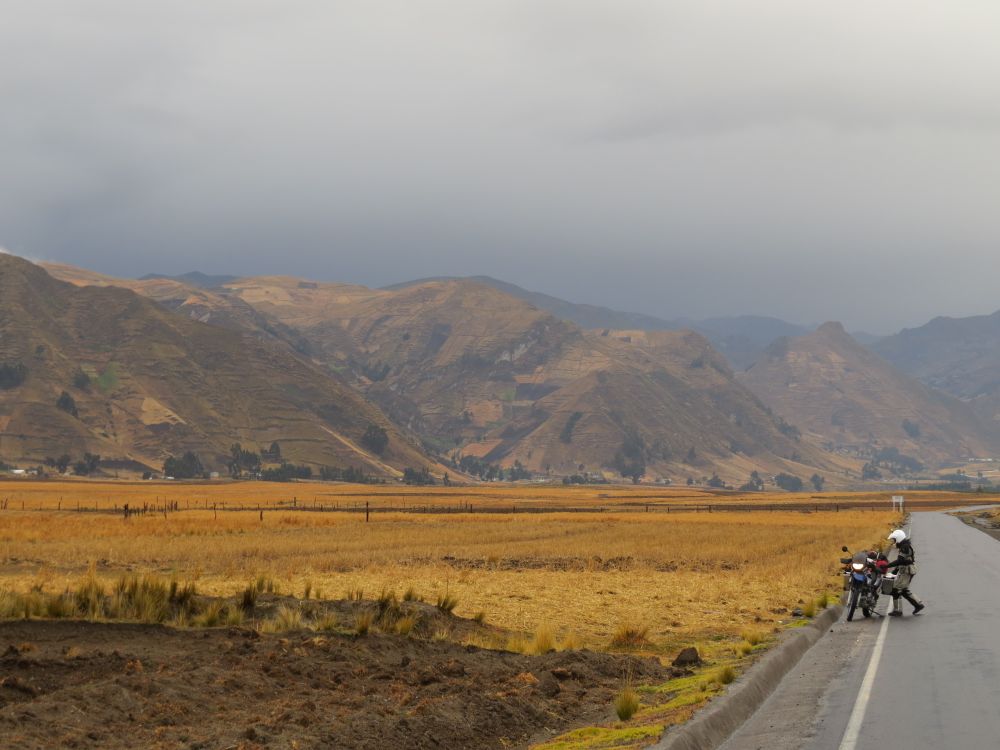
The road kept curling through the mountains, which got steeper and rockier. Dark clouds moved in and we realized we would end up in the middle of a thunderstorm. We looked for a shelter and found it underneath the roof of a gas station where we waited for the rain to stop. The rain has cleaned the air, everything smelled fresh when we continued. The landscape became wilder and it seemed the rain has intensified the colors of the surroundings. Steep mountain slopes with fields, which seemed to be hanging vertically on the side of the mountains. Everything is painted in different shades of brown and ocher. We rode into a broad valley on a winding road.

Suddenly a canyon opemsto our ride side

Suddenly a canyon opens to our ride side

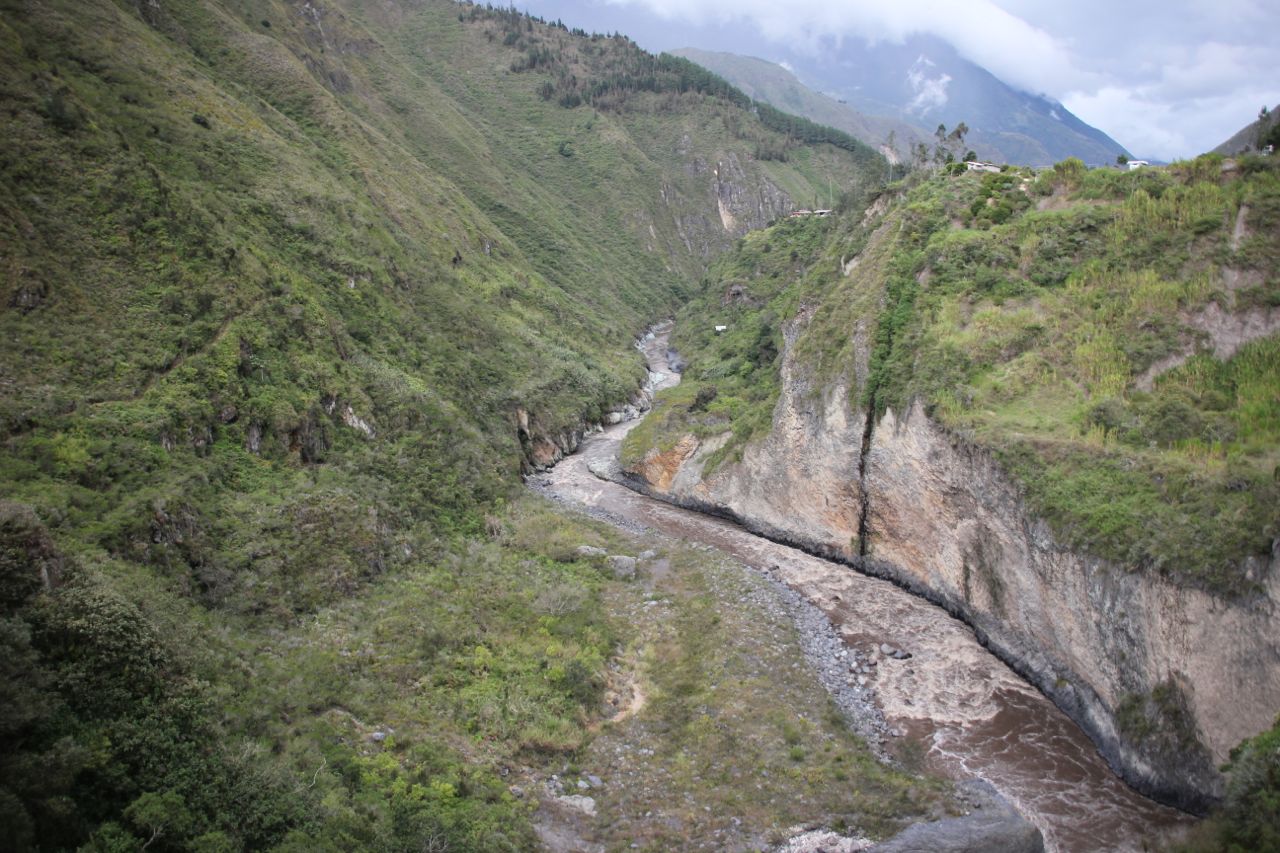
Suddenly a steep canyon opens to our ride hand side. Vertical walls lead down to a wild river in the bottom of the canyon. It is a landscape like from a fantasy movie. Christy said it wouldn’t surprise her if she saw a dragon sitting next to the road somewhere. The dark clouds and the sun shining in between them, the intensive colors, all which created an out-of-this-world atmosphere.

After the thunderstorm on the way to Quilotoa

After the thunderstorm on the way to Quilotoa

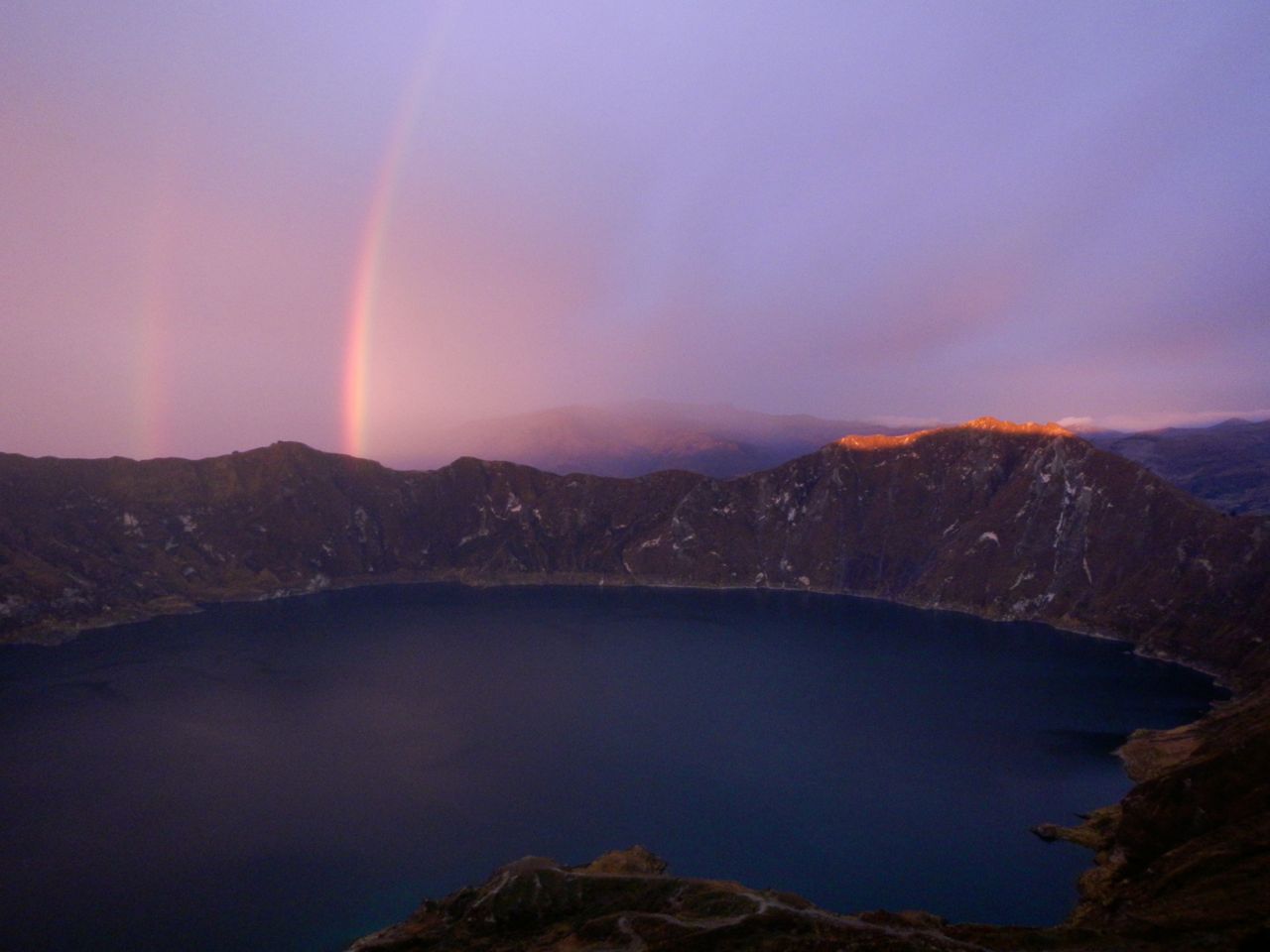
We arrived at the Quilotoa crater just a few minutes before sunset, surrounded by clouds. Just as we approached the crater by foot, the clouds opened a little gap. The sun was shining right through that gap illuminating the tips of the crater and creating a fantastic double rainbow over the crater lake. It was more than beautiful. It was beyond kitsch. It was one of the most amazing views I have ever seen.

As the sun sets very quickly here so close to the equator, the whole scene only lasted a few moments before it got pitch-black.

Sunset at Quilotoa crater lake

Sunset at Quilotoa crater lake

Sunset at Quiltoa lakd

Sunset at Quiltoa lake

The next day we went back to the panamericana using another road that brought us back close to the Cotopaxi NP where we have been before.

Again we had fantastic views, another thunderstorm some dirt roads and Christy had her first little fall. Harmless and pretty unavoidable with her broad front tire and the very soft and slippery ground in a construction site of the road.

Some short dirt track sections

Some short dirt track sections

Soon the Quilotoa round will be fully asphalted

Soon the Quilotoa round will be fully asphalted

On the way back from Quilotoa

On the way back from Quilotoa

Winding roads all day long

Winding roads all day long

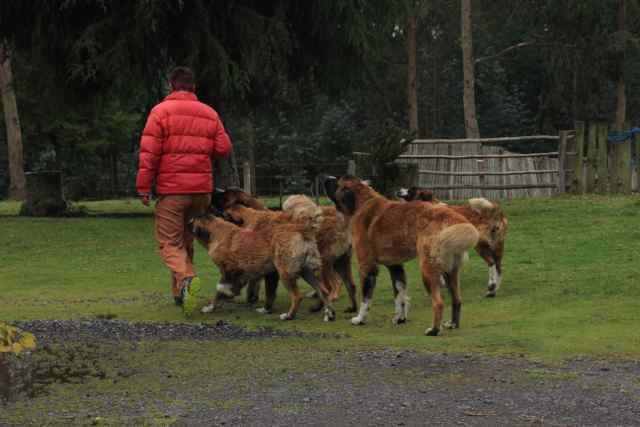
We ended up in a nice hostel, close to the Cotopaxi NP. A Swiss owned place with 5 huge Saint Bernard dogs that protect the place. It was quite a sight when I pulled up the place, stopping the engine and one, then two..three..finally 5 huge dogs approached and stared at me. I stood there for a moment not knowing what to do. I was afraid if I would get off the bike the calm dogs would suddenly turn into an aggressive pack of killerbeasts.

The swiss owner and his bernards

The swiss owner and his bernards

But another look at their sad and friendly eyes convinced me of their friendliness, which they immediately proved by cuddling up with me, once I got off the bike.

Dinner next to a fireplace made this day perfect.