Lakes and volcanoes

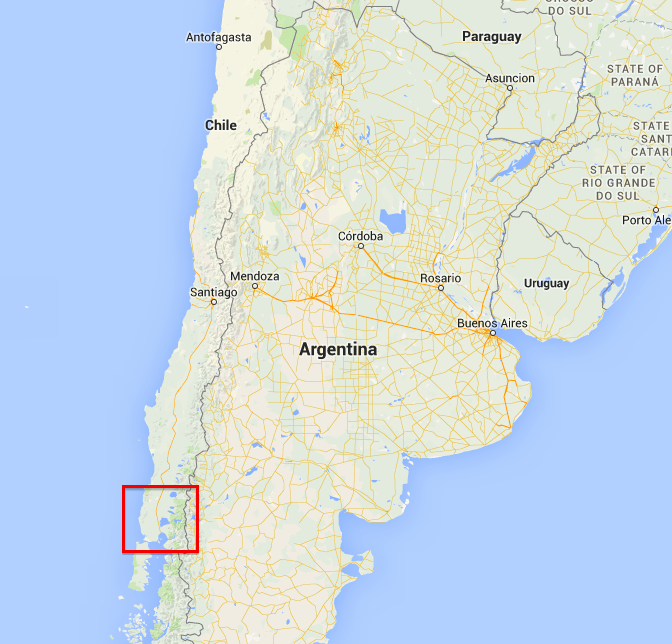
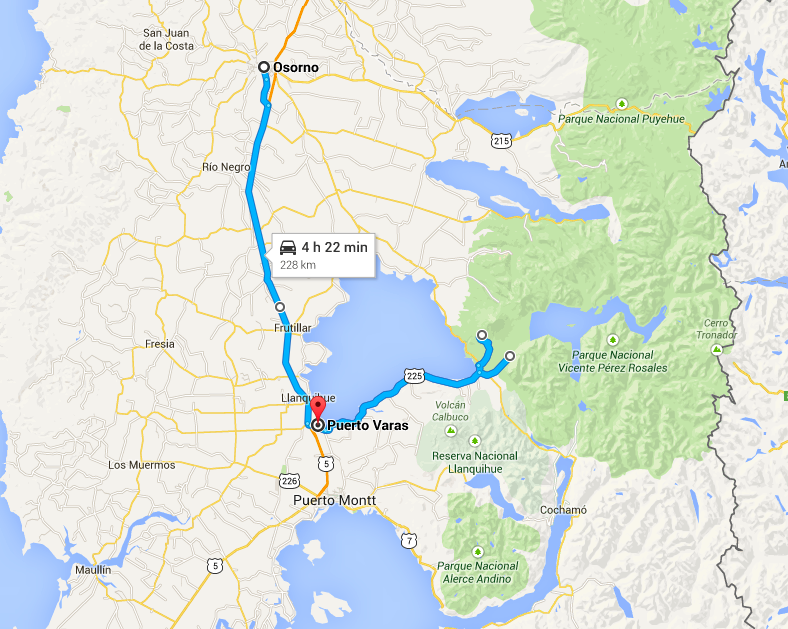
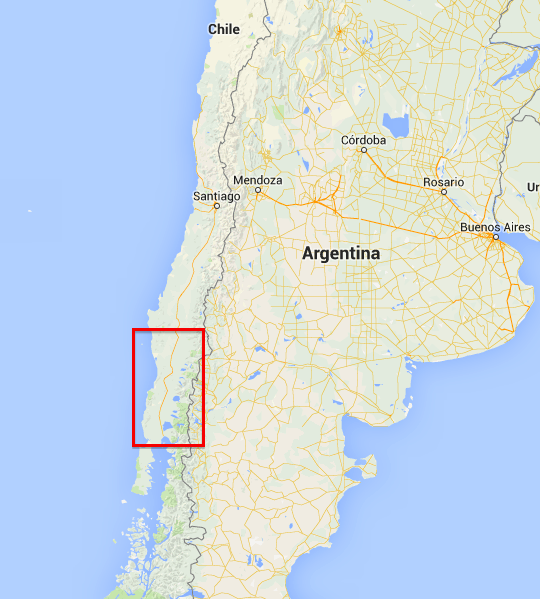
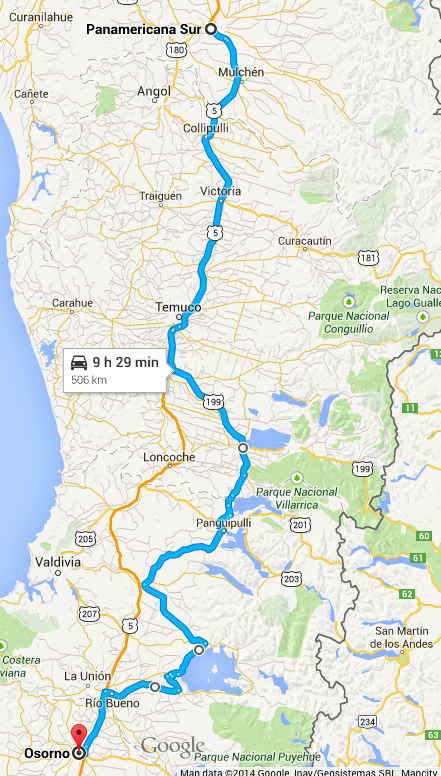
Osorno – Puerto Varas

Screen Shot 2014-12-23 at 13.40.47 Screen Shot 2014-12-23 at 13.39.29

Osorno is not a very pleasant town. We only stayed here to get new tires and to get our steering fixed. Motoaventura is a BMW dealer and rents motorbikes as well. They had the spare parts ready, the tires we wanted on stock and they made a good and quick job.

We waited a few hours till everything was done, but the time flew by as a lot of other travellers (most from Argentina) stopped by and so we had a great time there. We were served coffee as well and had a fantastic lunch on a restaurant nearby.


We were glad that we did not have to stay another night though as the town has nothing to offer and so we continued to the Lago Llangquihue which is close by. The lake is incredible. It is pretty big and a fantastic snow covered volcano is towering on its eastern side. This whole region has been settled by Germans and they keep their traditions. So you find Bavarian restaurants, coffee shops offering “kuchen”, and a lot of names are German. We had a short stop in the town of Frutillar for a coffee in a theatre built directly at the water. It is a great building and it seems to be a fantastic theatre, offering room for 1600 people. We wondered how this little village would look like when 1600 people arrive there for the evening event.

The town of Puerto Varas has a fantastic view on the volcano as well. We stayed there and made a daytrip to the volcano and some neat waterfalls nearby.

We took advantage of the German influence and enjoyed an “Erdinger Weissbier” in the evening.

Big fat cows on green meadows

Salto de Laja – Villarica-Osorno

Screen Shot 2014-12-21 at 22.36.37 Screen Shot 2014-12-21 at 22.45.53

Just a week ago we had passed the Atacama desert, on of the driest areas on this planet. And now this: all shades of green. Big trees, high grass, thick bushes.

And all among it: cows. Lots of them. Big fat cows. And sheep.

This is cow paradise. We drove along a nice road, the sun was shining, it was warm, almost hot.

The road passes fantastic lakes with high snow covered mountains sorrounding it. This looks like picture book Switzerland except you won’t find a perferctly shaped volcano there.

We rode the bikes along the shores of Lago Villarica and Lago Ronco. The lake district of Chile is a fantastic area. And after all the desert that we have seen on our trip this is exactly what we our souls were thirsting for: lots of green and lots of water. We had sunshine all these days as well and the roads were in perfect condition. And so Christy came to the conclusion that if you could ride a bike in heaven, it would be just like here.

Waterfalls

NP 7 tazas – Salto del Laja

We arrived at a very nice campsite just outside the NP “Siete tazas”. The name translates as “seven cups” describing the river as it falls in several spectacular waterfalls into little bowls that the river had carved out of the hard rock here.

We camped and had a nice evening with 2 guys from Israel before we took our bike to the entry of the national park. A little hike brought us to a canyon. A small trail led through a colorful forest and down the canyon, offering fantastic views on the waterfalls.

We continued south and after a stretch on the PanAm we found a nice hotel close to another great waterfall, the “Salto de Laja”. Our hotel happened to be right at the edge of one side of the waterfall and we had a view on it directly from our room.

The next day we wanted to have a better look at it.

It was closed though. As we approached the gates we could see a lot of people with tired and sad expressions. A police officer stood in the entrance of a little path that led to the waterfalls. A rescue vehicle stood aside.

A little girl of 13 years age fell into the water underneath the waterfall and had been pulled into a powerful undertow the day before. She was still trapped there and we could hardly imagine what the poor parents went through, sitting there and waiting for the officials and rescuer to bring them the body of their daughter.

We felt very bad, standing there with our cameras, excited tourists that hoped to see a great natural site… and there the poor family going through the most unimaginable pain.

We turned our bikes around and left.

It was a quite ride and we both wished the best for the poor family.

Fruits, vineyards and a nail

Valparaiso to Santa Cruz

We left Valparaiso and followed the route “Ruta fruta”, as they call it since all kind of fruits are grown here. Momentarily there is strawberry time. And everywhere they offered big baskets of these bright red fruits. We did not buy any though (I guess we thought we would buy them later till we finally had left the area… a mistake I keep doing repeatedly on my travels).

Instead we got into an area, which was full of vineyards. Grape vines everywhere. It was steaming hot, even though we had been freezing just a few hours before on the coast where the wind blows from the icy cold pacific.

But inland the Heat.Was.On.

It was not far to our destination when we passed this fantastic house in the middle of the vineyards. We stopped and quickly decided to stay here for the night.

The owners grow and sell grapes to the surrounding vineries. We had a fantastic view on the fields. A short swim in the nice little pool cooled us down.

After my swim I realized I had a flat tire. I located a 3cm nail sticking out of my rear tire. I decided that this would be a quick fix and disassembled the rear wheel. But when it came to take the tire off the rim it just wouldn’t work how I expected.

I used all the tricks I knew and had heard of. But it was too tight. Even with the help off the receptionist, a massive 1,5m crow-bar, mother gravity and his weight of approximately-pretty-much we didn’t get the tire off the rim. The whole action was accompanied by a wide variety of German and dialect curses (such as “godverdamminomool”), intranslatable …). But then I was told there is a vulcanizador just around the corner and so I brought the wheel there the next morning and with the right machines it was off in not time. In South America a lot of tires get repaired, other than in Germany. The profession is called vulcanizador, so this was the right guy to go to. He got everything fixed within a few minutes and we were off the road again.

Big waves and into Santiago

NP Pan de Azucar to Santiago

We left the national park Pan de Azucar and continued along the coast for a few kilometers before we got on the PanAm again and just flew down the 4 lane highway with a short stopover in Vallenar, where we found a really nice hotel.

La Serena is a really nice colonian style town and again we found safe parking and a real nice hotel just around the corner of the central plaza where we stayed for the night.

We continued our long stretch of days on the PanAm. Riding was very relaxed. Not too much traffic, the broad lane of the PanAm, an enjoyable landscape. Nothing to get overly excited about, but after all these eventful days in Bolivia we almost enjoyed not to “have to stop and look at something”. We just rode. You can let your mind fly away, think about the journey, about the country, about friends, family or just keep your mind busy by calculating how much time you would need to the next exit/town/gasstation when riding at different speeds (something I did a lot and I can proudly announce that I became the master of “I-will-be-at-the-next-exit-in-X.XX-minutes-at-the-momentary-average-speed-of-Y-km/h-sort-of-calculation”).

After we had enough of long straight roads, we decided to make a little detour via Monte Patria. It turned out to be a pretty road with some lakes, lots of curves and very little traffic.

We did not want to arrive late in Santiago and so we decided to find a place somewhere at the coast for the night.

And we found a pretty one: Pichidangui turned out to be a little village on a fantastic rocky coast. The deep blue ocean breaks its waves powerful on the black rocks of the coast. The setting sun added some warm color to the scene. And the birds contributed their squawking noises to the thundering sound of the breaking waves. It was a mind-blowing scenery.

On the road the day before we had to stop on a construction site. I chatted with the guy standing in his car behind me and he told me his friend owns a hostel where lots of motorbikers go. He marked the position of the hostel in my navigation (Case Matte 33° 26’22” S ;70° 37’43” W). So we looked for the hostel and drove up and down the road in Santiago until a young guy put his head out of the fence and asked if we where looking for a hostel. It turned out to be Christian, the owner. A motorcyclist himself he decided to start this hostel. For whatever reason it does not have a sign outside, but it is a fantastic place. Safe parking, a kitchen for use, a fantastic roof terrace, fast internet… everything we wanted to have.

He made some phone calls for us so we could get our bikes serviced at BMW.

The next two days we walked around the city, had fantastic meals, even a german Weissbier, had our bikes serviced (it turned out though they did not check the bearings on the steering, so we had to get this done a few days later in Osorno; grrrr).

It was a relaxing time there and a little break from all the riding we did in the past week.

Campsite at the beach

San Pedro to NP Pan de Azucar

The copper mine made a great impression on us and so we continued the road to Antofagasta. We crossed the Atacama desert, one of the driest deserts on earth. It wasn’t a very pleasant ride. The landscape became less attractive and everywhere there were little mining cabins and trucks.

Every second car was a red pick-up truck from the national mining company Codelco. A lot of watertrucks passed us on their way to the big mining sites near Calama.

We stayed in a good hotel in Antofagasta and even the car-park there told you that all there is going on in this region is about mining. Beside our motorbikes there were only pick-ups from mining companies.

We continued our way south and the PanAm gets really boring as it gets more inland. Not that the landscape is ugly, but it gets quite repetitive. The only interruption was a sculpture that an artist put up in the desert. The hand of the desert is right next to the PanAm and so we took a short break there in the shadowless boiling heat of the desert.

After 300km of heat and desert the landscape becomes more hilly and nicer. We finally turned off the PanAm to get to the coast to a nice little national park. The NP Pan de Azucar offers a lot of plants (mainly little cactus) that only life in this little area. It is a wonderful landscape as well. The area doesnt get any rain at all. But it gets humid with clouds and fog that rolls in from the coast. We had blue sky and sun all day long, but as we approach the national park the sky gets cloudy. We arrived at the coast on a campsite.

It is a quite little bay with a perfect sand beach, rocks on both ends of the 1km beach.

There are little shelters for cooking set up. All very nicely. We are the only guests. The owners live in a couple of little huts where fishermen have their boats. So we make our dinner and enjoying the beach and the stars all by ourselves. It is beautiful.


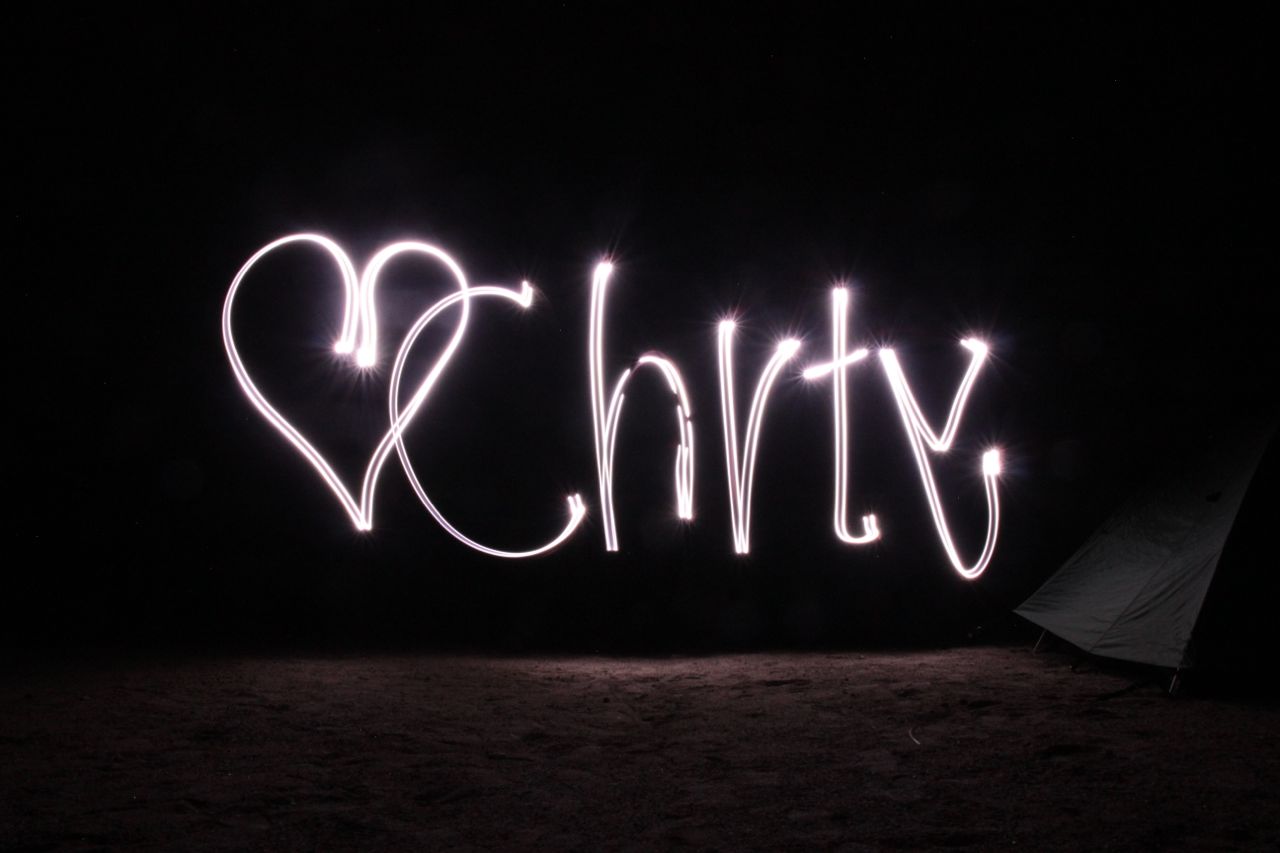
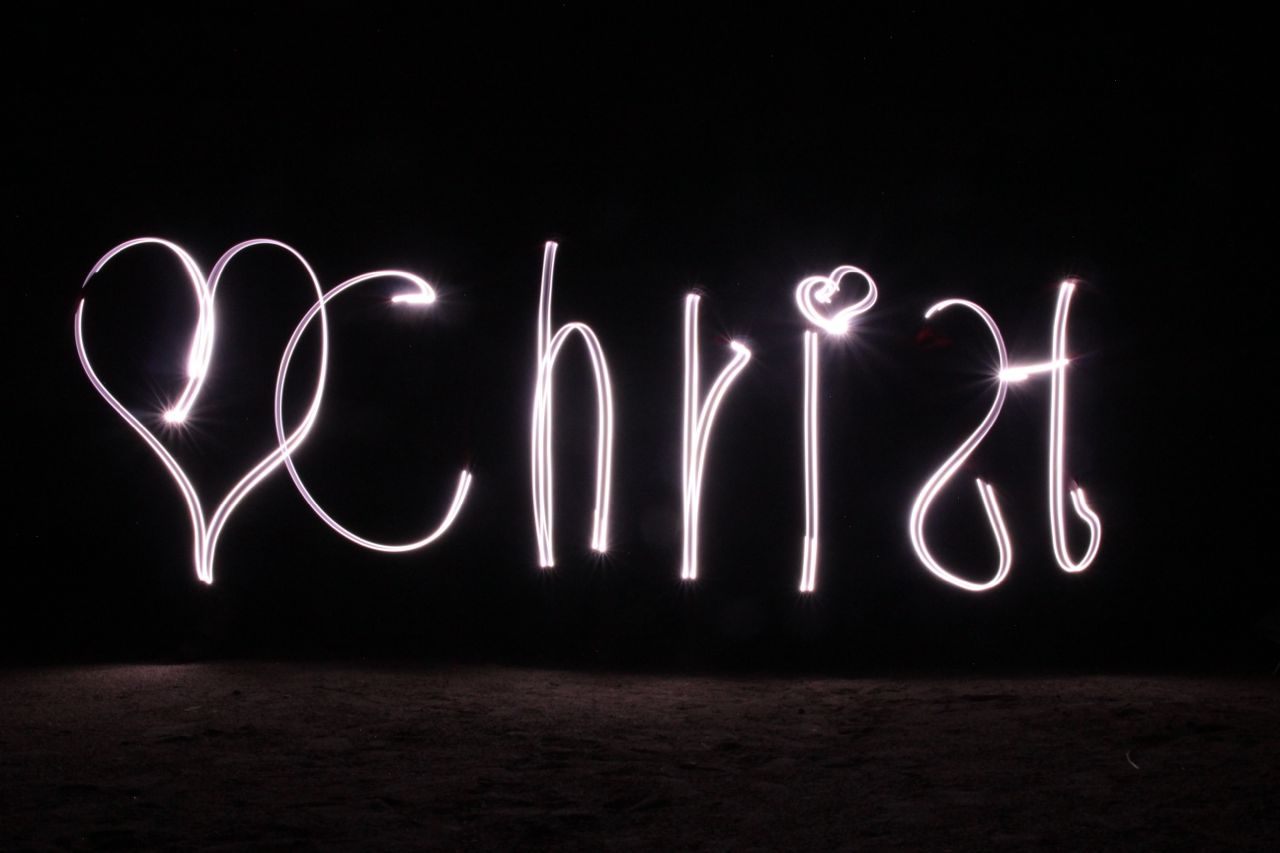
After dark we played around with the camera and Christy wrote my name with her flashlight really nicely. She had to write in reverse and it turned out she is a natural talent to as it is not as easy.

Chisties first attempt. Pretty neat.

Chisties first attempt. Pretty neat.

My attempts were less flattering. These are my best tries (out of many, many, many).

That went well... oh there is a letter missing...

That went well… oh there is a letter missing…

.... and another one missing

…. and another one missing, and why can’t I get the Y right?

....almost...

….almost…

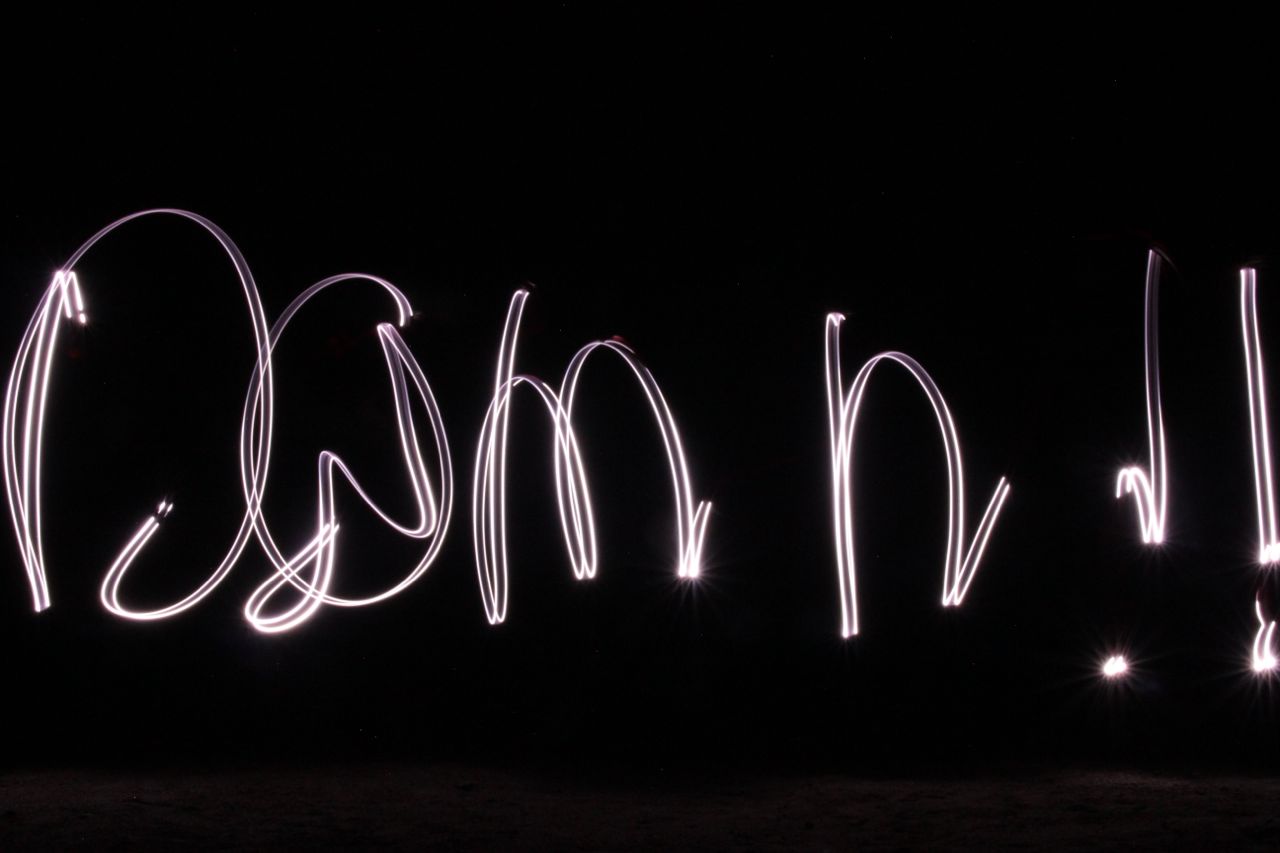
After many other triesI finally gave up and just gave her a kiss instead.

"Damn" I gave up

“Damn” I gave up

Them thar hills

It’s certainly not the most romantic destination, but when we decided on Chile instead of Argentina upon leaving Bolivia, I knew just where I wanted to go — Chuquicamata! It’s not everyday that you can just stop by one of the biggest open pit mines in the world. It’s not on the list of UNESCO’s World Heritage Sites, but this active mine is a testament to human ingenuity and development.

The volcanic veins of magma which have formed these hills of the Atacama contain copper. American mining companies discovered this here over a hundred years ago. Since then, operations were transferred to the Chilean State, but the mining hasn’t slowed down a bit. Today, a third of Chile’s economy depends on copper.

Mining is a fascinating and somehow horrifying industry. This is a place of absolute superlatives. Trucks larger than in your wildest dreams, moving weights unimaginable to get at a precious metal. Well, in the case of copper not technically precious. This base mental has a current spot per pound of just under US$3. In it’s path, mining leaves behind huge waste and destruction. But we all want our stuff… Christmas lights, phone cords, electronics of all sorts, including whatever device you’re using to read this blog, contains some copper.

Environmentally, the place is a nightmare. A mere one percent of the rock they extract here is actually copper. Some additional gases and minerals are yielded in processing and we were credibly assured that nothing which can be sold goes to waste. The guide admits they haven’t really found a good solution for the dust which results after the rocks are pulverized, and water is a real issue.

Situated in one of the driest deserts in the world, the Atacama, water is a serious problem. Massive amounts are needed to process copper. On the tour, our guide told us that a new law was passed that only allows mines to use sea water for processing (background). Water trucks are everywhere along the highway (don’t even begin to think about the carbon footprint the exhaust of all this is causing…).

They are working to find better solutions, but it seems the mining brings as many challenges as it does solutions. (Interesting article.)

In Chuquicamata, they have set a target to move operations underground to exploit the new finds located below the current pit. The massive trucks will stop burning their diesel at three gallons a minute, and instead conveyors will lift the rocks to the top.

Nevermind the fascinating eyesore the mine creates. Deserts are wonderful, magical places, but this area isn’t particularly beautiful. It’s hot, dry and I imagine if weren’t for the mine, nobody would want to live here. The sandy landscapes we drove through past Calama were mostly interesting because of the mining activity.

Copper

Calama – Chile

I remember seeing a picture of that monster the first time.

And now it is crawling up the hill right in front of me. Slow. Roaring. Heavy.

The truck carries 400t of rock. It is an incredible sight. It slowly passes us on its way out of the mine. After it passed us all you see from behind is 4 gigantic wheels. They are more than 4m in diameter. 40.000$ worth each. And they only last 8 months.

I turn around to have another look into the mine. It is mindblowing. More than 1000m deep. 5km long. 3km wide. It is a day of unbelievable numbers. It is a place of superlatives.

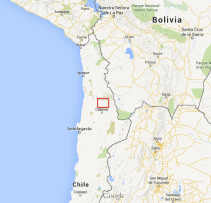
We are visiting Chuquicamata, the largest copper mine in the world.
Screen Shot 2014-11-30 at 10.47.19

Almost 100 years ago they started this mine. Not knowing how big the place would become. In the meantime they started 2 other mines, digging in the same geological site. They dig for copper here, and for Molybdenum.

Only one percent of the rock is copper and they have exported more than a million tons of copper last year. Easy to understand how much earth had to been moved for that.

Now the mine is slowly getting to its end and so the output has lowered to about half this year. But they have found more copper. Another 1000m deeper. They will change this now to a subterranean mine in the future. This will also reduce the impact on the environment. The huge hole in the surface is only the most visible impact. The dust, dirt and not least the exhausts contribute to a pretty bad impact the mine has on the environment. Each truck consumes more than 3L/min. They have 100 trucks moving around the clock; they soon will be replaced by conveyer belts.

The trucks are impressive. These are the largest truck that have ever been built. Everything on them is on an almost ridiculous scale. They are more than 8m wide. The tires are just incredible. And they move, slow but constant. The huge caterpillars use only 3 shovels to fill them. So they stand less than 30 seconds to get filled. There is a lane down and one up, so it is a constant movement of huge piles of rocks.

We made a short stopover at the mine. And it is a very exciting time we spend there. These are machines like from another world. Everything is big here. The huge pick-up trucks look like small toys next to the lorries.

And it is big business here. Before Salvador Allende took over the government, this was a big North American business. Ever since the mining is governmental owned. Making 1/3rd of the annual governmental income of Chile.

Hugely depending on the copper price of course.

And so every new source is welcome. A new mine has been started just last year, offering resources of copper for another 50 years. In order to get to these sources, parts the old town of Chuquicamate has been buried under a huge pile of rocks. Even a complete clinic (one of the most modern of the country) is covered by hundreds of meters of rocks.

The rest of the town can be visited. It is a well conserved ghost town. Our guide has studied here. “Lots of good memories” he said, when talking about the stadium of the high school. He tries to smile while he says it.