Fjords, ferries and dead trees

Puerto Varas – Hornopiren -Chaiten

Screen Shot 2014-12-29 at 11.50.44

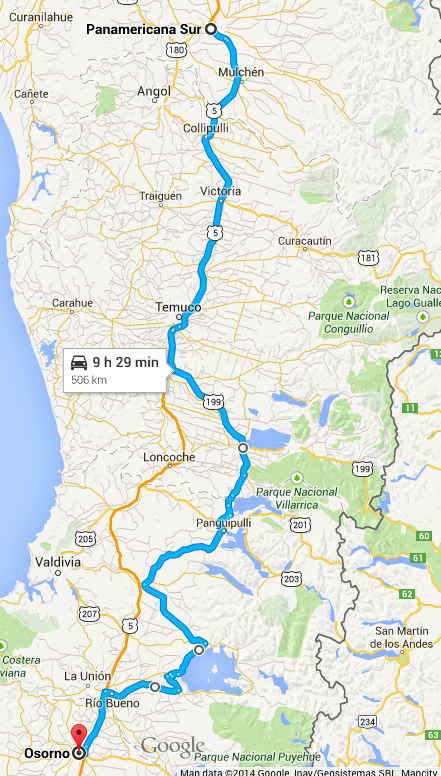
The southern part of Chile consists of high mountains that arise directly from the sea. Many little islands and deep fjords form the outline of the coast. So years ago, the few little villages that exist here were only reachable by boat or little planes that had to curve between the mountains to land on gravel runways.

It had been like this until the 70’s. The dictator Pinochet wanted to strengthen the presence in these areas for strategic reasons and he therefore ordered to build a road here. And so a road, the Carretera Austral now leads to one of the most beautiful places in Chile and therefore we clearly didn’t want to miss it.

The road is mostly a gravel road with lots of pot holes, but it is getting improved constantly and so many parts are paved nicely in the meantime.

It is not really connected to the rest of Chiles road system. You need to take in total 3 ferries to get to the real start of the Carretera Austral.

We took the first ferry, a short crossing of 30 minutes and went south on a good dirt road that brought us to Hornopiren.

The town of Hornopiren is a nice little place. There is a little fish farm, some grocery stores and the little harbor. It is located beautifully at the end of a large fjord. An island separates the fjord into two arms. It was cloudy, we would only get little partial views on the surrounding mountains.

The town has a real pioneer flair. I feel very reminded of the small towns in northern Canada. Simply constructed little houses and a very slow pace. Nobody is in a hurry here. When you stand on the side of one of the few roads cars would stop to see whether you would maybe like to cross the street. Drivers friendly smile and slowly continue when you signal them that you are just standing there to take a picture of the bay.

We found a nice little cabin. It was cozy even though the bathtub was about to crash through the floor and the carpet was full of dirty spots. We stayed there for two nights and just relaxed during the day.

The ferry would leave at noon and so we boarded the bikes and enjoyed the boatrip through fantastic fjords. We were lucky enough to meet the captain who invited us on the bridge and so we had a very special view and a great chat to the captain and his pilot.

The time flew by and after three hours on the ferry we and a whole lot of other local travellers got on a dusty gravel road just to reach another ferry not 20km down the road. The second ferry took only 30 minutes though and so we finally reached the northern part of the Carretera Austral.

This part of the road leads through the Pumalin National Park. This park not only has a fantastic landscape but also an interesting history. Douglas Tompkins, the founder of The North Face has bought large areas here and after some difficulties and skepticism of the locals eventually created this national park.

It is a fantastic area. The road cuts through thick vegetation. Leaves as big as me are next to the road. Gorgeous lakes, rivers and mountains left and right. The road is in good condition and there are many fantastic campsites. We are early in the day though and so we keep on going.

Suddenly an almost shocking change. Riding down a slope we get to what appears a river valley. But the green is gone. All the trees are dead. The riverbed is full of trunks that lay on each other chaotically. This is ground zero of a disaster.

Indeed: 2008 the Chaiten volcano suddenly erupted with little warning. Large areas were destroyed and the town of Chaiten completely vanished.

It is quite impressive to ride the bike through this landscape. But when I said there is no green that is not entirely correct. Mother nature is already coming back and small bushes and plants are starting to heal this scar.

Early in the day we arrive in the new build town of Chaiten. We find a nice restaurant for an early dinner and since the owner also rents rooms we have found our place to stay as well.

Other travellers join us on a beer in the evening and so it is a nice chatty evening with interesting people.

People we met: Pastores Alemanes

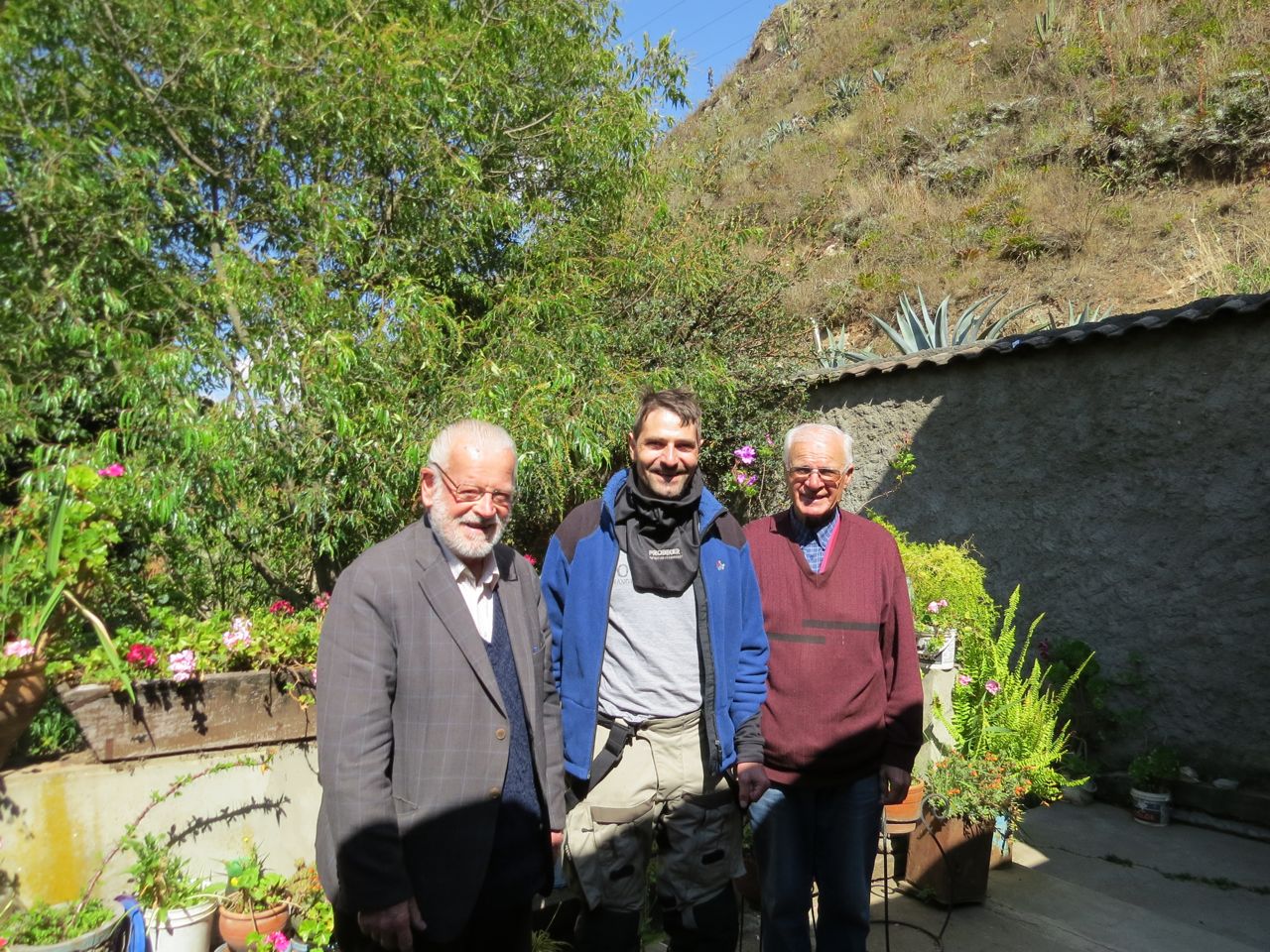
I know Padre Eduardo from the last time I was here in Peru. And my Mum knows him from her many visits here in Palca. He is a good friend. He knew my Dad. They both liked and respected each other a lot.

Padre Eduardo and his colleague Padre Luis are taking care of the needs of the people here in Palca. And they do this since many years, as they are both far over 30 years in Peru. And they do it with a dedication that blows your mind.

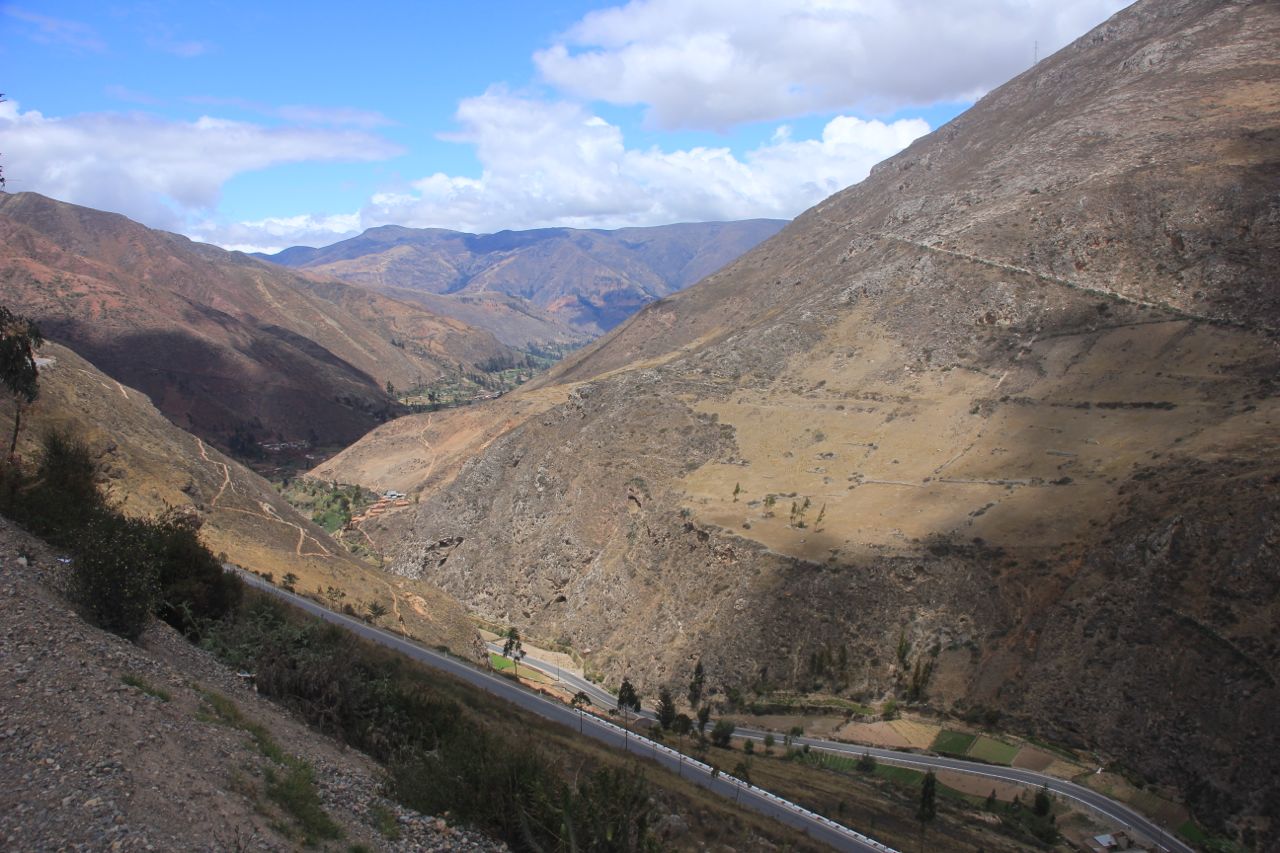
The high Andes near Tarma

The high Andes near Tarma

The conditions to live in this part of the Andes are harsh. But they visit all the little villages up there in the high Andes. It is difficult to get up there. But people ask them to get a mass and so they go. They go as far as the 4×4 gets them. And then they walk. To the little “Nest” up there as the Padre puts it in German. They sleep in the houses of the poorest of the poorest, because they ask for spiritual succor. Because they ask for help.

Because the spiritual succor the two can offer have a lot higher meaning here in Peru than we can imagine. We have this so very different image of the church in mind that is present in Europe. Here this all means a lot more. This is what religion and church is really about. This is where people like the two padres really make a difference.

The two pastores in Tarma

The two pastores in Palca, Padre Eduardo and Padre Luis

And they are dedicated. Padre Luis tells us his story of when he arrived in this area after he had spent 14 years in one of the most polluted cities worldwide, Cerro de Pasco. He has been working as a priest in different countries already and knew his ways around when things get difficult. So when he was asked in his first month in Palca to hold a mass in one of the little villages up the mountain he didn’t hesitate. Even though it was a long way up, even though it was a difficult rugged road up the hill, even though it was rain season. He jumped into his 4×4 and slowly drove the road up the hill. It became difficult, but he knew how to use the power of the 4-wheel-drive car and made it. After he held the mass, he picked up two young priests in another village and wanted to get down again. In the meantime it got dark, the rain had started and the road turned from a rugged road to a bad slimy and slippery mud pipe. The road went along a steep mountain with a 200m cliff on his right side. Going around a corner there was a landslide. They got out and worked with the shovels on the slide to make it possible to pass. After half an hour he decided to give it a try and got back into the car. He sort of slid through the passage as the tires spun in the mud. Suddenly the back of the car drifted to the right until one of the tires hung over the cliff. They all got out. Continuing was too dangerous, so they called for help. Eventually some people from the next town arrived with a couple of tools and ropes to securely get the priests car off the cliff and back on track.

The priest went to this village the following week and many times during the rain season again.

The slopes are steep and many little towns are very hard to get to, especially during rain season.

The slopes are steep and many little towns are very hard to get to, especially during rain season.

His colleague Padre Eduardo is from South-Tirol. A quite elderly, and wise man with a great sense of humor. He has a million stories to tell about his time here as well. During the main time of the activity of the shining path he was held hostage for a day. When the commander of the group pointed a pistol at his head and asked him to kneel down, he told him he wouldn’t kneel in front of anybody. The terrorist was impressed. They let him go.

Both persons are great and of an impressive coolness when they talk about the difficulties and dangers they had here, especially in the days of the shining path. People around them have been killed and slaughtered. And they were asked whether they would like to stay. All other authorities had left the area. But they stayed.

When Padre Eduardo was asked whether he was afraid he answered in his great humor: “No, tenemos dos pastores alemanes aqui”. (No, we have two german priests here.)

A great wordplay since pastores alemanes has a double meaning: it can mean “german priests” or “German shepard dogs”.

We were deeply impressed by these two old fellows. The braveness, their trust in God, their dedication, their will to help other people, their modesty.

It makes you ask yourself about your own attitude about the world that we live in.

Equipment: The bikes …BMW 650 GS

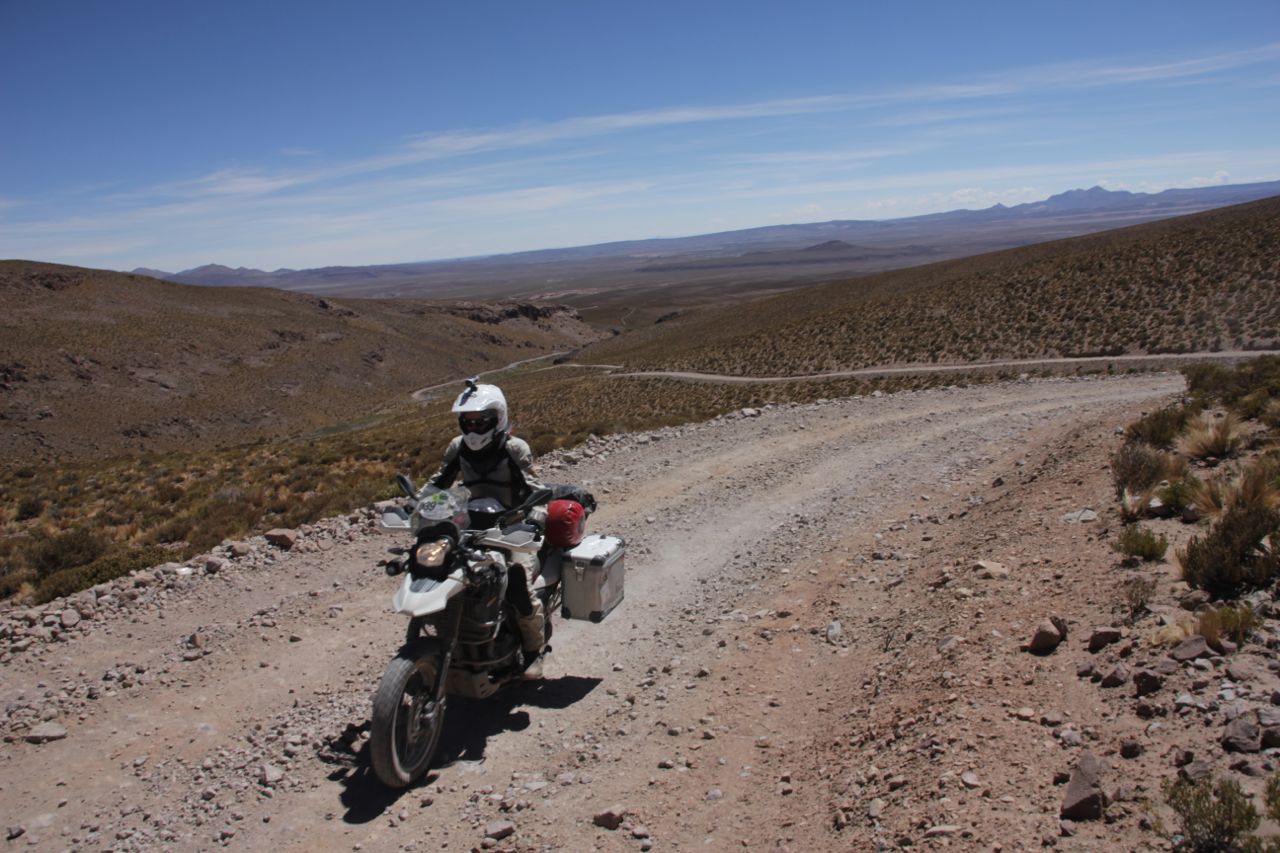
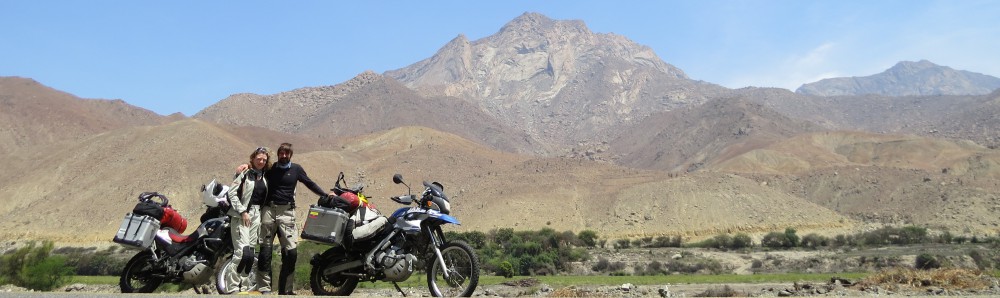
We both use BMW 650GS. Christy a 2011 G650GS and myself a F 650GS Dakar from 2005.

Our bikes: a 2005 F650GS Dakar (front) and a 2011 G650GS

Our bikes: a 2005 F650GS Dakar (front) and a 2011 G650GS

I rode the F 650 Dakar model for more than 6 years now (earlier a 2003 Dakar model) and I am pretty very happy with this bike.

It is just a “no-drama” bike. It works. Always.

In the following I put down my experience with this bike in case you are considering it as a travel bike.

For travelling this is an excellent choice for a couple of reasons:

  • good engine and comfortable for long rides
  • consumption and range
  • no problem with low octane fuel
  • no problem with high altitude
  • no problem with bad quality gas
  • no engine issues .
  • pretty low (the G650GS that is, not the Dakar!)
  • Offroad capabilities

The downsides:

  • bearing of steering
  • bolts of G650GS (model since 2011)
  • splash guard F650GS (only 2005model)
  • rear mirror (2000-2006 model)
  • stand Dakar (all years)

 Good engine

The engine has enough power for travelling; I never had the feeling that I would need more power. But it has a very good culture, no bad vibrations. The seat is by standard quite comfortable and good for long rides. For offroading it is better to put the handlebar a little bit higher though.

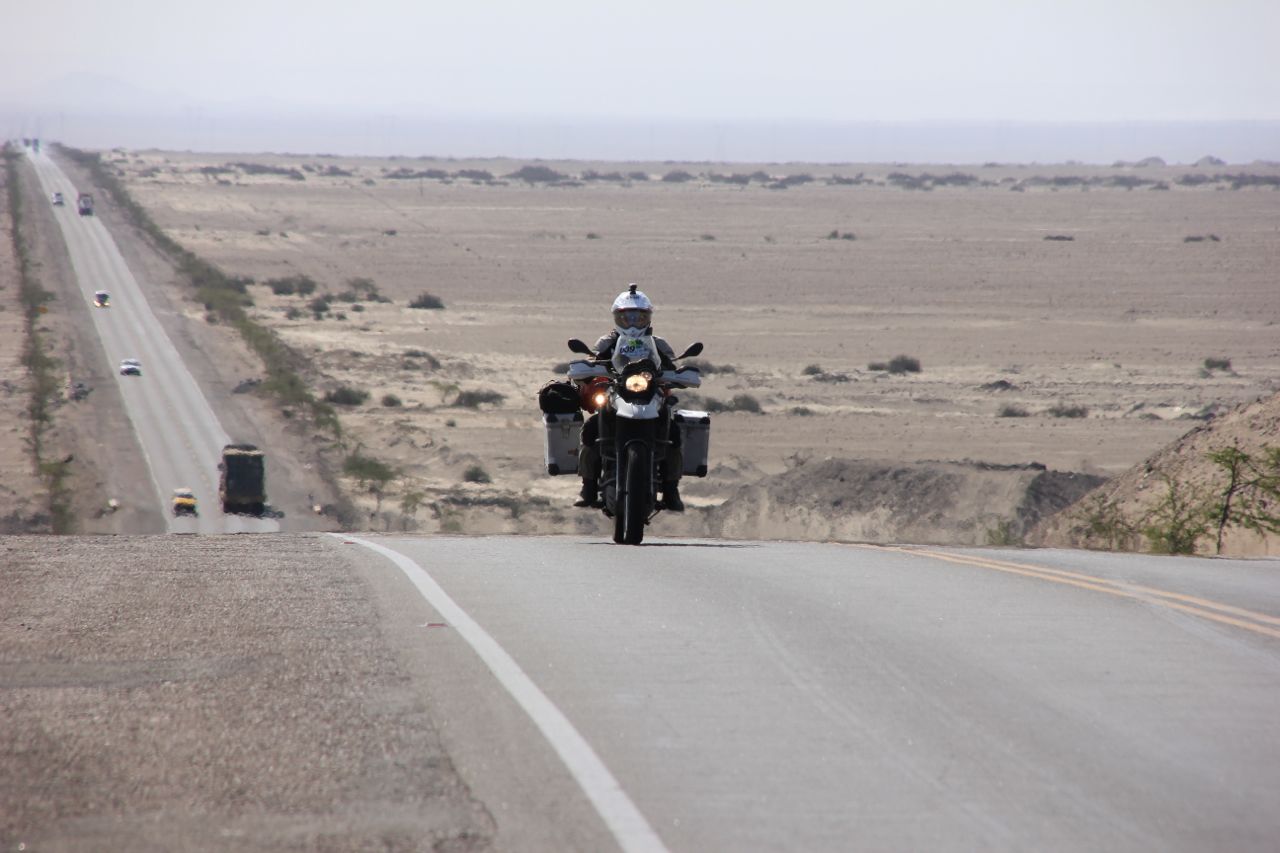
Long stretches no problem

Long stretches no problem

 No Power loss

Even in the high Andes it was enough power, even though of course there is a noticeable power loss on altitudes over 4000m.

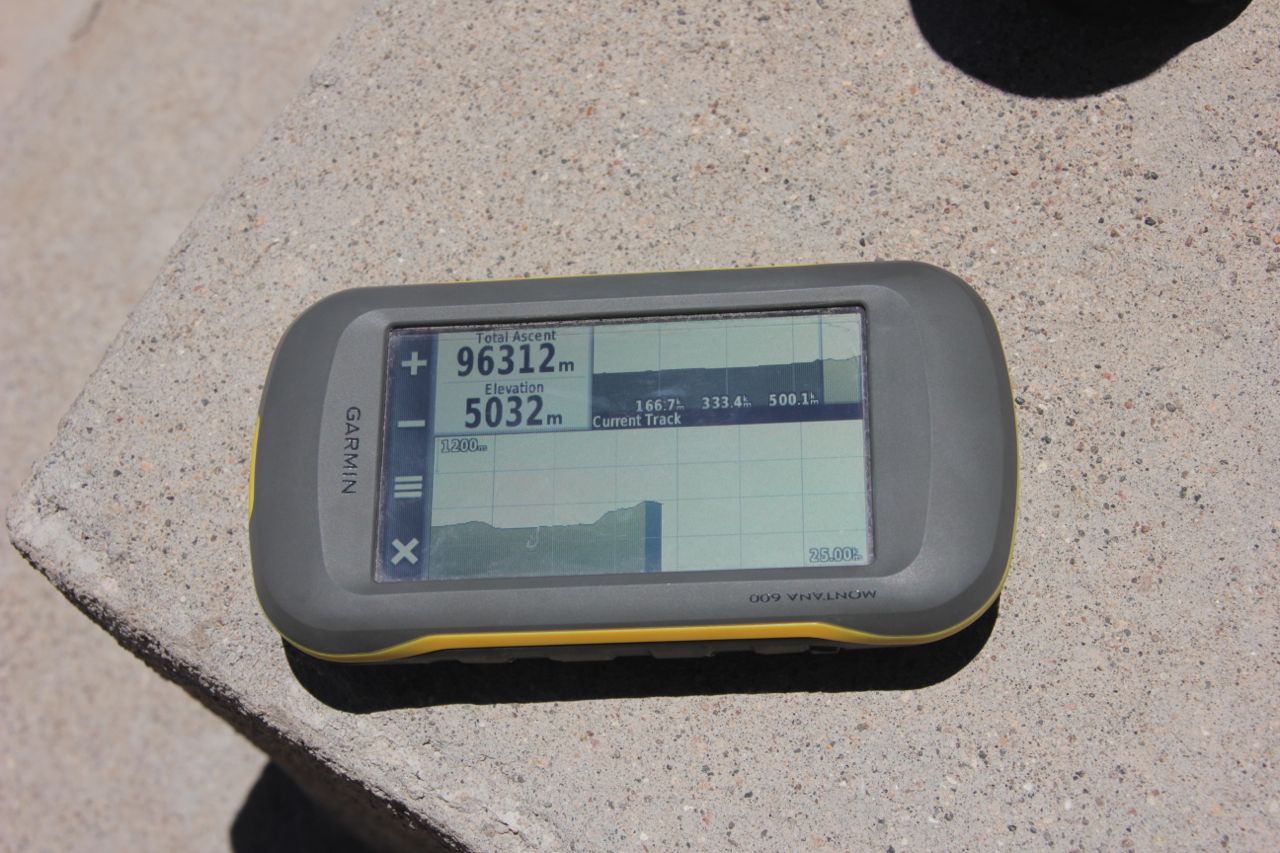
Even at elevation over 5000m we never had any issues

Even at elevation over 5000m we never had any issues

Consumption and range

Consumption is sensational: during most of our travel the consumption was as low as 4l/100km (70miles per gallon). On major roads when travelling over 100km/h consumption goes up to approx. 5l/100km.

The Dakar can cover min 400km, the G650GS has only a 14L tank so it covers approx. 350km.

We only had two times (southern Bolivia and southern Argentina) where we needed more than this and we simply bought 2 canisters with 4L each and that covered 500km.

The canisters we simply attached to the passengers footrests with two straps. That worked perfectly fine even with the 500km gravel we covered in southern Bolivia.

No Bad gas issues

We used gas with octanes as low as 80 and we were advised to filter the gas in Bolivia before filling it in our tanks, which we never did. We never had any issues with this though.

No engine issues

I had a 2003 F650 Dakar with 65000km on the clock. My actual bike is a 2005 model with now 35000km and Christys bike has 34000km. We had absolutely no issue with the engine ever.

Height

The G650GS is ok for riders who are not that big. My girlfriend is 1,65m tall and she can handle the bike pretty well. She gets her feet down (not flat though) and she managed to handle the bike in pretty bumpy road condition, even though she was not an experienced rider at the start of this trip.

For shorter persons the bike is perfectly fine. The Dakar version is quite high though, so you should be at least 1,70m or taller.

Christy is 1,65m, learned to ride not a year before the trip and had no issues handling the bike.

Christy is 1,65m, learned to ride not a year before the trip and had no issues handling the bike.

Offroad capabilities

We did some of the hardest routes you can do as a traveller in south america and both bikes had proofed to be good enough. You do NOT need a Dakar version. The G650GS will meet your needs for such a travel.

The Dakar version is good for even some tough terrain, but you most likely do not approach that with heavy travel luggage.

Most important: it is not too heavy. I can get my bike up again after I fell (off road that happens, sooner or later). I would not like to fight with a 300kg monster…

Christy in action on the G650GS.

Christy in action on the G650GS.

 Issues with the bikes:

There are some downsides to the bike though:

Bearing of the steering

Seems to be a problem: I had to change it on both Dakars that I had after long straight stretches. It is nothing that you need to address immediately during the travel though. You have enough time to change it when it appears. So it won’t stop you in your travels, but you might want to check before starting on a longer trip.

Bolts on the G650GS

There has been a quality drop from the 2000-2006 models to the newer G650 (2011 an later) models. We had severe problems with multiple bolts on Christy 2011 bike. Some heads were bad, so that you couldn’t use the standard tools (they were not “damaged” by wrong use of a tool, but the original shape of the Torx was not deep enough, I don’t even understand how they fixed them during assembly).

Other screws (in total 5) had seized up so that we could not open them without damaging the thread. Before you go on a journey with one of the newer models check the bolts. It is a real pain to deal with this during the travels.

Splashguard 2005 model

This is a problem only occurring on the 2005/2006 model of the F 650 Dakar.

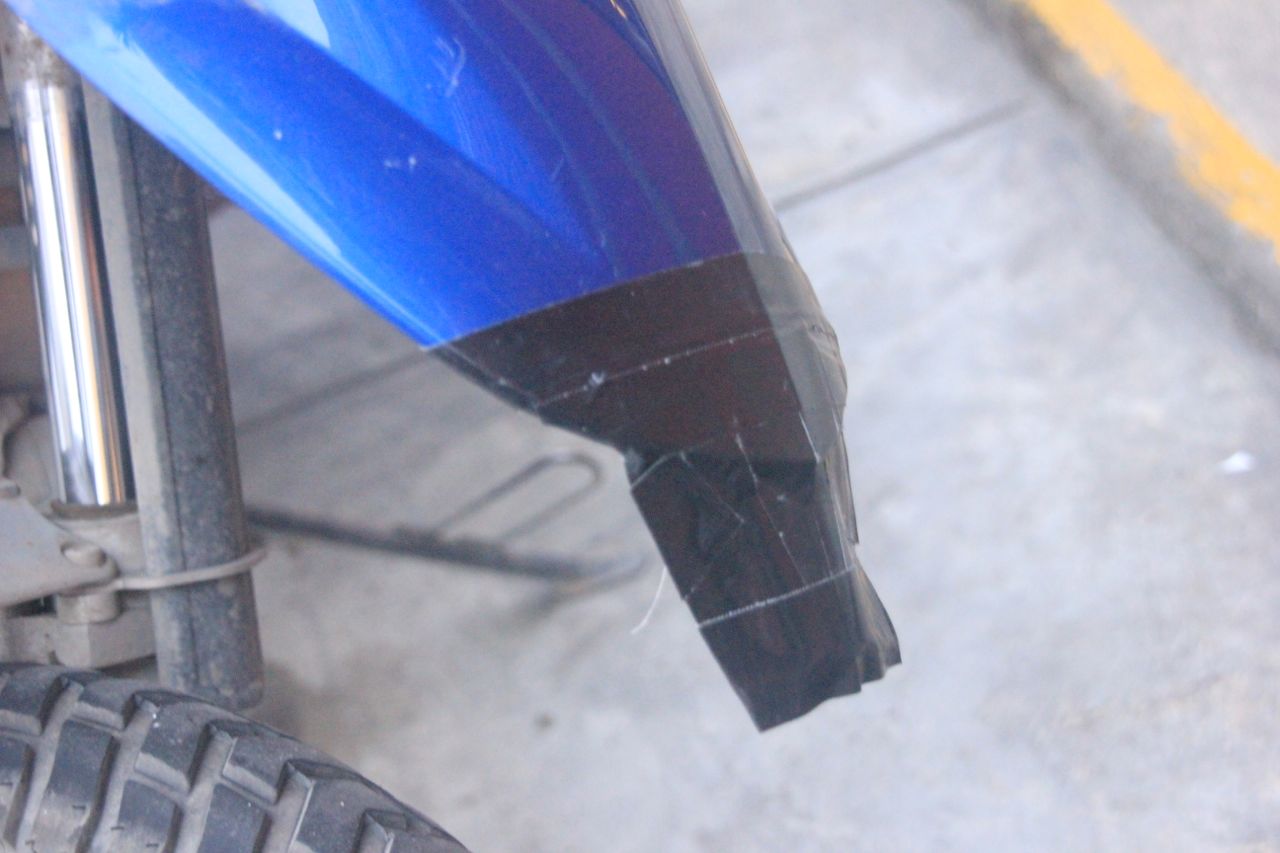
They have changed the windshield from the 2003 model so that when it rains, you get all the dirty water splashing up from the front wheel nicely sprayed on your visor. Really fantastic, I don’t know what engineering was thinking here. Anyway I fixed that simply with a piece of a plastic bottle and some tape. Works perfectly fine.

IMG_1941 copy

Rear mirror

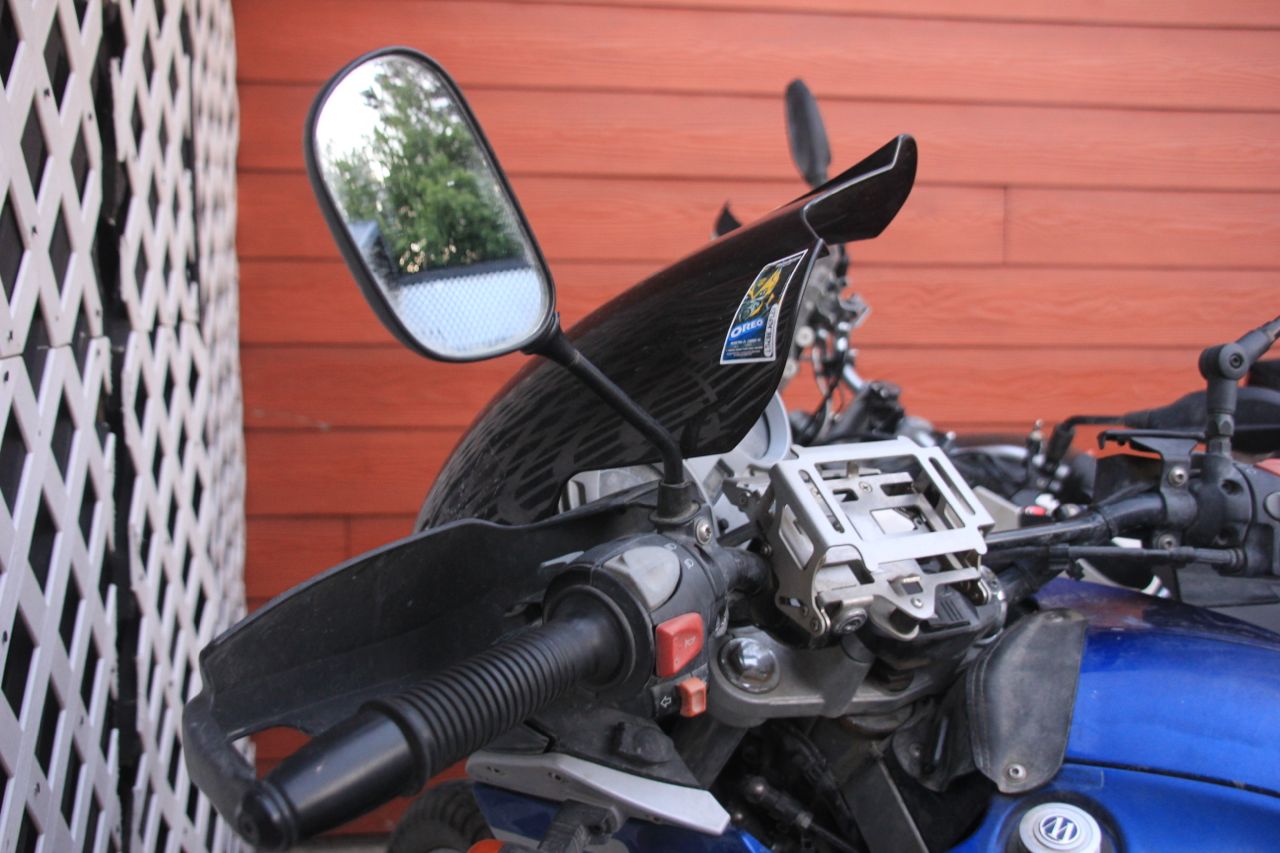
I lost both mirrors during my travel on my Dakar. They stick out pretty far and when you fall, the chances are pretty good that you are loosing a mirror. In my case that was a simple fall over of the bike due to heavy wind.

Get them changed for some more offroad compatible ones before you travel, you need the mirror when you hit some lousy traffic as e.g. Lima.

Great replacement for my original mirror. I got it for 3$ . Cheap is best...

Great replacement for my original mirror. I got it for 3$ . Cheap is best…

Stand Dakar

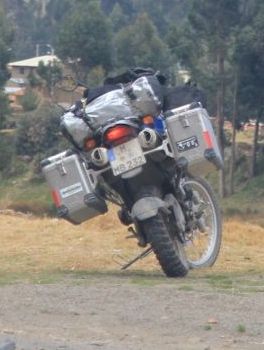
The Dakar stands at an really frightening angle. The stand is simply too short.

With the road being a little bit uneven in the wrong direction the bike simply falls over when heavy loaded. Same happens with soft ground. Wunderlich has a nice add-on part that makes the stand larger so it wouldn’t sink in as much AND is approx. 15mm thick, so the bike stands more upright.

Make sure to glue in the screws as I have lost that handy little part during my trip.

The Dakar stands at an scary angle on the side stand. Good idea to have that improved...

The Dakar stands at an scary angle on the side stand. Good idea to have that improved…

Rear splash guard F-650GS 

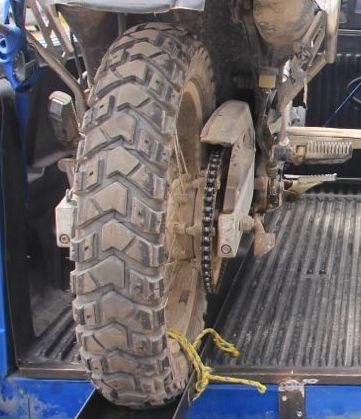
The rear splash guard the F650 has attached originally doesn’t last. On both my Dakars it came off eventually, leaving a plastic part flapping around. I just ripped the rest away, just leaving the guard for the chain on the bike. You can do this advance or just let it happen during the travel. It might get caught in the chain or the tire somehow, so i would just take it off in advance.

Before...

Before…

After...

After…


Comparison G650 vs. Dakar version

Both bikes are good for travelling.

The Dakar version offers a better suspension if you want to go high speed offroad. I liked to do that sometimes, but this is nothing that is a necessity for a trip, more a fun thing to do if you know what you are doing.

Other than that: the G650 doesn’t limit you in terms of where you can get it to.

The G650GS has 3L less gas on board. That is no problem, as the only time we needed to enlarge the range was in southern Bolivia and southern Argentina (a 4L canister did the trick). In Ecuador, Peru, Chile you will have absolutely no fuel issue with a range more than 200km.

They are both good bikes for travelling

They are both good bikes for travelling

There are two thoughts that I think might make the G650 even a better bike for South America:

  1. For riders not experienced with sand or deep gravel: a wider front tire helps you in these conditions. You can’t lower air pressure, since you may hit hard rocks, so the 19″wheel of the G650 has an advantage over the 21″wheel of the Dakar due to the wider tire.
  1. The Dakar is higher, and that makes it more vulnerable to side wind. You will hit a lot of wind from the side in South America (along the coast of Peru and of course in Patagonia). I had the feeling that Christy on the G650 was not swerving as badly as I was on the Dakar when we had side wind. That might be because the bike is higher. Another effect on this might be the smaller front wheel of the G650. It is rotating at higher speed and that might stabilize the bike a bit more (I haven’t really calculated that through, so corrections on this thought are highly appreciated).

Lakes and volcanoes

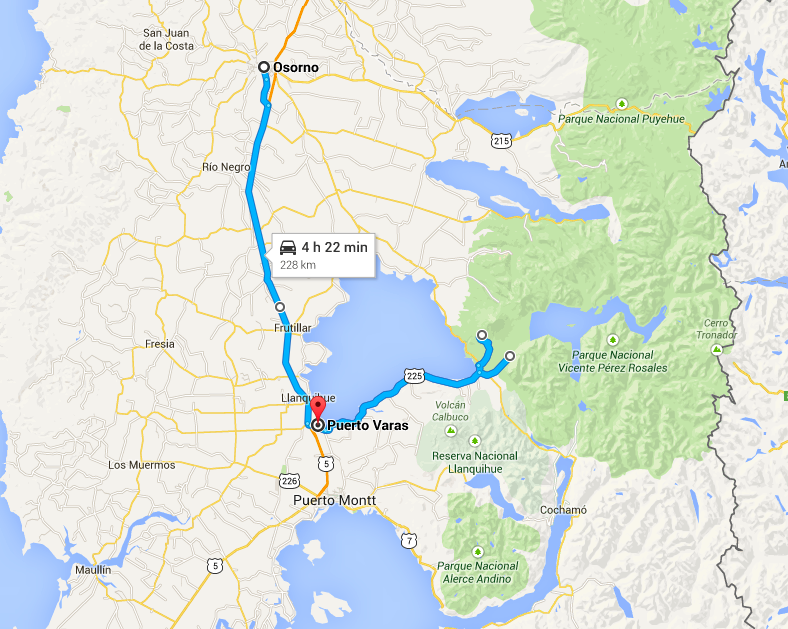
Osorno – Puerto Varas

Screen Shot 2014-12-23 at 13.40.47 Screen Shot 2014-12-23 at 13.39.29

Osorno is not a very pleasant town. We only stayed here to get new tires and to get our steering fixed. Motoaventura is a BMW dealer and rents motorbikes as well. They had the spare parts ready, the tires we wanted on stock and they made a good and quick job.

We waited a few hours till everything was done, but the time flew by as a lot of other travellers (most from Argentina) stopped by and so we had a great time there. We were served coffee as well and had a fantastic lunch on a restaurant nearby.


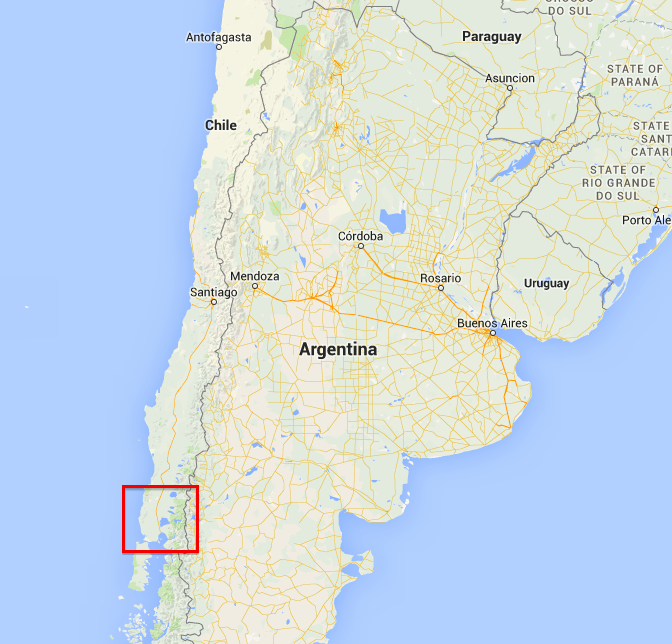
We were glad that we did not have to stay another night though as the town has nothing to offer and so we continued to the Lago Llangquihue which is close by. The lake is incredible. It is pretty big and a fantastic snow covered volcano is towering on its eastern side. This whole region has been settled by Germans and they keep their traditions. So you find Bavarian restaurants, coffee shops offering “kuchen”, and a lot of names are German. We had a short stop in the town of Frutillar for a coffee in a theatre built directly at the water. It is a great building and it seems to be a fantastic theatre, offering room for 1600 people. We wondered how this little village would look like when 1600 people arrive there for the evening event.
The town of Puerto Varas has a fantastic view on the volcano as well. We stayed there and made a daytrip to the volcano and some neat waterfalls nearby.

We took advantage of the German influence and enjoyed an “Erdinger Weissbier” in the evening.

Big fat cows on green meadows

Salto de Laja – Villarica-Osorno

Screen Shot 2014-12-21 at 22.36.37 Screen Shot 2014-12-21 at 22.45.53

Just a week ago we had passed the Atacama desert, on of the driest areas on this planet. And now this: all shades of green. Big trees, high grass, thick bushes.

And all among it: cows. Lots of them. Big fat cows. And sheep.

This is cow paradise. We drove along a nice road, the sun was shining, it was warm, almost hot.

The road passes fantastic lakes with high snow covered mountains sorrounding it. This looks like picture book Switzerland except you won’t find a perferctly shaped volcano there.

We rode the bikes along the shores of Lago Villarica and Lago Ronco. The lake district of Chile is a fantastic area. And after all the desert that we have seen on our trip this is exactly what we our souls were thirsting for: lots of green and lots of water. We had sunshine all these days as well and the roads were in perfect condition. And so Christy came to the conclusion that if you could ride a bike in heaven, it would be just like here.

Waterfalls

NP 7 tazas – Salto del Laja

We arrived at a very nice campsite just outside the NP “Siete tazas”. The name translates as “seven cups” describing the river as it falls in several spectacular waterfalls into little bowls that the river had carved out of the hard rock here.

We camped and had a nice evening with 2 guys from Israel before we took our bike to the entry of the national park. A little hike brought us to a canyon. A small trail led through a colorful forest and down the canyon, offering fantastic views on the waterfalls.

We continued south and after a stretch on the PanAm we found a nice hotel close to another great waterfall, the “Salto de Laja”. Our hotel happened to be right at the edge of one side of the waterfall and we had a view on it directly from our room.

The next day we wanted to have a better look at it.

It was closed though. As we approached the gates we could see a lot of people with tired and sad expressions. A police officer stood in the entrance of a little path that led to the waterfalls. A rescue vehicle stood aside.

A little girl of 13 years age fell into the water underneath the waterfall and had been pulled into a powerful undertow the day before. She was still trapped there and we could hardly imagine what the poor parents went through, sitting there and waiting for the officials and rescuer to bring them the body of their daughter.

We felt very bad, standing there with our cameras, excited tourists that hoped to see a great natural site… and there the poor family going through the most unimaginable pain.

We turned our bikes around and left.

It was a quite ride and we both wished the best for the poor family.

Fruits, vineyards and a nail

Valparaiso to Santa Cruz

We left Valparaiso and followed the route “Ruta fruta”, as they call it since all kind of fruits are grown here. Momentarily there is strawberry time. And everywhere they offered big baskets of these bright red fruits. We did not buy any though (I guess we thought we would buy them later till we finally had left the area… a mistake I keep doing repeatedly on my travels).

Instead we got into an area, which was full of vineyards. Grape vines everywhere. It was steaming hot, even though we had been freezing just a few hours before on the coast where the wind blows from the icy cold pacific.

But inland the Heat.Was.On.

It was not far to our destination when we passed this fantastic house in the middle of the vineyards. We stopped and quickly decided to stay here for the night.

The owners grow and sell grapes to the surrounding vineries. We had a fantastic view on the fields. A short swim in the nice little pool cooled us down.

After my swim I realized I had a flat tire. I located a 3cm nail sticking out of my rear tire. I decided that this would be a quick fix and disassembled the rear wheel. But when it came to take the tire off the rim it just wouldn’t work how I expected.

I used all the tricks I knew and had heard of. But it was too tight. Even with the help off the receptionist, a massive 1,5m crow-bar, mother gravity and his weight of approximately-pretty-much we didn’t get the tire off the rim. The whole action was accompanied by a wide variety of German and dialect curses (such as “godverdamminomool”), intranslatable …). But then I was told there is a vulcanizador just around the corner and so I brought the wheel there the next morning and with the right machines it was off in not time. In South America a lot of tires get repaired, other than in Germany. The profession is called vulcanizador, so this was the right guy to go to. He got everything fixed within a few minutes and we were off the road again.

Big waves and into Santiago

NP Pan de Azucar to Santiago

We left the national park Pan de Azucar and continued along the coast for a few kilometers before we got on the PanAm again and just flew down the 4 lane highway with a short stopover in Vallenar, where we found a really nice hotel.

La Serena is a really nice colonian style town and again we found safe parking and a real nice hotel just around the corner of the central plaza where we stayed for the night.

We continued our long stretch of days on the PanAm. Riding was very relaxed. Not too much traffic, the broad lane of the PanAm, an enjoyable landscape. Nothing to get overly excited about, but after all these eventful days in Bolivia we almost enjoyed not to “have to stop and look at something”. We just rode. You can let your mind fly away, think about the journey, about the country, about friends, family or just keep your mind busy by calculating how much time you would need to the next exit/town/gasstation when riding at different speeds (something I did a lot and I can proudly announce that I became the master of “I-will-be-at-the-next-exit-in-X.XX-minutes-at-the-momentary-average-speed-of-Y-km/h-sort-of-calculation”).

After we had enough of long straight roads, we decided to make a little detour via Monte Patria. It turned out to be a pretty road with some lakes, lots of curves and very little traffic.

We did not want to arrive late in Santiago and so we decided to find a place somewhere at the coast for the night.

And we found a pretty one: Pichidangui turned out to be a little village on a fantastic rocky coast. The deep blue ocean breaks its waves powerful on the black rocks of the coast. The setting sun added some warm color to the scene. And the birds contributed their squawking noises to the thundering sound of the breaking waves. It was a mind-blowing scenery.

On the road the day before we had to stop on a construction site. I chatted with the guy standing in his car behind me and he told me his friend owns a hostel where lots of motorbikers go. He marked the position of the hostel in my navigation (Case Matte 33° 26’22” S ;70° 37’43” W). So we looked for the hostel and drove up and down the road in Santiago until a young guy put his head out of the fence and asked if we where looking for a hostel. It turned out to be Christian, the owner. A motorcyclist himself he decided to start this hostel. For whatever reason it does not have a sign outside, but it is a fantastic place. Safe parking, a kitchen for use, a fantastic roof terrace, fast internet… everything we wanted to have.

He made some phone calls for us so we could get our bikes serviced at BMW.

The next two days we walked around the city, had fantastic meals, even a german Weissbier, had our bikes serviced (it turned out though they did not check the bearings on the steering, so we had to get this done a few days later in Osorno; grrrr).

It was a relaxing time there and a little break from all the riding we did in the past week.

3P-Info Part: Salar de Uyuni

The Salar de Uyuni is one of the most amazing places I have ever visited.

Crossing it on a motorbike is priceless. Don’t miss it.

Get there:

To get to Uyuni from LaPaz there are basically two options:

1. direct road from Challapata to Uyuni

2. continue in Challapata on the Ruta 1 to Potosi and then go west to Uyuni.

The first option is a really bad road. Lots of cur rogations, sandy parts, lots of construction. They are building a new road, so in a few months this might be a good option. But certainly till middle of 2015 this is a very bad road for 160km. But it is very beautiful and there a nice spots to pitch your tent on the way (eg. rock formations few km before Rio Mulatos).

The second option is all paved and in good conditions. Potosi seems to be a nice city with a silver mine. So this is by far the easier route.

It case in rains:

In case it had rained, it is strongly recommended (by a lot of people, including local guides and international motorbike guides) to not enter on your own motorbike. That is especially the case for modern motorbikes with a lot of electronic equipment. The water splashes everywhere and may cause serious problems. After a day, or a week or a month…

When the lake is whet (in ourcaseonly the first few hundret meters) the salt really gets everywhere.

Some people had to leave their motorbike there as the electrics got so badly torn up, that it was not repairable. Of course you can also go with your own bike if it is wet, if you are lucky you won’t have any problems.
You can rent motorbikes though (small Honda 400ccm which are big fun or more powerful DR650).

You can rent them at MTB: http://www.motorcycletoursuyuni.com

They only rent including guide at 200$ per day. Thats quite pricy, but totally worth it. The alternative would be to take one of the many 4×4 organised tours. That is a lot cheaper, but you miss the feeling of riding a motorbike on the salar, which is fantastic.

If the Salar is dry it is safe to go on your own bike

Ride into the void:

There are only few places where you can enter the Salar.

Don’t enter anywhere else and only use the tracks from the 4×4. Off the tracks the surface can be very soft so that you may sink your bike and need a 4×4 to pull it out.

The eastern entrance is in Colchani at the road from Chalapata to Uyuni at approx. 20km north of Uyuni (S20° 17.876′ W66° 56.130′). You can’t miss it. There are 2 salt hotels at the entrance. We haven’t stayed there, but people we met said it was interesting (plus you can see the sunset over the salar there).
Once you are on the Salar you can go wherever you want.

Once in the while little holes (up to 50cm diameter) offer a view into the world of salt crystals underneath (the locals call them “Ojos”). They are no danger and you can go and have a look.

There is an island where all the 4×4 organized tours go to (S20° 14.498′ W67° 37.671′): Isla Incahuasi (formerly Isla Pescado). It has a little hill and offers a fantastic view. Only enter the island from the northeastern end (where you will see some huts and during the day dozens of 4×4, as the rest of the surroundings of the islands may have a thin salt crust).

It is great fun to ride the bike on the Salar. It is not slippery at all.

After the visit make sure to clean your bike at one of the many washing places in town.

Campsite at the beach

San Pedro to NP Pan de Azucar

The copper mine made a great impression on us and so we continued the road to Antofagasta. We crossed the Atacama desert, one of the driest deserts on earth. It wasn’t a very pleasant ride. The landscape became less attractive and everywhere there were little mining cabins and trucks.

Every second car was a red pick-up truck from the national mining company Codelco. A lot of watertrucks passed us on their way to the big mining sites near Calama.

We stayed in a good hotel in Antofagasta and even the car-park there told you that all there is going on in this region is about mining. Beside our motorbikes there were only pick-ups from mining companies.

We continued our way south and the PanAm gets really boring as it gets more inland. Not that the landscape is ugly, but it gets quite repetitive. The only interruption was a sculpture that an artist put up in the desert. The hand of the desert is right next to the PanAm and so we took a short break there in the shadowless boiling heat of the desert.

After 300km of heat and desert the landscape becomes more hilly and nicer. We finally turned off the PanAm to get to the coast to a nice little national park. The NP Pan de Azucar offers a lot of plants (mainly little cactus) that only life in this little area. It is a wonderful landscape as well. The area doesnt get any rain at all. But it gets humid with clouds and fog that rolls in from the coast. We had blue sky and sun all day long, but as we approach the national park the sky gets cloudy. We arrived at the coast on a campsite.

It is a quite little bay with a perfect sand beach, rocks on both ends of the 1km beach.

There are little shelters for cooking set up. All very nicely. We are the only guests. The owners live in a couple of little huts where fishermen have their boats. So we make our dinner and enjoying the beach and the stars all by ourselves. It is beautiful.


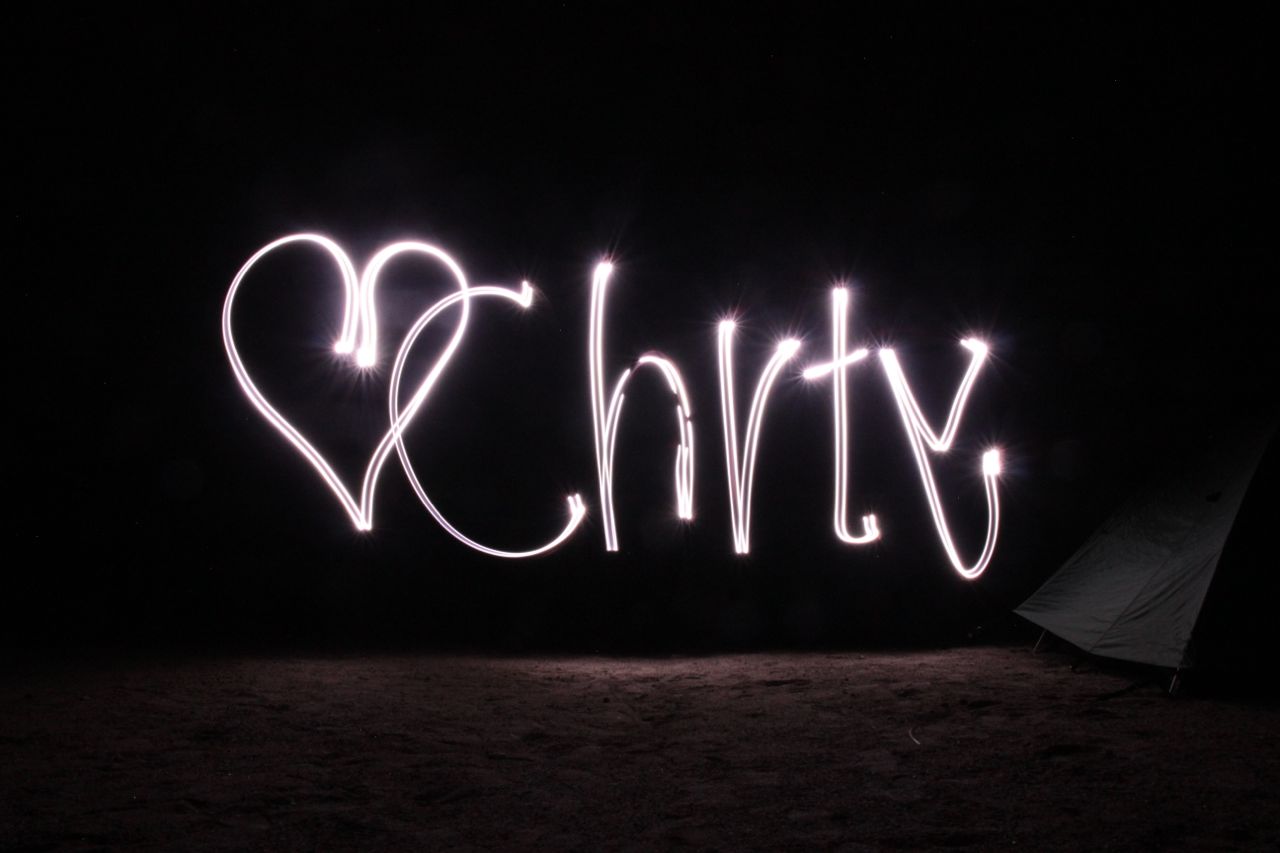
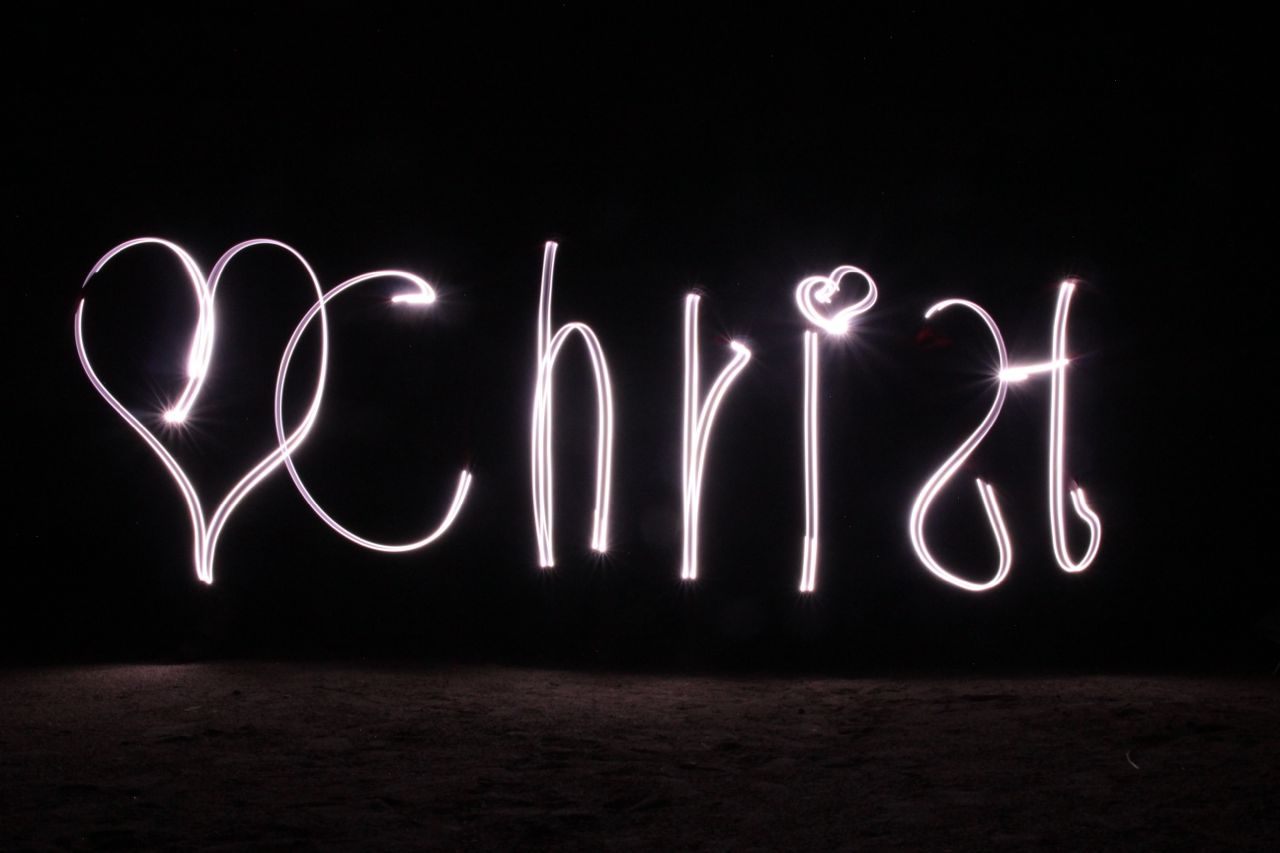
After dark we played around with the camera and Christy wrote my name with her flashlight really nicely. She had to write in reverse and it turned out she is a natural talent to as it is not as easy.

Chisties first attempt. Pretty neat.

Chisties first attempt. Pretty neat.

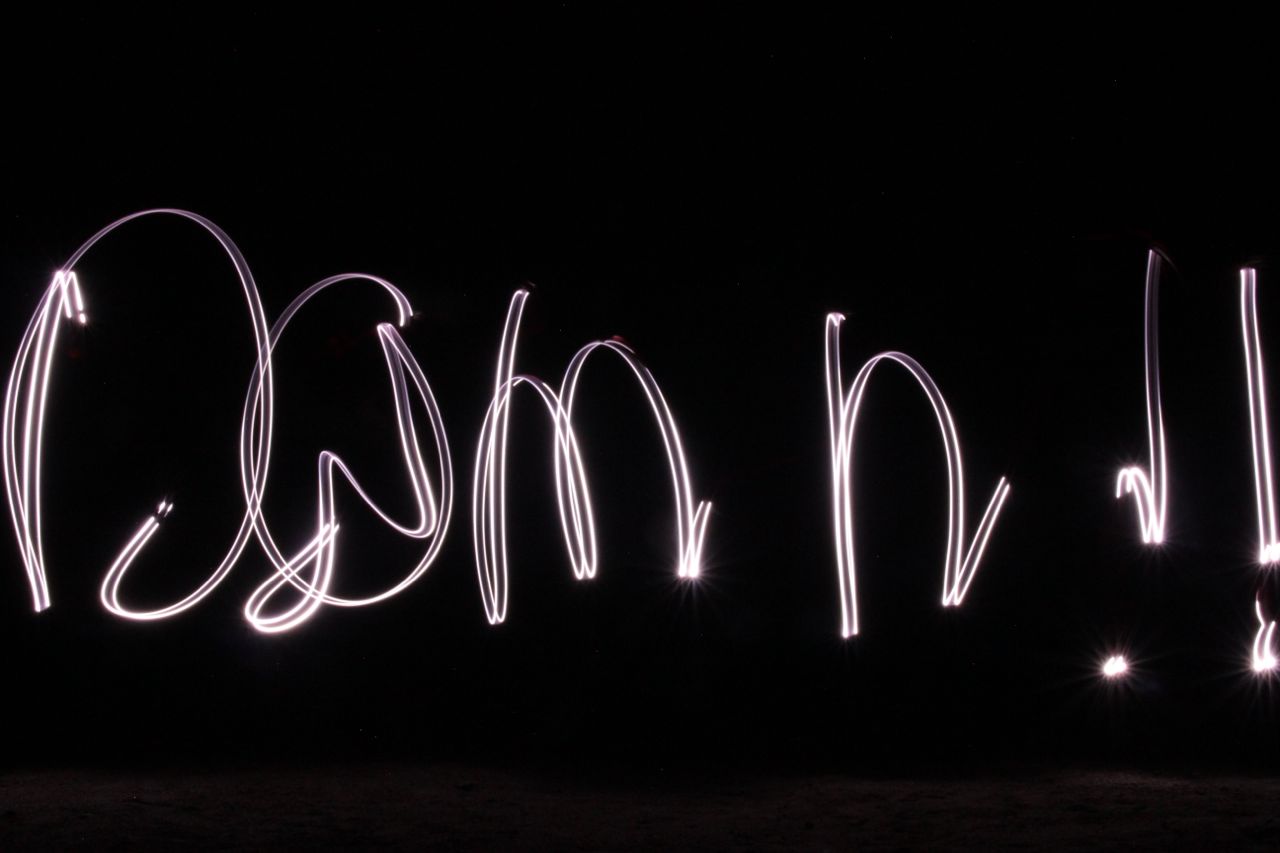
My attempts were less flattering. These are my best tries (out of many, many, many).

That went well... oh there is a letter missing...

That went well… oh there is a letter missing…

.... and another one missing

…. and another one missing, and why can’t I get the Y right?

....almost...

….almost…

After many other triesI finally gave up and just gave her a kiss instead.

"Damn" I gave up

“Damn” I gave up