Long lines

We hit the road before midday and stayed on the PanAm which is a road with not too much traffic here. As the rest of the coast of Peru, the area is very dry. If it is not sandy it consists of dry rocks on both sides of the road. The wind blows the fine sand over the road in straight lines. These thin lines get disturbed when Christy is passing through. The turbulences of her bike makes the sand dance around the street for some time before the wind forces them in a straight line from right to left again.

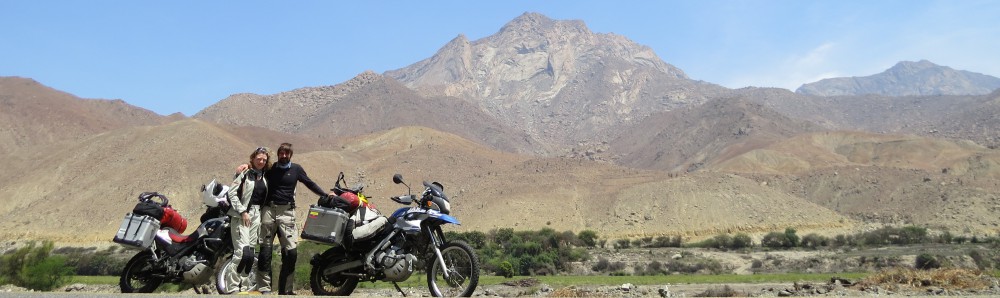
The black line of the PanAm that is cutting through these different shades of brown and yellow is a fantastic picture and we stop frequently since the shapes and colors of the desert change a lot.

It gets more hilly after a while and finally the PanAm lowers through a couple of river valleys. In one of the valleys we take a short dirt road that brings us to the first signs of the Nazca geoglyphes. We ride up a little hill and continue walking for a short while until we get to a place where we have a great view. We are all alone here. Nobody else. It is quite and peaceful here.

We continue the PanAm and after it leads out of a small valley we suddenly find ourselves in a large plane. Little black rocks cover the ground till the horizon. The road is perfectly straight for as long as you can see.

Suddenly I notice something on our right side. I stop and turn around to have a better view. And indeed, I have just crossed one of the Nazca lines. I stand there watching the line. It is approx. 3m wide and maybe 10cm deep, continues on both side of the road to eternity as it seems.

The Nazca lines are most known for its figures. But in fact there are thousands of long lines, some lasting for a couple of kilometers. The reason for why these lines where drawn is unknown. It is just a mistery. And here I stand, looking at it right in front of me.

We continue to a small tower that is standing next to the road. From it’s top you have a great view on three figures. I have seen pictures of these images a million times. But I was surprised how small they look in real live. And the lines are really thin (approx. 20cm wide).

We continued to a little hill from which many of the long lines start (or end). We climbed it and had a perfect view along these long geometrical shapes. It was already 5o’clock and the low sun threw perfect shadows over the edges of the lines.

We looked for a hotel and ended up in a pretty fancy place: Nazca Lines Hotel. Maria Reiche, the main researcher of the Nazca lines lived here for more than 30 years until she died. The hotel owner let here live here for free to show his appreciation of her life long dedication to the Nazca lines.

We had a great dinner next to the pool and some nice palm trees and thought of that eventful day had just passed.


Cattle and penguins

After we stayed in Lima for another day to fully recover from my illness we started on our way south. Parracas is a small town 200km south of Lima that lives from the tourism. The reason for tourists to come to this little place is a couple of islands close to the cost. A huge number of different birds live on these little islands together with a small penguins and sea lions.

After a noisy night (it has been Halloween night with a lots of drinking and singing going on in town) we got up to line up with these hundreds of tourists. Large groups of tourists were coordinated by the trip organizers. I felt a little bit like being in a herd of cattle, not exactly knowing what was going on around me. The tour guide that picked us up from the hotel has disappeared and so we end up in a different group of people. And like one of the herd I just thought we best go with the masses and finally just ended up in one of the boats somehow.

Once we left the harbor the many boats spread so that you could hardly see any other boats. We past a large sign that was carved into the shore, a few hundret meters long. As the geoglyphes at Nazca they meaning is unknown but quite impressive. And even though this carving has been directly at the sea, influenced by the strong winds here, it lasted for so long.

We leave the coast and the boat takes course to the islands. The islands are a sight for itself: a couple of rocks laying there in the sea with steep cliffs and a lot of caves and bridges. It looks like the phantasy island of a pirate movie and I wouldn’t have been surprised a lot if the Black Pearl appeared suddenly.

There are birds everywhere: small black ones, large pelicans, white middle sized… in fact birds of all colors and sizes. And they are all in large numbers. A constant cawing of thousands of birds mix with the splashing sound of the waves crashing on the rocky shores of the islands.

The smell is an interesting mixture of the salty sea and the bird’s dung in which the rocks are covered. In fact this dung used to be one of the main export goods of Peru as it is known as one of the best fertilizer.

The captain of our small boat maneuvers the vessel very close to the shore, so we got a perfect view on all these different animals. And there is more than just birds: sea stars, crabs, shells of all different kind appear. And finally some birds I wouldn’t have expected here: penguins. These little cute things are staying here on this island. It is a very small type: Humboldt Penguins. They are really fantastic with their clumsy way they move around solid ground. And it is tricky terrain for them with all the steep rocks and the high steps they have to take. Just watching one of them helplessly trying to get up on a rock made my day. He fell over on his belly again and again, but eventually he made it. Persistent little guy!

Going around another corner of the islands finally sea lions hang around on little mini islands. The males posing and showing off, some getting into a real fights and others (most of them) just hanging around lazy on the rocks. The way they lay there make the rocks look like a real cozy place even though some of them lay there in a real uncomfortable situated places.

It was fantastic to see these animals so close in their natural sorroundings. They seem to be totally fine with the situation and just look at you in a mixture of boredom and curiosity.

The whole boat trip took two hours of which one hour we spend with the animals on the island. It was a fantastic tour and made me even forgot the terrible herding experience from the morning.

We happily returned to the hostel and packed our bike to make it to Nazca the same day.


Momentaufnahme

There is sand in the bottom of the swimming pool. Of course there is. They can clean it as often as they like, this is the desert. High sandy mountains rise up around us, lost a bit in the hazy morning air. The roaring trucks on the motorway suggest they have contributed to these milky hues. Despite the traffic and frantic horns of the mototaxis, it’s quiet and peaceful here. It is a paradox for the senses, the sound of the road and the calm of the lush garden here, half a mile away. The body relaxes in the warm, calm wind, with the sound of palms in the breeze, cheerful chirping of tiny birds and the cooing of doves on the rooftop.

In the night, the horns stop but the constant droning to the city continues. There are nine million people there who want fresh food and industry awaits precious minerals from inland Tarma and the Central Highlands which is at the other end of this dusty road. While dozing into the night, you can imagine it’s the steady white noise of the ocean which puts you to sleep.

The chaotic motorway connects one unremarkable dingy town to the next. We asked a mototaxi driver for a suggestion in the last town and he said there’s no place recommendable and suggested we keep going. There’s a country club ahead. There, the guard suggests pushing through to Lima, his colleague suggests a turn off immediately after the upcoming bridge. And here we end up, in a gated community of colonial estates just off the main road, our beautiful guarded oasis.


El Jardin


Hacienda La Florida – Tarma

Screen Shot 2014-10-29 at 16.56.42

I sit in the bed and lean a bit forward to get a different angle looking out of the window of our room. Outside an old couple drags large portions of some sort of grass through the farmyard. They have formed a bundle bigger than themselves, wrapped a huge cloth around it and carry it on their back. From behind you hardly see anything of the person, it seems the bundle moves on its own feet. They disappear through a large door. The bikes stand there in front of the veranda like horses used to stand in front of a saloon.

The sky is bright and blue. The dogs are dozing in the sun. The air is cool though, we are at 3000m here in Tarma.

I am glad I feel a lot better. 3 days ago I woke up in the night, not feeling well, freezing. Not the kind of freezing that you have when it is cold. The kind of freezing that comes from the inside. The kind of freezing you get when your body has changed the inner thermostat to a higher temperature. That’s what he does when he thinks a fever could do some good.

I ended up with over 39 degree fever, quickly rising. And I felt absolutely miserable. Since we had been across some areas which are malaria prone, there was the small chance I had caught this or some other nice tropical illness.

I decided to see a doctor. We called Padre Louis, a 70-year old padre from Germany that we know and who lives here for decades. Since he had a little spare time that day he offered to bring us to the hospital, where they could make a quick test for Malaria.

We had to wait for more than 5 hours to get the result. But I also got a shot to lower my fever so I quickly felt better in the hospital. We waited and could watch the life going on in that provincial hospital. It goes on a slow pace.

A Peruvian singer sings his cheesy love songs in the radio. The lady behind the desk has a pile of papers in front of her, holding a pen in her hand and from time to time even filling something in. But most of the time she is leaning back and turning her had so she can follow the game show in the TV. Once in a while one of the girls walks along the aisle and you can hear the clacking of high-healed shoes as she goes around the corner. The clacking is of a low frequency. Nothing like the hectic sounds you would hear in a European hospital.

As the padre is waiting with us all the time, we wanted to know how much longer we have to wait (they originally said something about 40 minutes). The lady at the desk was not turning her head to us or even just taking her eyes off the TV show when Christy was asking her. It would be only another 20 minutes she promised.

The padre took off eventually. He had some appointments.

I was watching the whole scene from one of 6 beds they had set up here. It is sort of the waiting room. One other person was laying there. An elderly man who is calmly resting. After a few hours one of the doctors is taking care of his injured hand and he disappears. One of the nurses prepares the bed, which means she is putting the same sheets back in order.

The sheets I am laying on have been in use already as well. Brown and red spots all over. I am too tired, feverish and ill to care about.

Finally the results come. The lady doctor had a look at them. No malaria. She wonders where the result of the urine test is that she had ordered. We realize we paid for it (and as well for a second shot) but the nurses have forgot about it. So now Christy is going to the pharmacy to get one of these neat little cups. They get their urine sample and one of the nurses disappeared with it. We were let alone with the promise it would only take 20-40 minutes for the result. Since we already waited 5 hours for the last 40-minute-promise I started to let them know that el-gringo was getting a little bit angry about it.

Finally another doctor showed up. He was more senior and started to ask me precise questions about my whereabouts. After he had a detailed knowledge of where I had been for how long he assured me, that Dengue and a couple of other possible candidates of tropical diseases would not be a possible reason for my high fever. That sounded very professional so we gladly returned to the hotel.

So here I sit. In the nice little hotel. In our nice little room. Getting slowly better as the fever lowers a little bit every day.

It is not a typical hotel we are in. It is an old hacienda that rents rooms. The Hacienda has a long an interesting history. A well known Peruvian author wrote a nice little novel about it (Silvio in the rose garden).

It is run by Pepe, the owner, and his wife Inge, a German lady that fell in love with the Andes and then with Pepe some 30 years ago. She is a very caring, very open and warm person. Every day she comes to see how I am doing. In the evening she prepares a special soup for me, all with all kind of super fresh vegetables from her huge garden. That garden (el jardin) plays a large roll in the novel about the hacienda. And as I am sitting there in my bed, getting slowly better I decide it would be time to get up and have a look around. Christy joins me for a stroll around the hacienda.

A double storied and u-shaped main building is creating a yard of approximately 20x20m. The buildings are painted in a light blue.

In the yard there are some old motorbikes (the most actual one a KLR650 from their son who traveled South America with it). An old Land Rover, a classic Ford, and a first generation Unimog are standing around. The open side of the u-shaped main building is closed by a wall, a shed and a little chapel. The wall contains a huge gate that leads to the fields of the hacienda which spread along the valley.

A little door in one corner of the main building has a wooden sign above it: “El Jardin” it says. It leads to a nice and full garden with lots of different flowers and plants. A huge 200 year old cypress marks one corner of the garden. Behind it a little meadow for the horse spreads. It is also the campground for guests who want to pitch their tent. Next to it a huge herb and vegetable garden allows Inge to create her nice meals. There are also stables for a couple of cows.

A young german studies the chances for the farmers in the valley as part of his degree in socioeconomics and a young girl is spending her last 2 weeks of her work and travel time here on the hacienda.

The whole place is very calm. Tranquilo as the Peruvian would say.

I am very happy I got sick at a place like this and not in a loud and chaotic city. And I am almost a little bit glad I got sick at all. Otherwise we wouldn’t have got to know that little place here so well.

Back to the coast and to the oldest ruins

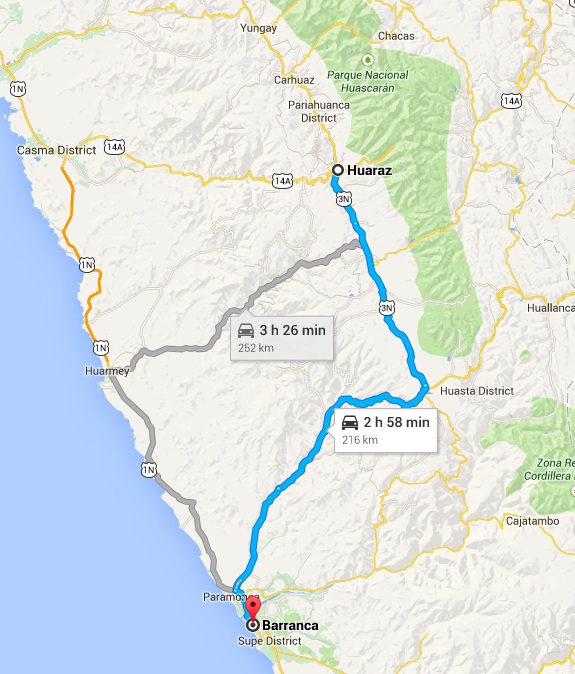
Once we got out of the traffic of Huarez the ride became another highlight.

Screen Shot 2014-10-20 at 23.16.48


Screen Shot 2014-10-20 at 06.35.33


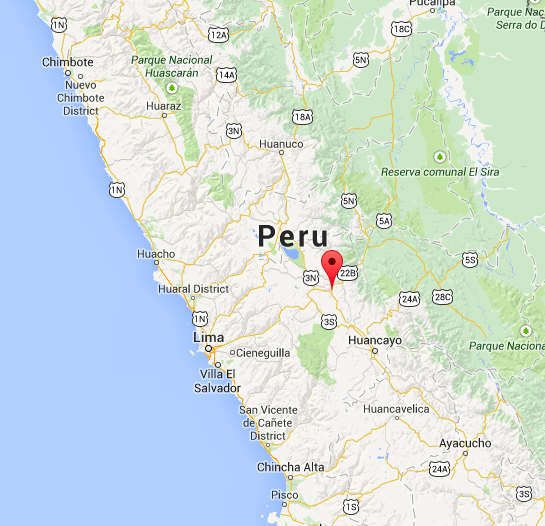
Finally the weather has cleared up and we see the full beauty of the southern part of the Cordillera Blanca. We are still travelling along the Rio Santa which is a small stream up here. The valley slowly turns into a hilly countryside with the high mountains on the left. Brown grass bundles are the main vegetation. They move in the strong wind and make the hills look like they were covered in fur. In the background the white peaks show their majestic shapes. We still go uphill even though the city is already way over 3000m. We find a little dirt road that leads towards the mountains and ride into it. It leads back into the national park, we think about taking that road in order to make a little loop. But the road contains deep gravel areas, which make it difficult to ride with the loaded bikes. That would make the trip pretty long hours. We decide to get back to the main road and continue the route we had originally planned.

After we reached a little pass, the road started to decline. In less than 60km it goes down from 3500m to 500m and then to sea level. The road is in very good shape, there is not much traffic and so riding is real fun.

The road leads down into a valley and offers great point of views where we stop to take pictures. The vegetation becomes less and less until the valley is a pure desert. Just on the last 40km the valley seems to contain some water so that the lower part of the valley is green while the mountains and hills around us seem to be completely dry.

We reach Barranca. Again we are irritated by how unpleasant some of the Peruan cities are. We look for a hotel along the beachside, but the area doesn’t look very safe. So we end up in a hotel in the center of town, opposite to a couple of casinos. The hotel is quite nice and so we have a good rest after this day full of new impressions.


The following day we ride west to find the ruins of Caral. A very good dustless dirt road leads through huge fields of papas, sugar cane, corn and a lot of other vegetables. Farmers cut the fields, collect the fruits and carry them to the trucks. The sugar cane trucks are loaded far beyond anything we would call full. They look like Silent Bob from the Simpsons when they come around the corner.

A little dirt track leads away from the main road we had been on. There are no signs, only gps is showing us the way. The dirt track is very bumby, partly sandy and is great fun to ride. I use the little bumps to make little jumps with the bike, drift in the sand and playfully enjoy the ride into the desert.

Finally we arrive at a circular arranged entrance to the site. Eerything is very new. The UN heritage is supporting this site. It is the oldest site on the American continent. The site is over 5000 years old, as old as the Egyptian culture. The pyramids which can be visited there are partly destroyed and are other than the Mayan pyramids not with a real peak, but have a terraced structure.

The site has only been investigated since 1996 and is open for the public only a few years. They still search and think they have discovered maybe 40% of the site. They found more than 20 sites in this valley.

It was very interesting to see it, imagining that this site completely changed the facts of history as the closest sites in terms of age they have found so far in America is 1000 years younger. How many other sites are still buried under these many sand dunes in this country? Where did this old culture move to? Where are all the other cities that must have existed?


We took our time and rode down the coast to find a great new hotel with view to the seaside in a small town, just 150km north of Lima in the town of Huacho.

So we would have a relaxed day riding into Lima the following day.

Into the Cordillera Blanca

National park of Huascaran – Laguna Orconcocha – Huaraz

Screen Shot 2014-10-20 at 23.16.48 Screen Shot 2014-10-20 at 23.15.32

Even though the weather was not very stable and clouds covered the mountains most of the time, we wanted to get into the national park of the Cordillera Blanca. A small dirt road brought us the few kilometers from the valley to a deep cut in the mountains. We enter the mountains through these pillars of rocks left and right. It felt like entering a cathedral. The road constantly lead up and finally a crystal blue lake on the right side appeared. The water is intensively colored and looks almost artificial. We stopped and had a look around.

We passed the small lake and continue the valley to a second lagoon. The landscape is unreal. The colorful lakes, steep walls of rock, and above, visible from time to time through the clouds the white glaciers of the high peaks.

At the end of the second lagoon there is an open area, which is marked as campsite. We pitched up our tent and met the only neighbors, a young couple from France who travels for more than one year in their camper with their 2 little children. Since they come from south, we exchanged some information and have a little chatted before the cold forces us to return to the tent.


The next day we made a little hike. We actually wanted to go to Lake 69, a little lagoon which lays in between high mountains. It is a few hour hike, but I didn’t feel very well and so we decided not to finish the way to the lagoon as it is located at 4700m altitudes. It was still really beautiful and we enjoyed every step we took. The hike led through a valley with cows enjoying the warmth of the sun. The flat ground of the valley had rich green gras, a little stream peacefully led through the meadows. As we continued to hike further down the valley, the flat area suddenly ends with steep walls. From all sides long waterfalls feed the little stream that flows in the valley. The highest peak in Peru was just uncovering from the clouds and so we have fantastic views into the high mountains surrounding us.

We left the beautiful valley and headed for Huarez, which we reached just after sunset.

As many cities of Peru Huarez is pretty chaotic when you enter. Traffic and the chaos don’t make it very pleasant to ride through the city.

The city itself doesn’t really have much to offer either. The main topic here is the mountains. On every corner guides offer their trips, rent equipment and advertise adventure tours.

Through the canyons and into thin air

Chimbote – Cañon de Pato – Caraz

Screen Shot 2014-10-19 at 22.31.04  Screen Shot 2014-10-19 at 22.21.26

We left Chimobote, a loud and chaotic city to head into the valley of the Rio Santa. The valley starts as a very green and broad oasis in between rocky, sandy and dry mountains. Fields of all kind of vegetables show that this ground is very rich. Corn, potatoes and endless fields of sugar canes on both sides of the roads. The road is in good conditions and leads us deeper and deeper into the Andes. The mountains get higher and higher as the valley becomes more and more narrow. After approximately on hour the pavement ends and a good gravel road continues following the river. The green of the valley almost disappears, only a small stripe of green directly at the river remains. The riding is great and the roads allows high speed travelling, you can easily go 80 or partly even 100km/h. Christy is taking it more easy of course, but is constantly riding at reasonable speed. So when I want to take a nice picture of her I have to speed up for a while and get the camera out in a hurry to be able to get into a good position of a picture. I am surprised how well she is managing the bike on the gravel. The off-road training with her little Beta bike back in Germany really seemed to help her. We stop very often to take pictures and to enjoy the view of the valley, but I also try to keep us going, as I expect the Cañon de Pato, a steep canyon at the very end of todays itinerary to be a little bit more difficult and I don’t want us to end up in the dark there.

The valley is spectacular with steep walls on both sides and the dirt road winding on its ground along the river. The colors of the mountains surrounding us vary in different brown colors and areas of yellow and red earth. It is incredibly beautiful. As the valley slowly turns into a steep canyon, the road leads up the hill, offering breathtaking views into the canyon.

In a small village we stop to get something to drink. It is a very strange atmosphere. Many of the inhabitants sit around and look at us as we were from a different planet. As usual I try to chat them up, but other than the people in all other areas on our travel so far they are not very talkative.

So we drink our cokes in quite. The road keeps being spectacular and the walls of the canyon even get higher and the canyon narrower. This is where the Cañon de Pato begins. The walls of the canyon are just a few meters apart and fall vertically down to the bottom where the Rio Santa roars wildly. Other than I had expected, the road turns out to be very good and paved. But it is a one-way road with many small tunnels. Signs encourage you to honk before every tunnel, but I still end up facing traffic in the tunnel. So we squeeze us through the wall and the upcoming car. The road is covered with sand and only two lanes of where the car tires roll are free. There is nothing like a guardrail. If you happened to slip over the edge the next stop would be the bottom of the river, so we keep our concentration up and make a couple of breaks.

After a few kilometers the canyon opens up and the valley becomes wide again. On the left hand side the mountains of the Cordillera Blanca reach up to 6000m. They are covered in clouds though, so we can only guess about their beauty.

Because the road through the Cañon de Pato is way better than anticipated we make it to Caraz at around 3:30pm. We search a Hotel and find a nice place in the “Los Pinos Lodge”. We unload the bikes and as the clouds open up a little bit we get a short view of one of the mountains of the Cordillera Blanca. A steep snowy mountain, seen from the yard of our hotel where humming birds fly around the colorful flowers. It was mind blowing.


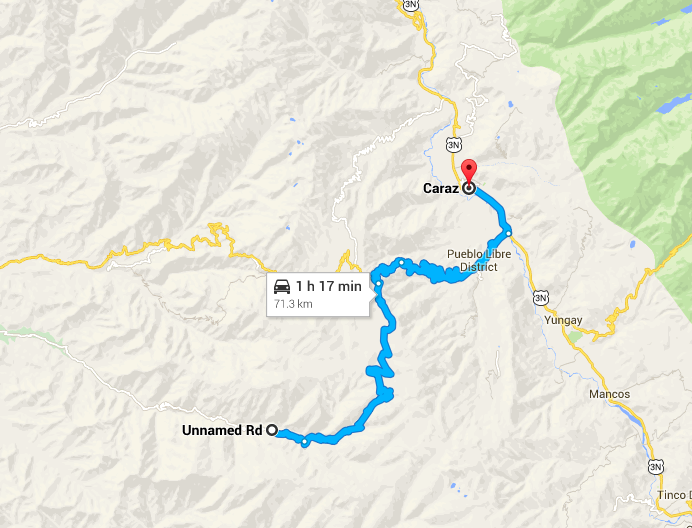
We decide to make a little day trip into the Cordillera Negra. It is a mountain range in the west of the valley. As the Cordillera Negra “only”reaches up to just below 5000m, the tips of the mountains are not covered in snow, other than the white summits of the Cordillera Blanca, which gives both ranges the names.

Screen Shot 2014-10-19 at 22.22.50

We expect to have a nice view into the Cordillera Blanca and get up early to use the usual better weather in the morning.

The road is very good, but very narrow. The good asphalt brings us through a small village. All houses are build in a 15th century clay brick style except the tin roofs.

In dozens of serpentines the road leads up the hill and with every curve the view into the valley is changing. The slopes of the Cordillera Blanca end in clouds that cover the tip of the mountains. They strangely only cover the Cordillera Blanca. We ride in the sun and the whole valley is sunny as well.

The mountain we ride up doesn’t seem to end, one curve after the other. Some of the serpentines are really steep, and since the road is very narrow, we are very happy that there is only little traffic. On some places the road leads all the way to the edge, where the walls go down 1500m. Again we have to keep the concentration up. Safely we arrive at a mountain pass. Instead of going on, we find a little dirt road that leads along the ridge of the mountain. We follow the track for a few kilometers until we find a spot with a great view. The clouds have moved a little bit, and it seemed as if it would clear up a little.

We sat there, watched nature slowly opening the scenery of the Cordillera Blanca. Small openings in the clouds allowed to get a little peek of the one summit, than a few minutes later of another one, as the first one gets covered again. It was fantastic. I remember the first summit I saw peeking out of the clouds. It was so high up, that I could hardly believe it was connected to the lower part of the mountain that you could see.

The sun was shining on us the whole time, but the wind was sort of cool since we were at an Altitute of over 4200m so we decided to ride down. The weather cleared up even more as we descended down the road.

The beauty of the landscape, the colors of the mountain, the white summits of the Cordillera Blanca, the incredible road and the drops next to it, it all gave us the feeling of having been a witness of a one-of-kind magic moment, even though we know the mountains have been there for millions of years and will most likely last some more.


Equipment: Action Cam Garmin Virb Elite vs. GoPro

I have been using the GoPro for a couple of years on my motorbike. I used it to video travels and a couple of rallyes I participated in. I loved it but on my last travel around the Adria I lost it (that sticker was not that well fixed on the motorbike as I thought).

So in preparation for this trip I was thinking about getting a new one. There are some things you cannot capture on a photo and I like to have some recordings of rides.

I was looking around and found the Garmin Virb Elite. Christy bought one and my friend Thomas loaned me his GoPro for the trip (thanks at this point to Thomas).

So during this trip we could compare them very well and I want to share my experience here. Not in terms of the technical data, that is something you can find elsewhere in the internet, but in terms of practical usability.

First of all:

Recording while motorbiking is really nice. Especially when travelling. Very often we just put the cameras on because the road is nice, there is a little nice village we pass through or because there is an interesting riding sequence. We film basically for two main reasons:

  1. the situation is better captured in motion
  2. we don’t want to stop to take a picture (sounds stupid, but you can not always stop)


It is great to see these movies at a later point, integrate it into a “slide-show”(sorry, I grew up in the analog world) and it is great for memories. It shows the world (that means friends and family) how we saw the places when riding.


Now as for the comparison there is not much to say about the quality. The Garmin is a lot more up to date than the Hero model I use on this trip, so there is no fair comparison. This thread should more be about the handling.


Battery

The GoPro’s batterie is a lot worse than the Garmin. When the camera is on (not filming) and filming once in a while, it does not last a whole riding day (max 6h that is on our travel so far). The Garmin has a powersaver and even though it contains a GPS device, Christy rarely ran out of battery when she had it fully powered up the night before. She is filming a lot more than I am, since I knew of the power problem before. And even if I shut down the camera completely for most of the time, the battery is always empty at some point.

There is one really cool thing worth mentioning: If you happen to use a Gamin Montana Navigation (highly recommended for bikers who also do some offroading because you can also use tracks e.g. from http://www.wikiloc.com ) you can SWITCH batteries. Virb and Montana use the same batteries. Since the Montana is will be constantly charged by the bike, you always have a fully charged “spare batterie”.

This may also be the case for other Garmin GPS, you will have to check yourself for other models though.

GPS

The Garmin Virb elite comes with an integrated GPS. That is a really nice feature for bikers. It shows the position where something was filmed (very cool on long distance travels) and shows the speed (that’s more a play thing, I wouldn’t know where this is overly interesting, but nice to have). The GoPro does not have this feature to my knowledge (maybe as an add-on device, I haven’t checked).

Waterproofness

Both devices are waterproof (at least as far as motorbikers are concerned, you cant dive with the Garmin (out of the box, there is special equipment), but you could with the GoPro.

Since you wont see anything in rain anyway (the spray on the camera lens makes a blurry image) this is only important for motorbikers so that they don’t have to stop to dismount the camera every time a little drizzle surprises them.

The Garmin is a one-unit waterproof thing. The GoPro is a non-waterproof unit that has a waterproof housing. This housing is a lot more waterproof than the Garmin (as I said, you can dive with it). That has no advantage for motorbikers, but a huge disadvantage: it condenses when temperature is falling or the air pressure changes (e.g. when climbing a mountain pass).

I had a couple of great rides filmed with the GoPro and when I wanted to see the video in the evening I had to find out that the whole scene is pretty foggy.


Use

Both systems have diverse mounting equipment available. So you can mount them in all kind of positions on the bike.

I like the 3M stickers that both of the have even though one came off and I lost my GoPro. That was certainly my own fault, there was nothing wrong with the sticker I cleaned the surface not well enough. But still you kind of lose confident a little bit.

There is one thing that always bothered me on the GoPro (and every motorbiker I know): turning camera ON and OFF is the same button. The camera makes a little beep when turned on and beeps 3 times when turned off. Additionally there is a little LED blinking while filming. That just doesn’t work on a bike. You don’t hear the beep very well, and the LED is not visible enough on bright days.

So many of my videos start with me looking in the mirror to check whether the camera is on. I also had it, that I didn’t press hard enough one time and from that time on, I was filming everything that was boring (including me making a short “pit-stop” at some remote tree, maybe not so boring after all) and not filming the interesting stuff.

Garmin has a slider button. You always know if the camera is on or off. You can feel it, even with thick gloves.

This slider wakes the camera up from the stand-by and starts recording. That’s perfect and saves battery as well.

Screen

The Garmin has a little screen, so you can check what you are actually filming. That is especially handy when mounting somewhere where you want part of the motorbike being in the image.

The GoPro has a mount-on screen, but as far as i know it is not waterproof anymore.


SO, my advice:

The GoPro as the godfather of action-cams is good for a lot of things, but not for motorbikers.

My recommodation is clearly the Garmin Virb Elite. It has everything that a motorbiker wants on his/her action cam.


Short overview:

GoPro disadvantages:

Use (on/off button is a nightmare)

Lens gets foggy

No GPS

Battery
Through the desert

Piura – Trujillo

We wanted to make it all the way to Chimbote today. So we had an early start and left the hotel at around 9. The PanAm is a very good road the goes through the desert de Sechura (Dry Desert). In the morning it was partly cloudy and once we have left the town of Piura we cruised with around 90-110 km/h through the desert. The desert changed during the drive a lot. First there were still some bushes left and right and along the road there were many little wooden barracks and houses where people are selling their goods. But soon the barracks ended and so did the bushes. The landscape became more flat and sandy. Slowly a little bit of wind came up as well. Every now and then areas of sand dunes appeared, sometimes small, sometimes as high as 50m. In some areas u-shaped dunes appeared. In a perfect sickel shape they spread as far as one could see.

In other places the desert was perfectly flat.

It is quite amazing going through that desert, knowing that the sea is only a few km from the road. The landscape was fantastic and the quick change from the last days came to my mind a couple of times. Just 3 days ago we rode through rich vegation with banana trees left and right of the street.

As it got warmer, the wind picked up on speed. After 1pm the wind got really strong and riding got difficult.

Especially with the wind coming from the side, which was the case for most of the time.

Every time we passed a truck we swerved over the rest of the road. The road got more busy in the afternoon as well, and overtaking got real nerve wrecking with other cars overtaking us as well. We had a couple of situations where we had to slow down since oncoming traffic underestimated our speed and we were faced with two trucks coming right at us.

We made a couple of short stops. The breaks where really necessary to keep the concentration up.

In total it was a very beautiful day, but also very tiring.

At 4pm we decided to stop in Trujillo instead of pushing though the rest of the 150km to Chimbote. We went to Chan-Chan, the largest pre-columbian ruins but they were already closed, so we decided to return the next day.

We ended up in the fanciest hotel in town, directly at the main plaza.

And we saw something we haven’t seen in a long time: the golden arches of McDonald. So we decided to get some good old American fast food for a change.


A little paradise

Christy was not feeling well, so we took our time in the morning. We met Daniel an American lawyer who got into mining and owns a mine just inland of Trujillo. He invited us to stay with him if we would make it to his place. He goes to the Ecuadorian border 3 times a year to leave the country for a few minutes to renew his visa. He lives in Peru since almost 2 years like this and even though he is Mexican by birth and therefore has no language barrier at all, he told us he would have problems to get used to the country. As a business man it seems to be very difficult to get used to the Peruvian attitude to work and progress which is very different to what we are used in Europe or the US.

At 3pm we decided to keep going and to make it to either a campsite which has been recommended by a Frenchman we met in Baños or to Mancora a beach city further down the road.

The road was more or less all along the ocean side and really fantastic. The deep blue sea on our right and dry desert to our left.

We arrived at Zorritos after one hour of riding and found the campsite at the coordinates we got from the French guy (S3.72356, W80.75981).

We were welcome by Melba and her husband Jacques a Swiss from the French part of Switzerland. Their two dogs werebarking at us but they calmed down immediately and it turned out the dogs were very friendly once they get to know you.

One of the dogs is a Viringo, a Peruvian race which has no hairs and develops a higher body temperature. He looks pretty scary first and it is quite strange to touch him with his elephant like skin. He is really young and likes to play a lot and we had great fun with him. He is also making the place pretty safe, scaring everybody else away, even though that was not really necessary, since the area is very tranquilo.

A French couple on a 1 1/2 year trip through South America with their Toyota stayed on the campsite as well.

The campsite is really small and still under construction. But the facilities are very clean and good. The campsite is bordered by the seaside with a perfect sand beach. So we put up our tent just a few meters away from the beach and heard the waves all night long. Melba made dinner for us and it was delicious. We had a great evening speaking a wild mixture of French, Spanish and English. We watched sunset and were standing in the waves at night. The wind was cool, but with the feet in the warm sea we enjoyed the view of the moon reflecting in the Pacific Ocean.

The place was so peaceful, relaxing and beautiful, we decided to stay two nights.